DIY Beehive: Essential Guide
Want to build your own beehive? A DIY beehive is a rewarding project that saves money and connects you with nature. This guide offers simple steps, lists essential tools, and provides safety tips for beginners to create a functional and durable hive. Let’s get buzzing!
Building a beehive at home might sound complicated, but it’s a straightforward woodworking project. Many beekeepers start this way to cut costs and ensure quality. This guide breaks down the process into easy-to-follow steps, so you can confidently build a safe haven for your future buzzing friends. We’ll cover everything from choosing your wood to assembly, making it simple and fun. Get ready to create something truly special!
Why Build Your Own Beehive?
There are many great reasons to consider building your own DIY beehive. For starters, it’s significantly more affordable than buying a pre-made one. The cost of lumber is often much less than the retail price of a new hive. Beyond the savings, you gain a deeper understanding of beekeeping and a sense of accomplishment. You can also customize the hive to your specific needs and preferences, ensuring it’s built with durable materials that will last. Plus, it’s a fantastic woodworking project that yields a beautiful, functional result!
Choosing Your Beehive Type
Before you start cutting wood, it’s important to decide on the type of beehive you want to build. The most common and beginner-friendly type is the Langstroth hive. This design is widely used by beekeepers worldwide due to its ease of management and compatibility with other beekeepers’ equipment. Other options include the Top-Bar hive and the Warre hive, each with its own advantages.
For this guide, we’ll focus on building a standard Langstroth hive. It’s a great starting point for any new beekeeper.
The Langstroth Hive Explained
The Langstroth hive is a modular system consisting of several boxes, called “supers,” stacked on top of each other. Each super contains frames where bees build their comb. This design allows beekeepers to easily add or remove supers as the colony grows or during honey harvests, without disturbing the bees too much. The key components of a Langstroth hive are:
- Bottom Board: The base of the hive, providing an entrance for the bees.
- Brood Boxes: The larger, lower boxes where the queen lays eggs and the brood (baby bees) develop. Beekeepers typically use one or two brood boxes.
- Honey Supers: Smaller boxes placed above the brood boxes where bees store honey.
- Inner Cover: A thin cover that sits below the outer cover, creating an air space and preventing bees from building comb in the wrong places.
- Outer Cover (Telescoping Cover): The top of the hive, protecting it from the elements.

Essential Tools and Materials
Gathering the right tools and materials is crucial for a successful DIY beehive build. Safety first! Always wear safety glasses and gloves when working with wood and power tools. Here’s what you’ll need:
Wood Selection
The choice of wood is important for the longevity and health of your hive. Pine and cedar are excellent choices for beehives. Cedar is naturally resistant to rot and insects, making it a more durable option, though it can be more expensive. Pine is a more budget-friendly choice and works well if painted or sealed.
- Recommended Wood: Pine (preferably knot-free) or Cedar.
- Thickness: Aim for 3/4-inch thick lumber for durability.
- Avoid: Pressure-treated lumber, as the chemicals can be harmful to bees.
Tools You’ll Need
You don’t need a professional workshop to build a beehive. A few basic woodworking tools will get the job done.
- Measuring tape
- Pencil
- Saw (hand saw, circular saw, or miter saw)
- Drill with various bit sizes
- Screwdriver bits
- Wood glue
- Wood screws (exterior grade, rust-resistant)
- Clamps (optional, but helpful)
- Safety glasses
- Work gloves
- Sandpaper (medium and fine grit)
Materials List (for one Langstroth Brood Box)
This list is for a standard 10-frame Langstroth brood box. You’ll need to adjust quantities for honey supers or if you opt for 8-frame equipment.
| Component | Dimensions (Approximate) | Quantity |
|---|---|---|
| Side Pieces (Long) | 20″ x 5.5″ | 2 |
| Side Pieces (Short) | 20″ x 3.5″ | 2 |
| End Pieces (Front/Back) | 16.75″ x 5.5″ | 2 |
| Base Board (for Bottom) | 16.75″ x 16.75″ (Cut to fit inside the assembled sides) | 1 |
Note: These dimensions are for assembling a box where the sides overlap the ends. This is a common and sturdy method. Exact dimensions can vary slightly based on lumber thickness and joinery style. Always measure twice, cut once!
Step-by-Step Guide: Building a Beehive Box
Let’s get building! We’ll focus on constructing a single brood box. You can replicate this process for additional boxes or honey supers.
Step 1: Measure and Cut Your Lumber
Accuracy is key here. Double-check your measurements before cutting. For a Langstroth 10-frame box, you’ll need pieces that create a box roughly 19 7/8 inches long by 16 1/4 inches wide on the outside, and about 9 5/8 inches deep. These are nominal dimensions; actual lumber sizes will vary, so precise cutting according to your chosen plan is essential.
- Cut Side Pieces: Cut two pieces for the long sides and two for the short sides. The exact lengths will depend on how you plan to join the corners (e.g., butt joints, rabbet joints). A common approach is to have the long sides overlap the short sides.
- Cut End Pieces: Cut two pieces for the front and back of the box.
- Cut Bottom Board: A piece to fit snugly inside the bottom perimeter of the assembled box.
A common dimension for the outer sides of a Langstroth box is around 19 7/8 inches. The ends would then be around 14 3/4 inches, assuming the side pieces overlap the ends. It’s often best to find a detailed plan online. You can find excellent resources from organizations like the Bee Informed Partnership or university extension offices.
Step 2: Prepare the Entrance
One of the end pieces will serve as the front of your hive. You need to create an entrance for the bees. A common method is to cut a 3/4-inch diameter hole about 1 inch from the bottom edge and centered horizontally. Some beekeepers prefer to leave a gap at the bottom of the front board for a larger entrance, or cut a horizontal slot.
Step 3: Assemble the Box Sides
Now it’s time to put the walls of your hive together. Apply exterior-grade wood glue to the edges where the pieces will join. Then, secure them with screws. Ensure the corners are square.
- Attach the short side pieces to the ends of the long side pieces using glue and screws.
- Ensure the corners are a perfect 90-degree angle. You can use a carpenter’s square to check.
- This will form the four walls of your brood box.
Step 4: Attach the Bottom Board
Slide the bottom board into place inside the assembled walls. Apply wood glue to the edges and screw it securely from the outside through the walls into the bottom board. This creates a solid base for your hive.
Step 5: Sanding and Finishing
Once the box is assembled, sand down any rough edges or splinters. This protects you and the bees. For the exterior of the hive, you can leave it unfinished if using cedar, or paint/seal it if using pine. Use only exterior-grade, water-based paints or sealants. Darker colors like white, grey, or light blue are common. Avoid painting the inside of the hive or the top edges where frames rest.
Important Note on Painting: Never paint the inside of the hive. Bees will propolize (seal) any surfaces they don’t like. For the exterior, use low-VOC or zero-VOC paints. Exterior latex paint is a good choice. Allow ample time for the paint to cure completely, ensuring no strong odors remain before introducing bees. Check out resources from the USDA Agricultural Research Service for bee health guidelines.
Building Other Hive Components
Once you have your brood box, you’ll need to build or acquire other essential pieces to complete your hive setup.
Honey Supers
Honey supers are shallower boxes used for honey storage. They are built in the same way as brood boxes, but they are shorter. Standard Langstroth supers are typically 6 5/8 inches deep for 10-frame equipment.
Frames
Frames are crucial; they hold the beeswax comb. You can buy frames and foundation (the thin sheet of beeswax or plastic bees start building on) or build your own. Building frames is a bit more intricate, involving small pieces of wood. For beginners, it’s often easier to purchase frames and foundation.
Inner and Outer Covers
The inner cover typically has an opening (a “bee space”) for ventilation and an entrance. The outer telescoping cover fits over the top of the entire hive, providing weather protection.
Bottom Board
There are two main types of bottom boards: solid and screened. A screened bottom board offers ventilation and can help with mite control. A solid bottom board is simpler to build, and sometimes preferred for winter to retain heat.
Safety First!
Working with wood and dealing with bees requires caution. Always prioritize safety.
- Woodworking Safety: Wear safety glasses and gloves. Be mindful of power tool operation. Keep your work area clean and organized. If you’re new to using power saws or drills, consider watching instructional videos or having an experienced woodworker guide you. Safe tool usage is paramount.
- Bee Safety: When working on an established hive, always wear protective gear: a veil, gloves, and a bee suit. Work calmly and avoid jerky movements. It’s best to approach the hive when bees are less active, such as in the early morning or late evening, or on cooler days.
Maintaining Your DIY Beehive
Building the hive is just the first step. Regular inspections and maintenance are vital for a healthy bee colony.
- Regular Inspections: Check your hive every 1-3 weeks during the active season. Look for signs of disease, pests, queen activity (eggs and larvae), and the amount of honey reserves.
- Pest and Disease Management: Be aware of common bee pests like the Varroa mite and diseases like American Foulbrood. Early detection and treatment are key. Consult local beekeeping associations or a mentor for best practices.
- Winter Preparation: Ensure your hive is well-insulated and has adequate food stores for the winter months.
Where to Find Plans and Resources
There are many excellent resources available online for detailed beehive plans. These often include cut lists and precise measurements for different hive types and sizes.
- University Extension Offices: Many agricultural universities offer free beekeeping guides and hive plans. Search for “[Your State] Extension Beekeeping.”
- Beekeeping Associations: Local and national beekeeping clubs often have resources, workshops, and experienced members who can help.
- Online Woodworking Forums and DIY Sites: Many hobbyists share their plans and experiences.
- Beekeeping Supply Companies: While they sell kits, they often provide free plans or diagrams you can use for DIY builds.
For example, you can find detailed Langstroth hive plans on the HoneyBee website, which is a reputable source for beekeeping information.
Troubleshooting Common DIY Beehive Issues
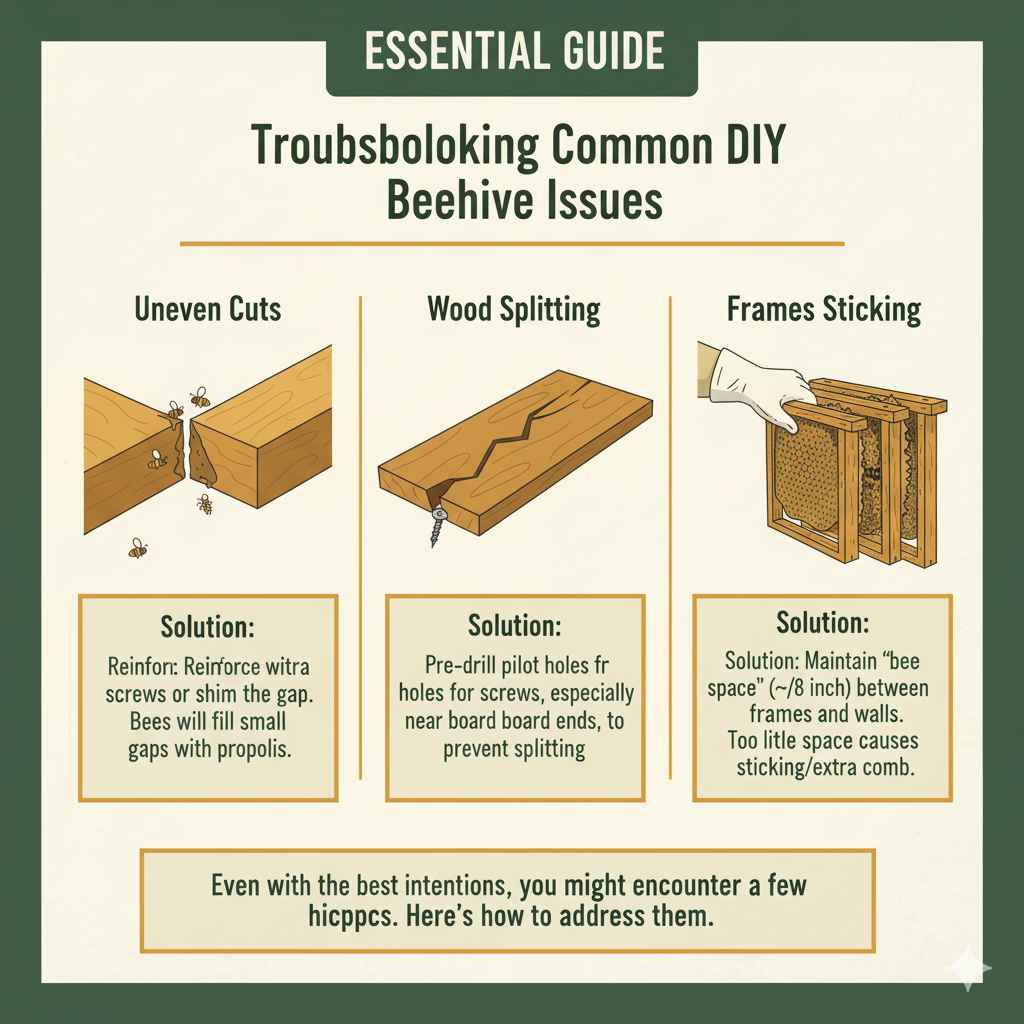
Even with the best intentions, you might encounter a few hiccups. Here are some common issues and how to address them:
- Uneven Cuts: If your pieces aren’t perfectly square, small gaps can form. Bees will fill these with propolis. For critical structural joints, you might reinforce them with extra screws or shim them.
- Wood Splitting: Pre-drilling pilot holes for screws, especially near the ends of boards, prevents wood from splitting.
- Frames Sticking: Ensure frames are cut to the correct width so there’s a consistent “bee space” (about 3/8 inch) between them and the hive walls, and between frames themselves. Too much space, and they’ll build extra comb; too little, and they’ll stick.
Frequently Asked Questions (FAQ)
Q1: What is the best wood for a DIY beehive?
Pine and cedar are the most recommended woods. Cedar is naturally more durable and pest-resistant. Pine is more affordable and works well if you paint or seal the exterior.
Q2: Do I need to paint the inside of the beehive?
No, never paint the inside. Bees prefer the natural wood and will seal it with propolis. For the exterior, use a light-colored, non-toxic, water-based paint or sealant after the hive is fully assembled and sanded smooth.
Q3: How many bees does a DIY beehive hold?
A standard 10-frame Langstroth hive can house a colony that grows to 50,000 bees or more during peak season.
Q4: Is it difficult to build a beehive?
Building a basic beehive box is an achievable woodworking project for beginners. With clear plans and basic tools, most people can successfully construct a hive.
Q5: What are the essential parts of a beehive?
The essential parts include a bottom board, brood boxes (where the queen lays eggs), honey supers (for honey storage), frames with foundation, an inner cover, and an outer cover.
Q6: Where can I find free beehive plans online?
You can find free plans from university extension offices, beekeeping associations, and various woodworking websites. Searching for “Langstroth hive plans PDF” is a good starting point.
Q7: Are there different sizes of beehives?
Yes, the most common Langstroth sizes are 10-frame and 8-frame. The depth of the boxes also varies (deep for brood, medium or shallow for honey).
Conclusion
Building your own DIY beehive is a deeply satisfying project that offers both practical and environmental rewards. You’ve learned about the different hive types, the tools and materials needed, and the step-by-step process for constructing a sturdy Langstroth box. Remember to prioritize safety in your workshop and when interacting with bees. With careful work and these essential guidelines, you’re well on your way to providing a welcoming home for a new bee colony. Happy building, and may your hive thrive!