
Is Petrified Wood Heavy: Essential Guide
Yes, petrified wood is generally quite heavy. Its weight comes from the replacement of organic wood material with dense minerals like quartz or agate, making it significantly denser than regular wood.
Is Petrified Wood Heavy? Your Essential Beginner’s Guide
Ever wondered if that intriguing, stone-like piece of wood you found is as heavy as it looks? You’re not alone! Many beginners and DIY enthusiasts are curious about the physical properties of petrified wood, especially its weight. It can be confusing because, well, it looks like wood, but it feels like rock! This can make planning for projects or even just admiring a specimen a bit tricky. But don’t worry! In this guide, we’ll break down exactly why petrified wood has its surprising weight and what that means for you. We’ll explore the science behind it in simple terms and give you all the essential information you need to understand this fascinating fossil.
What is Petrified Wood, Anyway?
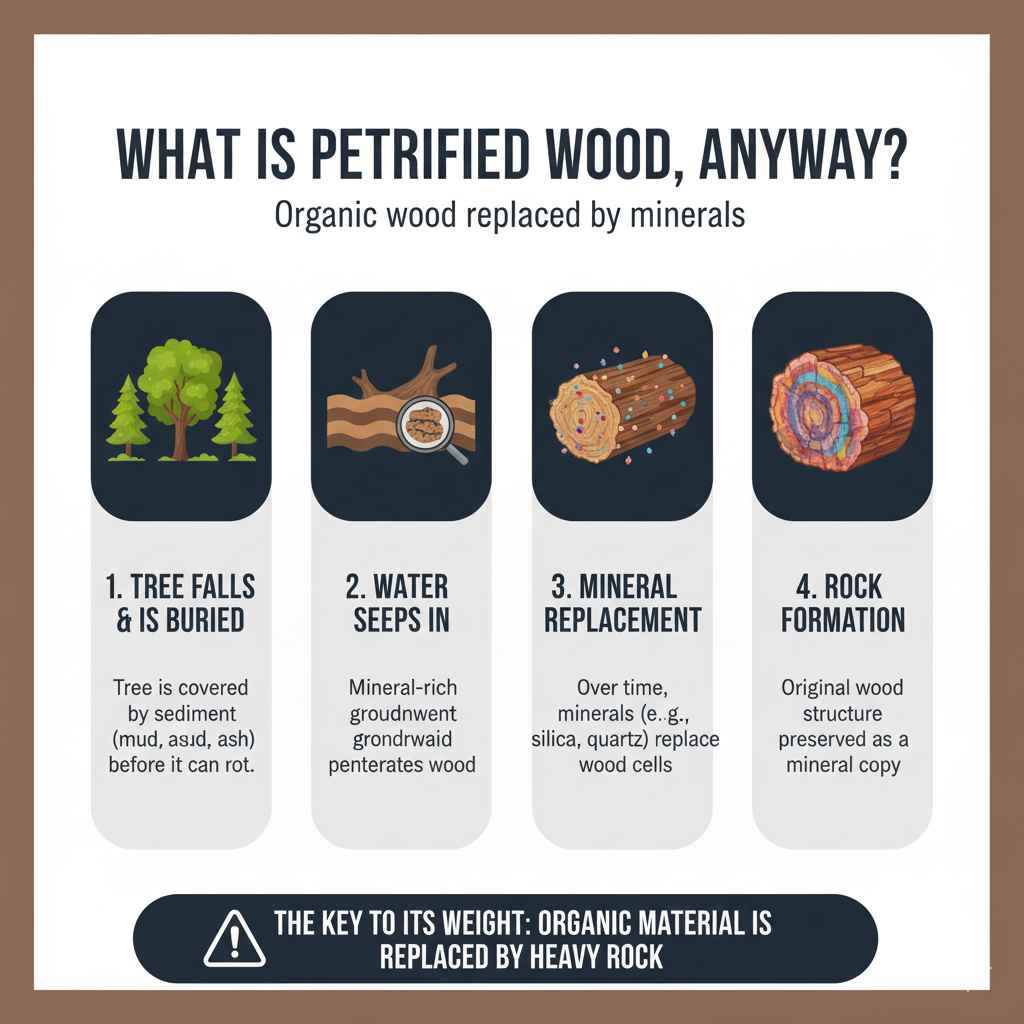
Before we dive into the weight, let’s quickly touch on what petrified wood is. Imagine a tree that fell long, long ago, maybe thousands or even millions of years. Instead of rotting away, its wood got buried under sediment – like mud, sand, or volcanic ash. Over a vast amount of time, groundwater rich in minerals seeped into the buried wood. As the original wood cells slowly decayed, these minerals, most commonly silica in the form of quartz or agate, took their place, molecule by molecule. This amazing process preserved the intricate structure of the original wood, but replaced the organic material with rock. It’s essentially a mineral copy of the original wood, and this replacement is the key to its weight.
The Science Behind the Weight: Density Explained
So, why is petrified wood heavy? It all comes down to density. Think of density as how much “stuff” is packed into a certain amount of space.
Regular Wood: Wood is made of organic cells with air pockets and relatively light organic compounds. This makes it light for its size.
Petrified Wood: When minerals like quartz (which is hardened silicon dioxide, the same stuff as sand and glass) replace the wood, they are much denser than the original organic material. The original structure is perfectly replicated, but with heavy, solid mineral matter instead of fragile wood cells.
This mineral replacement process is incredibly thorough. Often, the original wood structure is preserved down to the cellular level, but the material making up those cell walls and spaces is now solid rock. This makes petrified wood significantly denser than living wood.
How Heavy is Petrified Wood Compared to Regular Wood?
To give you a good idea, let’s compare. The density of materials is often measured in grams per cubic centimeter (g/cm³).
Average Wood Density: Most common hardwoods range from about 0.4 to 0.7 g/cm³. Softwoods are even lighter, often below 0.4 g/cm³. For example, pine might be around 0.35 g/cm³.
Petrified Wood Density: Petrified wood, being mineralized, is much denser. Its density typically falls in the range of 2.0 to 2.7 g/cm³. This is very close to the density of quartz (around 2.65 g/cm³), which is the most common mineral that replaces the wood.
This means a piece of petrified wood can be 4 to 7 times heavier than a piece of regular wood of the exact same size and shape!
Let’s visualize this with a simple table:
| Material | Typical Density (g/cm³) | Weight Comparison (for same size) |
|---|---|---|
| Pine Wood | ~0.35 – 0.45 | Light |
| Oak Wood | ~0.6 – 0.75 | Moderate |
| Basalt Rock | ~2.7 – 3.0 | Very Heavy |
| Petrified Wood | ~2.0 – 2.7 | Significantly Heavier than Wood |
As you can see, petrified wood often has a density similar to other types of rock, like basalt or even granite, rather than wood.
Factors Affecting the Weight of Petrified Wood
While the general rule is that petrified wood is heavy, there are a few factors that can cause some variation in weight:
1. Type of Mineralization: As mentioned, quartz and agate are common. However, other minerals like calcite, chalcedony, or even opal can be involved. Each mineral has its own density. For example, opal is slightly less dense than quartz. If a piece is heavily agatized (lots of quartz), it will be at its heaviest.
2. Degree of Replacement: Sometimes, the mineralization process isn’t 100% complete. There might be small voids or areas where the original wood structure wasn’t fully replaced by minerals. This can make a piece slightly lighter than one that is completely and densely mineralized.
3. Presence of Impurities: Like any natural stone, petrified wood can sometimes contain other embedded materials or impurities, which can subtly affect its overall density and weight.
4. Original Wood Type: While the mineralization process is the dominant factor, the original density of the wood might play a very minor role in the final weight if the replacement isn’t perfect. Denser original woods might lead to slightly denser petrified wood under identical mineralization conditions.
Is Petrified Wood Heavier Than Other Rocks?
This is a great question! Since petrified wood is essentially mineral replaced wood, its weight is very similar to many common rocks.
Compared to Granite or Basalt: Petrified wood (2.0-2.7 g/cm³) is often in a similar density range to granite (around 2.6-2.8 g/cm³) or basalt (around 2.7-3.0 g/cm³). So, a piece of petrified wood will feel quite comparable in weight to a piece of granite or basalt of the same size.
Compared to Sandstone: Sandstone (typically 2.0-2.4 g/cm³) can be slightly lighter or in a similar range, depending on its composition.
Compared to Pumice: Pumice, a volcanic rock, can be very light and porous, with densities sometimes below 1 g/cm³. Petrified wood is vastly heavier than pumice.
So, when you pick up a piece of petrified wood, you can expect it to feel like handling a solid piece of rock!
How to Estimate the Weight of Petrified Wood
If you’re planning a project or need to transport a significant piece, knowing its weight is crucial. Here’s a simple way to estimate:
1. Measure the Dimensions: Use a ruler or tape measure to find the length, width, and height of your petrified wood piece.
2. Calculate the Volume: Multiply these three dimensions together to get the volume. Make sure all your measurements are in the same unit (e.g., inches or centimeters). If you get cubic inches, you can convert to cubic centimeters by multiplying by approximately 16.387.
3. Estimate the Density: Use the typical density range for petrified wood we discussed (2.0 to 2.7 g/cm³). For a general estimate, you can use an average of 2.35 g/cm³.
4. Calculate the Weight: Multiply the volume (in cm³) by the density (in g/cm³). This will give you the weight in grams.
Formula: Weight (grams) = Volume (cm³) × Density (g/cm³)
5. Convert to Pounds (Optional): If you prefer pounds, divide the weight in grams by 453.592.
A Simple Calculation Example:
Let’s say you have a piece of petrified wood that measures 10 cm x 5 cm x 4 cm.
Volume = 10 cm × 5 cm × 4 cm = 200 cm³
Estimated Weight = 200 cm³ × 2.35 g/cm³ = 470 grams
Convert to Pounds: 470 grams / 453.592 ≈ 1.04 pounds
This is just an estimate, but it gives you a good ballpark figure. For precise measurements, you’d need a scale and ideally, access to more advanced tools to determine the exact density.
Can You Work With Petrified Wood?
Absolutely! While its hardness and weight present challenges compared to working with regular wood, petrified wood can be shaped, polished, and used in various applications. Because it’s essentially rock, you’ll use tools and techniques more akin to stone carving or lapidary work than traditional woodworking.
Cutting: You’ll need specialized saws with diamond blades, like an angle grinder with a diamond cutting disc or a wet saw designed for tile and stone. Standard wood saws won’t even scratch it. Always use water to cool the blade and suppress dust when cutting any stone material. You can find helpful safety guidelines on cutting stone from resources like the Occupational Safety and Health Administration (OSHA) https://www.osha.gov/.
Grinding and Shaping: Diamond grinding wheels or flap discs on an angle grinder are used to shape petrified wood. This is often done wet to manage dust and heat.
Polishing: To get that beautiful, smooth, glassy finish that highlights the colors and patterns, you’ll use progressively finer grits of diamond polishing pads. This is very similar to how cabochons (polished gemstones) are made.
Safety First! Working with materials this hard and abrasive requires strict safety precautions. Always wear safety glasses, a dust mask or respirator (especially when dry cutting or grinding), hearing protection, and gloves. Silicosis is a serious risk from inhaling silica dust, so dust control is paramount.
What Makes Petrified Wood Valuable?
The weight and hardness of petrified wood contribute to its mystique and value. It’s a tangible piece of ancient history, transformed into a durable and often beautiful object.
Rarity and Preservation: Exceptionally well-preserved specimens that show intricate details of the original wood structure, vibrant colors, or unique patterns are highly sought after.
Geological Significance: Petrified wood sites, like the Petrified Forest National Park in Arizona, are important geological and paleontological resources. Many specimens are protected, and collecting is restricted. You can learn more about these resources from the National Park Service https://www.nps.gov/pefo/index.htm.
Artistic and Decorative Use: Because it is so durable and can be polished to a high sheen, petrified wood is used in landscaping, as decorative elements, tabletops, sculptures, and even in jewelry. Its unique, natural beauty is unmatched.
Is All Petrified Wood the Same?
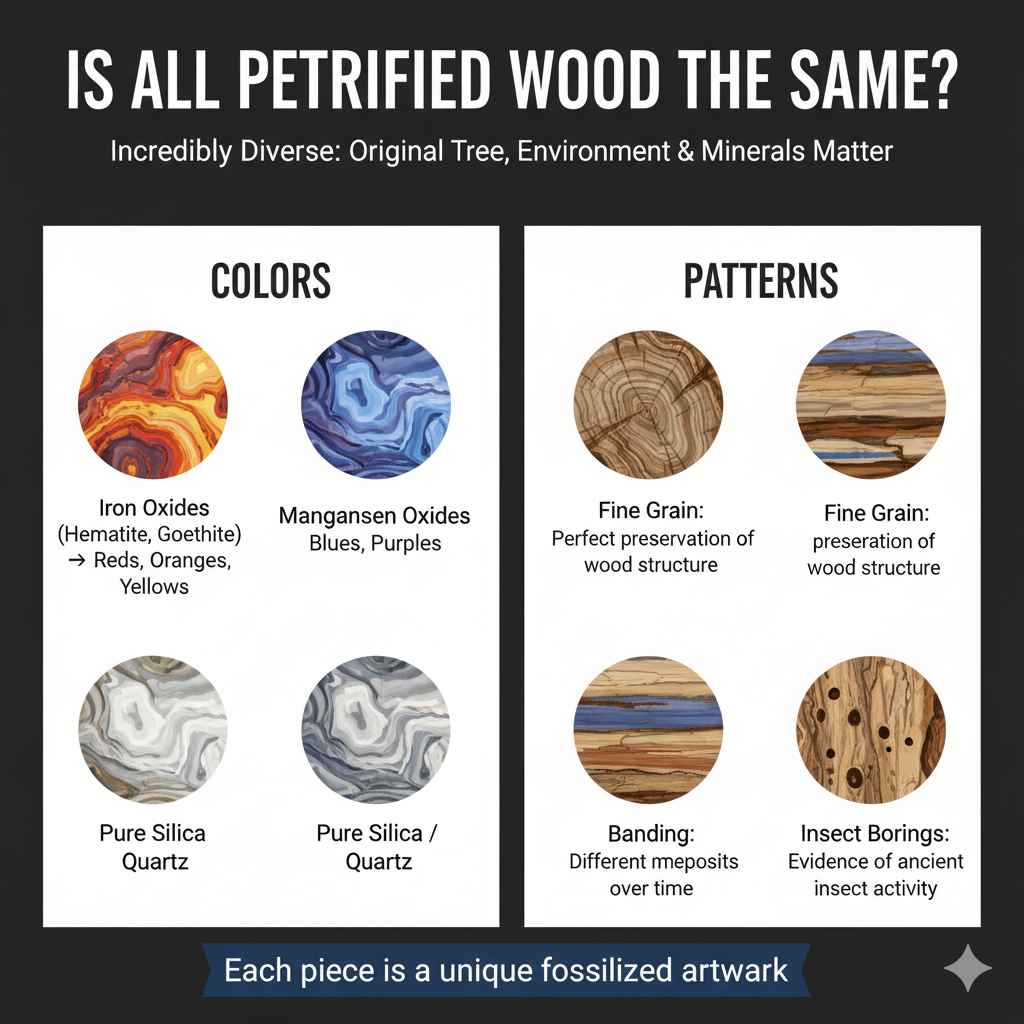
No! Petrified wood is incredibly diverse. The color, pattern, and even slight density variations depend on the original tree species, the environment it fossilized in, and the specific minerals that replaced the wood.
Colors: Vibrant reds, oranges, and yellows often come from iron oxides (like hematite and goethite). Blues and purples can be caused by manganese oxides. Whites and grays are usually from pure silica or quartz.
Patterns: Some pieces preserve the fine grain of the wood perfectly, while others may show banding from different mineral deposits or evidence of insect borings.
Frequently Asked Questions About Petrified Wood Weight
Here are some common questions beginners have about the weight of petrified wood:
Q1: Will a small piece of petrified wood feel surprisingly heavy?
Yes, absolutely! Even a small chunk of petrified wood, perhaps the size of your fist, will feel much heavier than a regular piece of wood of the same size. This is due to its high mineral content and density.
Q2: Is petrified wood heavier than a brick?
A typical clay brick weighs around 4.5 to 5 pounds (approximately 2 to 2.3 kg). Petrified wood has a density similar to many rocks, so a piece of petrified wood of comparable size to a brick would likely weigh in a similar range, possibly a bit more or less depending on its exact mineral composition and voids.
Q3: Can I lift a large piece of petrified wood easily?
Generally, no. Large pieces of petrified wood can be extremely heavy, often weighing hundreds or even thousands of pounds, just like large rocks. You’ll likely need lifting equipment or help to move substantial specimens.
Q4: Does petrified wood feel cold to the touch like stone?
Yes, petrified wood will feel cool to the touch, similar to other types of rock or stone. This is because it conducts heat away from your hand more effectively than wood does. The mineral composition absorbs and dissipates heat differently.
Q5: Is there a way to make petrified wood lighter?
No, you cannot make petrified wood lighter. Its weight is a fundamental characteristic of its mineral composition and the fossilization process. Any attempt to reduce its weight would involve removing material, effectively changing the specimen itself.
Q6: How does the weight of petrified wood compare to gemstones?
Many gemstones, like diamonds or rubies, are very dense, but often they are small. For pieces of comparable size, petrified wood (which is essentially mineralized silica) is often heavier than many lighter gemstones but might be in a similar range to quartz-based gemstones like amethyst or citrine, depending on their specific densities and cut.
Q7: What is the Mohs hardness of petrified wood, and how does that relate to its weight?
The Mohs hardness of petrified wood typically ranges from 6.5 to 7, similar to quartz. Higher hardness generally means a more tightly packed, crystalline structure with fewer intermolecular spaces, which contributes to higher density and therefore, greater weight. So, yes, its hardness is directly related to its weight; both stem from the dense mineral composition.
Conclusion: A Heavyweight of History
So, to wrap it all up, is petrified wood heavy? The answer is a resounding yes! Its unique transformation from organic wood to mineral rock imbues it with significant weight, often comparable to familiar stones like granite or basalt. This impressive density is a testament to the incredible power of nature and geological processes that occurred over millions of years.
Understanding this weight is key, whether you’re a collector admiring a new find, a hobbyist planning to incorporate it into a project, or simply curious about the natural world. While its weight means it requires careful handling and specialized tools for shaping, it also contributes to its durability and the stunning, permanent beauty it offers.
Next time you encounter a piece of petrified wood, you’ll know that its heft is far more than just mass; it’s a dense, mineralized echo of ancient forests, a true heavyweight of natural history. Keep exploring, keep discovering, and happy crafting (or collecting)!


