How To Remove Gorilla Glue From Wood Safe Diy Glue Removal Guide
Gorilla Glue is renowned for its strength and versatility, making it a go-to choice for many DIY enthusiasts. However, its strong adhesion can pose a challenge when it needs to be removed from wood surfaces without causing damage.
To remove Gorilla Glue from wood, start with mechanical removal, apply acetone carefully, then sand the surface gently if needed. Always test in an inconspicuous area first.
Understanding Gorilla Glue Properties
Composition and Adhesion
Gorilla Glue is a polyurethane adhesive known for its strong bonding capabilities on various materials, including wood. Its main ingredient is diisocyanate, which reacts with moisture to expand and create a tight bond. This characteristic makes it highly effective for woodworking projects, as wood naturally contains some moisture. The glue seeps into the wood fibers, forming a bond that’s tough to break once cured.
The expansion process allows Gorilla Glue to fill gaps, making it ideal for surfaces that are not perfectly aligned. However, this same property can make removal tricky, as the glue not only adheres to the surface but also infiltrates into the wood’s grain.
Common Uses on Wood
Gorilla Glue is often used in woodworking due to its strength and versatility. It is particularly useful for:
- Repairing broken furniture.
- Building wooden structures like shelves and frames.
- Bonding different types of wood for custom projects.
Its water-resistant properties make it suitable for both indoor and outdoor applications. However, because of its strong adhesion, care must be taken to apply it precisely. Excess glue can be sanded off once cured, but this may damage the wood’s finish.
Tip: To minimize cleanup, apply a thin layer and immediately wipe away excess with a damp cloth before it cures.
Preparation Before Removal
Safety Precautions
Before attempting to remove Gorilla Glue from wood, ensure your safety by wearing protective gear. This includes gloves to protect your hands and safety goggles to guard your eyes from any splashes or debris. Work in a well-ventilated area to avoid inhaling any fumes from solvents that might be used during the removal process.
Gathering Necessary Tools
Having the right tools and materials on hand will make the glue removal process more efficient. Here’s a checklist of items you might need:
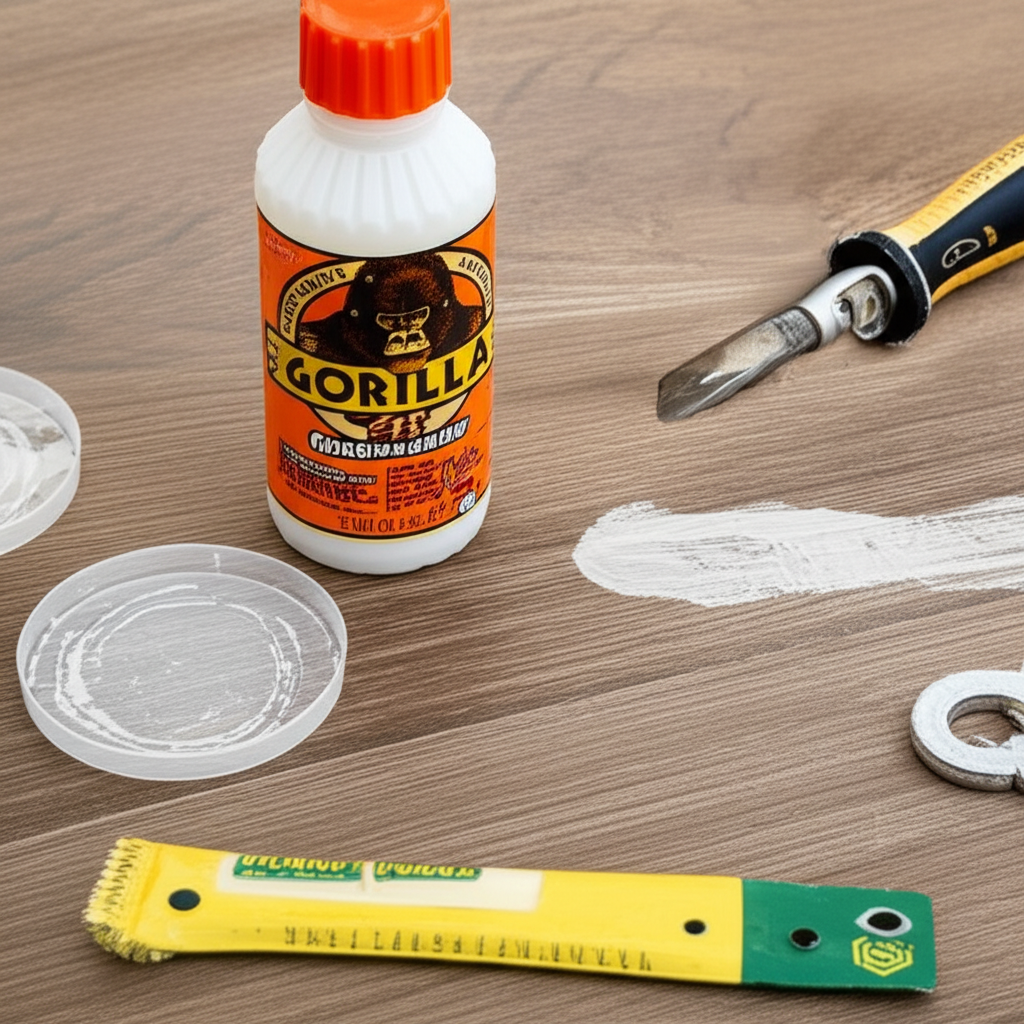
- Protective gear: Gloves, safety goggles
- Solvents: Acetone or isopropyl alcohol, as these can help soften the glue
- Scrapers: Plastic or metal scrapers for gentle scraping
- Sandpaper: Fine-grit sandpaper for smoothing out any remaining residue
- Cloths: Clean rags or paper towels for wiping away softened glue
Make sure all tools are clean and free of any substances that could damage the wood surface. This preparation will help you proceed with confidence and care during the glue removal process.
Mechanical Removal Techniques
Scraping with a Tool
To gently remove Gorilla Glue from wood, a simple scraping technique can be effective. Use a plastic scraper or a flat-edged tool that won’t damage the wood surface. Metal tools should be avoided as they can cause scratches.
- Step 1: Hold the scraper at a slight angle, and gently push against the glue to lift it.
- Step 2: Apply light pressure to avoid gouging the wood. Work slowly and methodically.
- Step 3: If needed, soften the glue first with a hairdryer on a low setting to make the scraping easier.
Tip: Test your technique on an inconspicuous area first to ensure it does not damage the wood.
Sanding the Surface
If the glue is stubborn, sanding can be a practical solution. This method also helps smooth the wood surface after glue removal.
- Step 1: Start with a medium-grit sandpaper (e.g., 120-grit) to gently sand away the glue.
- Step 2: Sand in the direction of the wood grain to prevent scratches.
- Step 3: Once the glue is removed, switch to a finer grit (e.g., 220-grit) for a smooth finish.
- Step 4: Wipe the dust off with a damp cloth to inspect the surface.
Tip: Always wear a dust mask and goggles when sanding to protect yourself from dust particles.
Chemical Solvents for Glue Removal
Using Acetone
Acetone is a widely available solvent that can effectively dissolve Gorilla Glue. To apply, start by gently scraping off as much glue as possible with a plastic scraper or a putty knife. Once the excess glue is removed, dampen a clean cloth with acetone and apply it to the glue-stained area. Allow it to sit for a few minutes to penetrate the adhesive. Then, use the cloth to rub the area in circular motions until the glue starts to dissolve. Repeat the process if necessary.
Tip: Always test acetone on a small, inconspicuous area of the wood first to ensure it doesn’t damage the finish.
Alternative Solvents
If acetone is not an option, other solvents like isopropyl alcohol or mineral spirits can be used. These solvents are less harsh and may take longer to work, but they can still be effective. Apply them in the same way as acetone, soaking a cloth in the solvent and rubbing it onto the glue stain. Be patient and persistent, as these solvents might require multiple applications.
Note: Ensure adequate ventilation when working with chemical solvents to avoid inhaling fumes.
Heat Application Methods
Applying heat is an effective method to loosen Gorilla Glue, making it easier to remove from wood surfaces. Here’s how to do it safely and effectively:
Using a Heat Gun
A heat gun can be a powerful tool for softening Gorilla Glue. Follow these steps:
- Set the Heat Gun: Use the lowest heat setting to avoid damaging the wood.
- Keep Distance: Hold the heat gun about 2-3 inches away from the glue.
- Keep Moving: Move the heat gun back and forth over the glue to distribute the heat evenly.
- Watch for Softening: As the glue softens, it will become easier to scrape off.
- Use a Scraper: Gently use a plastic scraper or a putty knife to remove the softened glue.
Ironing Technique
If a heat gun isn’t available, a household iron can be used:
- Set the Iron: Use the cotton setting without steam.
- Protect the Wood: Place a cotton cloth over the glue to protect the wood surface.
- Apply Heat: Gently press the iron on the cloth over the glue for a few seconds at a time.
- Check Softness: Lift the cloth periodically to check if the glue has softened.
- Remove Glue: Once softened, scrape off the glue gently with a plastic scraper.
Tip: Always test on a small, inconspicuous area first to ensure the heat method does not damage the wood finish.
Preventing Damage to Wood
To prevent damage to wood when removing Gorilla Glue, it is essential to take care not to affect the wood’s finish or structural integrity. Here are some strategies to protect the wood surface during and after glue removal.
Testing on a Small Area
Before applying any method to remove Gorilla Glue, test the chosen solution on a small, inconspicuous area of the wood. This helps ensure that the method will not discolor or damage the wood surface.
Post-Removal Treatment
Once the glue is removed, it’s important to treat the wood to restore its appearance and protect it from future damage.
- Cleaning: Use a damp cloth to wipe away any residue or cleaning solution. Avoid soaking the wood, as excess moisture can cause warping.
- Sanding: If necessary, gently sand the area with fine-grit sandpaper to smooth out any roughness left by the glue removal process.
- Refinishing: Apply a suitable wood finish or polish to restore the wood’s sheen and protect it from environmental factors.
Tip: Regular maintenance, such as dusting and polishing, can help keep the wood in good condition and prevent future issues with glue or other substances.
Restoring Wood Finish
Once you’ve successfully removed the Gorilla Glue from your wood surface, the next step is to restore its original beauty. This involves reapplying the finish and polishing the surface to bring back its shine.
Reapplying Finish
The type of finish you’ll need depends on the original finish of the wood. Here’s a simple guide:
- Varnish: Lightly sand the affected area with fine-grit sandpaper (220-grit) to smooth any rough spots. Apply a thin coat of varnish using a soft brush, moving in the direction of the wood grain. Allow it to dry completely before deciding if a second coat is necessary.
- Stain: Choose a stain that matches the original color. Use a lint-free cloth to apply the stain, wiping off any excess immediately. Let it dry and apply a clear topcoat for protection.
- Oil Finish: If the wood was finished with oil, apply a small amount of oil (tung or linseed) to the area with a clean cloth. Let it soak in for a few minutes before wiping off any excess.
Polishing Techniques
After reapplying the finish, polishing the wood enhances its appearance and protects it from future damage.
- Use a Soft Cloth: Gently buff the surface with a soft cloth to bring out the shine.
- Furniture Polish: Spray a small amount of furniture polish onto the cloth (not directly on the wood) and buff the surface in circular motions.
- Wax for Extra Shine: For an additional layer of protection and shine, apply a paste wax. Rub it onto the wood in a circular motion, let it dry, and then buff it out with a clean cloth.
Tip: Always test any finish or polish on a small, inconspicuous area first to ensure compatibility.
Preventing Future Glue Mishaps
Proper Application Techniques
Applying Gorilla Glue with precision can greatly reduce the chance of it spreading to unwanted surfaces. Start by using a small, controlled amount of glue; this product expands as it cures. Consider using a fine-tipped applicator for accuracy. Before applying, ensure the wood surfaces are clean and lightly dampened, as moisture activates the glue. This step not only improves adhesion but also minimizes excess glue.
Protective Measures
Preventing glue mishaps is all about preparation. Protect your work area with plastic sheeting or newspaper, and use painter’s tape to mask off areas you want to keep glue-free. Keep a damp cloth or acetone nearby to quickly wipe away any stray glue while it’s still wet. Wearing gloves will also protect your hands and prevent accidental smears.
Tip: “Always read and follow the manufacturer’s instructions for best results.”
By taking these steps, you can enjoy the benefits of Gorilla Glue without the hassles of unwanted spills and messes.
Quick Summary
- Gently scrape off as much Gorilla Glue as possible using a plastic scraper or a putty knife to avoid damaging the wood surface.
- Apply acetone or nail polish remover with a cotton ball or cloth to soften the remaining glue. Be sure to test the solution on a hidden area of the wood first to ensure it doesn’t cause discoloration.
- Use a clean cloth to wipe away the softened glue, applying more acetone if necessary until the glue is fully removed.
- For stubborn spots, sand the area lightly with fine-grit sandpaper, taking care to blend the edges into the surrounding wood.
- Clean the surface with a damp cloth to remove any residue and allow it to dry completely before refinishing if needed.
- Consider using a wood-safe adhesive remover for particularly tough glue spots, following the product’s instructions carefully.
- Always work in a well-ventilated area and wear gloves to protect your skin from chemicals used in the removal process.
Frequently Asked Questions
What is the best way to remove Gorilla Glue from wood without damaging the surface?
Use a plastic scraper to gently lift off excess glue. Follow with a cloth soaked in acetone to dissolve any remaining residue, taking care not to soak the wood too much.
Can I use heat to remove Gorilla Glue from wood?
Yes, applying gentle heat with a hairdryer can soften the glue, making it easier to scrape away. Be cautious not to overheat the wood, which can cause damage.
Is there a natural alternative to acetone for removing Gorilla Glue?
Vinegar can work as a natural solution. Soak a cloth in vinegar and place it over the glue for several minutes, then gently scrape off the softened glue.
How do I prevent Gorilla Glue from staining wood surfaces?
Before using Gorilla Glue, apply a thin layer of wax or petroleum jelly around the area you intend to glue. This acts as a barrier and prevents the glue from sticking to unwanted areas.
What should I do if Gorilla Glue has already dried on the wood?
If the glue has dried, sand the area lightly with fine-grit sandpaper. This will help remove the hardened glue without causing significant damage to the wood surface.