Can You Take Wood On A Plane? Essential Guide
Yes, you can often take wood on a plane, but it depends on various factors like type, size, treatment, and airline regulations. This guide will help you understand the rules and prepare your wooden items for air travel, ensuring a smooth journey for your materials and creations.
Planning a trip and wondering about bringing a special piece of wood, a handcrafted item, or even wood for a project with you? It’s a common question, especially for crafters, makers, and those who appreciate the beauty of natural materials. You might have a unique piece of timber you found on vacation or a cherished wooden keepsake you want to bring back home. The thought of navigating airport security with something that isn’t a typical carry-on can be a bit daunting. Worry not! With a little preparation and knowledge of the guidelines, you can definitely travel with wood.
This guide is your friendly workshop companion, breaking down all you need to know about taking wood on a plane. We’ll cover everything from small decorative pieces to larger lumber, understanding what’s allowed, what’s not, and how to pack it safely. Let’s get your woodworking plans and treasures ready for takeoff!
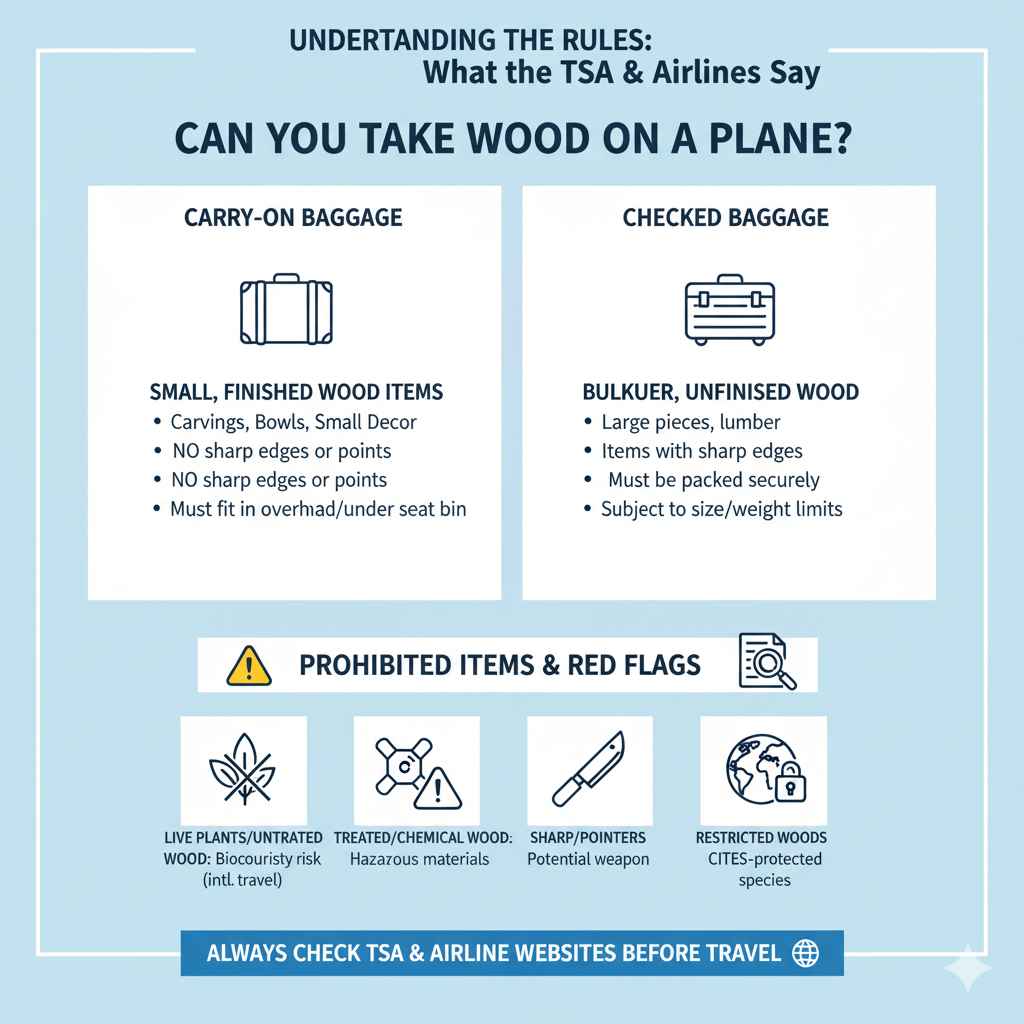
Understanding the Rules: What the TSA and Airlines Say
When you’re heading to the airport, the Transportation Security Administration (TSA) is your go-to for what you can and cannot bring through security checkpoints. For wood, the rules are generally straightforward, but there are always specifics to consider. The TSA’s primary concern at security is to identify items that could pose a threat. Most solid wood, in reasonable sizes, is not considered a threat.
However, the devil is often in the details. Treated wood, wood with sharp edges, or wood that could be misinterpreted as something else might raise flags. It’s always a good idea to check the most current TSA guidelines on their official website, What Can I Bring?, before you travel. Beyond the TSA, individual airlines also have their own policies regarding the size and weight of items you can bring onboard or check into the cargo hold.
Carry-On vs. Checked Baggage: Where Does Your Wood Belong?
The decision of whether your wood goes in the cabin with you or into the plane’s cargo hold depends largely on its size, shape, and quantity. Smaller wooden items, like a nicely carved bird or a small wooden box, are often fine to pack in your carry-on bag as long as they don’t have sharp points or exceed size limits. However, if your wooden item is bulky, has potentially sharp edges, or you are bringing a larger piece of lumber for a project, it will likely need to be checked.
Checked baggage is generally more forgiving when it comes to size and a few more types of materials. But, it’s crucial to pack your wood well to protect it from damage during transit and to ensure it doesn’t damage other luggage. Think of it like packing your favorite tools – you want them protected and secure.
Prohibited Items and Potential Red Flags
While plain, untreated solid wood is usually permitted, there are a few categories of wood that might cause issues:
- Live Plants/Wood: You generally cannot bring live plants or untreated wood that might carry pests or diseases across international borders. This is a significant biosecurity measure. Always check the USDA Animal and Plant Health Inspection Service (APHIS) for specific regulations when traveling internationally.
- Treated or Chemically Altered Wood: Wood treated with chemicals (like some types of lumber for specific industrial uses) might be subject to stricter regulations, especially if the chemicals are hazardous.
- Sharp or Pointed Objects: If your wooden item has very sharp edges, points, or could be construed as a weapon, it will likely be flagged. This is more common with decorative carvings or unfinished woodworking projects.
- Restricted Woods: Certain types of wood might be protected under international treaties (like CITES) to prevent illegal logging. While less common for hobbyists, it’s worth being aware of if you acquire exotic lumber.
Bringing Small Wooden Items: Crafty Carry-Ons
For smaller wooden pieces, like decorative items, small sculptures, or even carefully packed wooden tools, bringing them as carry-on luggage is often the easiest route. The key is to pack them securely within your carry-on bag so they don’t shift, get damaged, or risk injuring anyone if the bag is jostled.
What Qualifies as a “Small” Wooden Item?
Generally, if your wooden item can fit comfortably inside your approved carry-on bag without making the bag exceed weight or dimension limits, it’s a good candidate. Think of items you’d normally pack for personal use or gifts.
- Hand-carved figurines
- Small wooden boxes or bowls
- Wooden toys
- Small wooden musical instruments (like a ukulele, often with specific airline guidelines)
- Wooden handles of tools (if the tool itself is allowed in carry-on)
Packing Your Wooden Treasures for the Cabin
Protecting your wooden item is paramount. Even small pieces can chip or scratch. Here’s how to pack them:
- Wrap it Up: Use bubble wrap, soft cloth, or packing paper to cushion the item. Pay extra attention to delicate or protruding parts.
- Secure it in Place: If it’s a small item, place it in a sturdy box before wrapping. Then, pack this box inside your carry-on bag, filling any empty spaces with more soft material (like socks or t-shirts) to prevent movement.
- Consider the Shape: If your item has sharp points, wrap those areas extra carefully and perhaps place it in a more rigid outer layer, like a small hard-sided case if possible.
Transporting Larger Wood Pieces and Projects
When you have larger pieces of wood – whether it’s lumber for a project, a larger carving, or a wooden furniture piece – checked baggage becomes your primary option. This is where packing strategy really matters to ensure your wood arrives in one piece.
What About Lumber?
Can you bring a piece of lumber on a plane? Usually, yes, if it’s checked baggage. However, specific airlines will have rules about the maximum length and dimensions of checked items. Often, pieces over a certain length (e.g., 62 linear inches, which is length + width + height) will incur oversized baggage fees. It’s also highly recommended to protect the wood from the elements and rough handling.
How to Pack Lumber and Larger Wooden Items for Checked Baggage
This requires a bit more robust protection:
- Clean the Wood: Brush off any dirt, sawdust, or debris. This also helps in case it’s inspected.
- Bundle It: If you have multiple pieces of lumber, bundle them together securely with sturdy strapping tape or industrial-strength packing tape.
- Wrap for Protection: This is critical. Heavy-duty plastic sheeting, thick moving blankets, or specialized cargo wrap can protect the wood from moisture, scuffs, and impacts. Ensure the entire piece is covered.
- Consider a Crate or Box: For very valuable or delicate large items, consider building a simple wooden crate or an extra-durable cardboard shipping container. This provides the best protection.
- Label Clearly: Mark the package clearly with your name, contact information, and destination address. It’s also wise to mark it “Fragile” if appropriate, though handling can still be rough.
Airline Specifics: The Devil is in the Details
Every airline has its own specific baggage policies. These policies detail:
- Size and Weight Limits: The maximum combined linear dimensions (length + width + height) and weight allowed for standard checked bags and oversized items.
- Fees: Charges for checked bags, and particularly for oversized or overweight items.
- Prohibited Items: While wood is generally allowed, airlines might have their own rules about specific types or forms of materials.
It is absolutely essential to check your specific airline’s baggage policy on their website or by calling them before you fly. For example, you can find information on major US carriers like Delta Airlines, American Airlines, and United Airlines, which will give you a good idea of the standards. If you plan to fly with significant amounts of lumber or large wooden items, don’t hesitate to call the airline’s customer service directly to discuss your situation.
Customs and International Travel with Wood
When your travels take you across international borders, the rules become significantly stricter, especially regarding plant and animal products, which include wood. This is to prevent the spread of invasive pests and diseases that could devastate local ecosystems and economies. Always assume that bringing wood internationally requires special attention.
Phytosanitary Certificates Explained
For larger pieces of imported wood or if you are an exporter, you might need a phytosanitary certificate. This is an official document issued by the national plant protection organization of a country, certifying that a plant product (like wood) has been inspected and is free from quarantine pests. In the United States, this is typically handled by the USDA APHIS.
Key things to know about international wood travel:
- Untreated Wood is Risky: Raw, unfinished, or untreated wood is the most likely to be inspected and potentially confiscated at customs because it can harbor insects or diseases.
- Heat-Treated or Fumigated Wood: Wood that has been certified as heat-treated (HT) or fumigated is much more likely to be allowed. Look for the IPPC mark, which indicates compliance with international standards for wood packaging. This is common for shipping crates, but applying it to personal items might be complex.
- Declare Everything: It is always best to declare any wood products you are bringing into a country. Not declaring can lead to hefty fines or confiscation.
- Research Your Destination: Regulations vary wildly by country. Research the specific customs rules of your destination country well in advance. Websites of your destination country’s agriculture or customs departments are your best resource.
When in Doubt, Leave It Out
If you are unsure about the regulations for traveling internationally with wood, especially untreated or raw pieces, it is safer to leave it behind. The risk of confiscation, potential fines, and the hassle of dealing with customs can outweigh the benefit of bringing the item.
Tools You Might Need for Packing Wood
To ensure your wooden items travel safely, having the right packing supplies on hand is helpful. Here’s a list of items that can make a big difference:
- Heavy-duty packing tape
- Bubble wrap (large and small bubbles)
- Cardboard sheeting or moving boxes
- Strapping tape or rope (for bundling lumber)
- Shipping labels
- Scissors or a utility knife (for cutting materials, to be packed safely in checked luggage)
- Plastic wrap or moving blankets
A Sample Packing Checklist for Wooden Items
To make things even easier, here’s a quick checklist:
For Carry-On (Small Items):
- [ ] Item dusted and clean
- [ ] Wrapped in soft cloth or bubble wrap
- [ ] Placed in a protective inner box (if applicable)
- [ ] Packed securely in carry-on bag to prevent shifting
- [ ] Any sharp points well-padded
For Checked Baggage (Larger Items/Lumber):
- [ ] Wood cleaned of debris
- [ ] Bundled securely (if multiple pieces)
- [ ] Wrapped thoroughly with plastic sheeting/moving blankets
- [ ] Placed in a sturdy crate or heavy-duty box (optional, but recommended for high value)
- [ ] All seams sealed with heavy-duty tape
- [ ] Clearly and securely labeled with contact and destination information
- [ ] Checked airline’s size and weight restrictions
Can You Take Wood Carvings on a Plane?
Yes, generally, you can take wood carvings on a plane. They are typically considered personal items or decorative objects. As long as the carving does not have excessively sharp or dangerous points, is not a prohibited type of wood for international travel, and fits within your carry-on or checked baggage dimensions, it should be fine. The primary concerns would be its size, weight, and any potential sharp edges that could be a security risk. Ensure it’s packed well within your luggage to prevent damage during the flight.
Can You Take Wood Scraps on a Plane?
Taking small amounts of wood scraps is usually permissible, especially if they are part of a craft project or a small personal item. If they are loose and have sharp edges, it’s best to pack them securely in a box or bag within your checked luggage. For carry-on, ensure they are well-contained and don’t pose a safety risk. If you have a large quantity of scraps, they might be considered lumber or bulk material, and thus subject to checked baggage policies and potential fees.
Can You Take Finished Wood Products on a Plane?
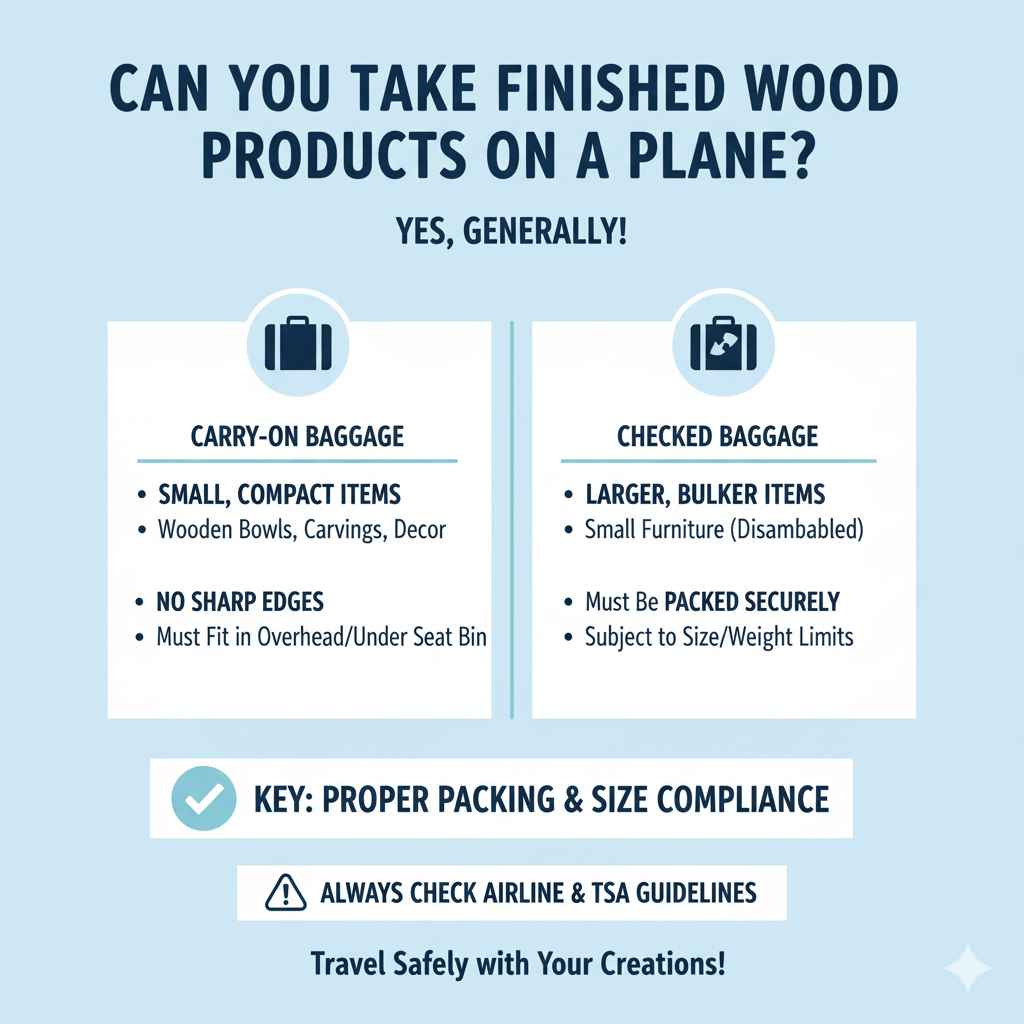
Generally, yes. Finished wood products like small furniture items, wooden bowls, decorative pieces, or even carefully disassembled wooden items can be taken on a plane. The key is how they are packed. For carry-on, ensure they are compact and safe. For larger items, they will need to be checked. Proper protective wrapping is essential for checked items to prevent damage from handling and transit. Again, always check airline-specific guidelines for size and weight limits.
Conclusion: Travel Smart with Your Wood
Navigating the world of air travel with woodworking materials or creations doesn’t have to be complicated. By understanding the basic TSA guidelines, checking your airline’s specific policies, and packing your wooden items with care and protection, you can bring your beloved wood and projects with you on your journeys. Remember that smaller items often fly in carry-on bags, while larger pieces and lumber are best suited for checked baggage. For international travel, always prioritize researching customs regulations and obtaining necessary certifications if required.
As a woodworking enthusiast, your materials are part of your passion. With a little foresight and proper preparation, you can ensure your wood travels safely and securely, ready for your next project or to be enjoyed at your destination. Happy travels and happy making!
Frequently Asked Questions about Wood on Planes
Q1: Is raw wood allowed on airplanes?
A: Yes, raw, untreated solid wood is generally allowed on airplanes. However, it is crucial to check with your specific airline for their baggage policies regarding size, weight, and any potential restrictions, especially for international flights where phytosanitary regulations are stricter to prevent pest and disease spread.
Q2: Can I bring a piece of lumber in my carry-on bag?
A: Typically, no. Lumber is usually too large or awkward for carry-on. It’s best to check lumber as part of your checked baggage, and be prepared for potential oversized baggage fees depending on the size and dimensions of the piece.
Q3: What if my wooden item has sharp edges?
A: If your wooden item has sharp edges or points (like a carving or tool handle), it may be subject to scrutiny by TSA. Ensure these areas are very well-padded and secured within your luggage. For carry-on, very sharp items might not be permitted, so checking with the TSA or packing it in checked baggage is advisable.
Q4: Do I need to declare wood when traveling internationally?
A: Yes, always declare any wood products you are bringing into a foreign country. Many countries have strict regulations against importing untreated wood to protect their environment from pests and diseases. Failure to declare can lead to confiscation, fines, or other penalties.
Q5: What is the IPPC mark, and why is it important for wood?
A: The IPPC mark stands for International Plant Protection Convention. It signifies that wood packaging material (like crates or pallets) has been treated (usually heat-treated, marked as HT) to kill pests and reduce the risk of spreading infestation. This mark is essential for international shipments and can help facilitate smoother customs passage for treated wood.
Q6: Can I bring wood glue or finishes on a plane?
A: This depends on the quantity and type. Adhesives and finishes are often considered hazardous materials. For carry-on, small quantities (under 3.4 oz/100 ml) might be allowed in your liquids bag, but larger containers will likely need to be checked. It’s best to check the TSA’s guidelines on hazardous materials and your airline’s policies for checked baggage contents.