Can You Cut Granite With A Tile Saw? Essential Guide
Yes, you can absolutely cut granite with a tile saw! However, it’s crucial to use the right blade, understand the process, and take necessary safety precautions. This guide will walk you through everything you need to know to successfully cut granite using a tile saw, making your DIY projects achievable.
Planning a DIY project that involves granite can be exciting, but the thought of cutting such a hard material often brings up questions. One of the most common concerns is whether a standard tile saw, often used for softer materials like ceramic or porcelain, can handle the toughness of granite. The good news is, with the correct setup and a bit of know-how, it’s entirely possible!
Many DIYers and homeowners hesitate to tackle granite because they believe it requires specialized, expensive equipment. This often leads to hiring professionals, which can be costly. But what if you already have a tile saw, or can get one relatively affordably? This guide is designed to demystify the process. We’ll break down exactly what you need to do, step-by-step, to cut granite safely and effectively. You’ll gain the confidence to tackle your granite cutting tasks and achieve professional-looking results without breaking the bank. Let’s get started on making your granite projects a reality!
Why the Question of Cutting Granite with a Tile Saw Arises
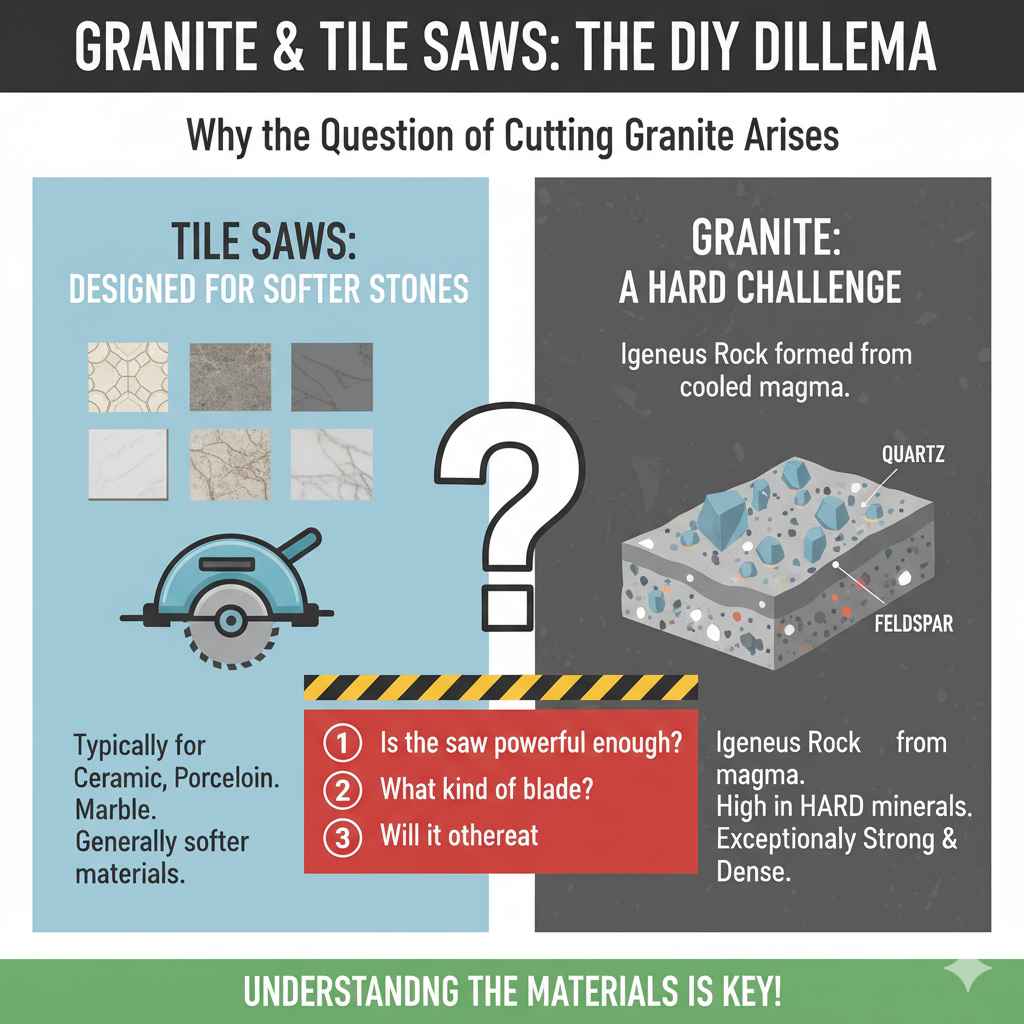
Granite is a beautiful and incredibly durable natural stone. Its hardness is one of its most prized qualities, making it resistant to scratches and heat in kitchens and bathrooms. However, this very hardness is what makes many DIYers wonder if less robust tools, like a typical tile saw, can actually cut it.
Most tile saws are designed to handle materials like ceramic, porcelain, and natural stones such as marble. These are generally softer than granite. Granite is an igneous rock, meaning it formed from cooled magma, and its composition includes hard minerals like quartz and feldspar. This gives it exceptional strength and density.
The concern, therefore, is valid: will a tile saw be powerful enough? And if so, what kind of blade is needed? Will the saw overheat? These are all important considerations that we’ll address. Understanding the nature of granite and the capabilities of a tile saw is the first step to confidently answering the question: “Can you cut granite with a tile saw?”
Understanding Tile Saws and Their Capabilities
Before we dive into cutting granite, let’s quickly understand what a tile saw is and how it works. Most common tile saws are wet saws. This means they use a continuous supply of water to:
Cool the blade: High-speed cutting generates a lot of heat. Water prevents the blade from overheating and becoming damaged, and also prevents the material being cut from scorching.
Reduce dust: Cutting stone creates fine silica dust, which is hazardous to inhale. The water traps this dust. You can learn more about the dangers of crystalline silica exposure from the Occupational Safety & Health Administration (OSHA) here: https://www.osha.gov/silica.
Lubricate the cut: Water helps the blade move smoothly through the material, making for a cleaner cut and reducing strain on the motor.
The heart of a tile saw is its motor, which spins a cutting blade at high speeds. The type of blade you use is absolutely critical, especially when cutting harder materials like granite.
The Essential Tool: The Right Blade for Cutting Granite
This is where the magic happens, and it’s the single most important factor in successfully cutting granite with a tile saw. You cannot use a standard ceramic or porcelain tile blade for granite. You need a blade specifically designed for cutting hard stone.
Diamond Blades: Your Granite-Cutting Companion
When cutting granite, a diamond blade is non-negotiable. These blades have industrial diamonds embedded along their cutting edge. Diamonds are the hardest known natural substance, allowing them to grind through dense materials like granite.
There are a few types of diamond blades to consider, and for granite, you’ll typically want a continuous rim or a segmented rim blade designed for stone.
Continuous Rim Blades: These blades have a smooth, unbroken edge of diamonds. They are excellent for producing very clean, chip-free cuts, which is ideal for visible edges of granite countertops or backsplashes. They tend to run cooler and quieter than segmented blades.
Segmented Rim Blades: These blades have the diamond edge in segments, with gaps in between. The gaps help flush away debris and water more effectively, making them ideal for faster cutting through very hard and thick materials. They can sometimes create a slightly rougher edge than continuous rim blades.
For granite, a continuous rim diamond blade is generally preferred for a cleaner finish, especially for DIY projects where aesthetics are important. Always ensure the blade specifies it’s for cutting “hard stone” or “granite.”
Choosing the Right Diamond Blade – Key Features to Look For
When you’re at the store or browsing online, keep these points in mind:
- “For Granite” or “Hard Stone”: This is the most important label.
- Blade Diameter: Match the diameter to your tile saw. Common sizes are 7-inch, 10-inch, and 12-inch. Larger blades can often cut thicker material.
- Arbor Size: This is the size of the hole in the center of the blade, which must match the spindle on your tile saw.
- Segment Type: As discussed, continuous rim is often best for granite for a cleaner cut.
- Quality: While it might be tempting to go for the cheapest option, a higher-quality diamond blade will last longer and provide better results, especially on tough materials like granite.
Blade Maintenance: Keep it Sharp and Clean
Even the best diamond blade can become less effective if not maintained. Keep the blade clean from slurry and ensure it’s properly seated on the saw.
Essential Safety Gear: Protecting Yourself
Cutting granite isn’t like cutting a piece of wood. It’s a dense, potentially dusty, and powerful process. Your safety is paramount. Never skip safety precautions.
Here’s what you absolutely need:
Safety Glasses or Goggles: Essential to protect your eyes from flying debris or water spray. Prescription glasses are not enough on their own.
Hearing Protection: Tile saws, especially when cutting hard materials, can be quite loud. Earplugs or earmuffs will protect your hearing.
Dust Mask or Respirator: Even with a wet saw, some airborne silica dust can escape. A good respirator (e.g., an N95 or P100 rated mask) is crucial for protecting your lungs. Visit the NIOSH website for information on respirator selection.
Gloves: Water-resistant gloves will help you grip the granite workpiece and protect your hands from the wet, abrasive material.
Appropriate Clothing: Wear sturdy shoes, long pants, and avoid loose clothing or jewelry that could get caught in the saw.
Setting Up Your Tile Saw for Granite Cutting
This is where we get hands-on. A proper setup ensures that your saw operates correctly and safely for this tougher material.
Choosing the Right Location
Ventilation: While wet saws dramatically reduce dust, place the saw in a well-ventilated area. If cutting indoors, ensure good air circulation.
Water Source: You’ll need a consistent water supply. Most portable tile saws have a reservoir. Make sure it’s filled and the pump is working correctly.
Stable Surface: Place the saw on a sturdy, level surface. Vibration can cause the saw to walk, which is dangerous.
Power: Ensure you have a safe electrical connection, preferably on a grounded outlet with a Ground Fault Circuit Interrupter (GFCI) for added safety in wet environments. Check your saw’s manual for power requirements.
Preparing the Saw
1. Install the Correct Blade:
Ensure the saw is unplugged.
Remove the old blade (if any).
Install your new, granite-appropriate diamond blade. Make sure it’s the correct diameter and arbor size.
Follow the manufacturer’s instructions for securing the blade. It needs to be snug but not overtightened. Blades have a directional arrow; ensure it spins in the correct direction as indicated on the blade and the saw.
2. Fill the Water Reservoir:
Use clean water. Some professionals recommend adding a small amount of dish soap to help lubricate and prevent slurry buildup, but check your saw’s manual. Too much soap can create excessive foam.
Fill the reservoir to the recommended level.
3. Check the Water Pump and Lines:
Turn the saw on briefly (without granite) to ensure the water pump is working and water is adequately flowing to the blade. This is critical!
4. Inspect the Saw’s Guides and Fences:
Ensure all guides and fences are clean and square. These will help you make accurate cuts.
A properly set up saw is key to a successful and safe granite cutting experience. Don’t rush this step!
Step-by-Step Guide: Cutting Granite with a Tile Saw
Now that everything is set up, here’s how to make that cut safely and effectively.
Step 1: Measure and Mark Your Granite
Accuracy is key. Measure twice, cut once!
- Use a high-quality tape measure.
- Use a pencil or a fine-tip permanent marker to mark your cut line. For darker granite, a white pencil or chalk might be more visible.
- If you’re making multiple cuts, ensure your lines are precise and consistent.
Step 2: Prepare Your Granite Workpiece
Ensure the granite is stable and supported.
- Place the granite on the saw’s cutting table.
- Position it so that the cutting line is aligned with the blade.
- Ensure that both the portion of the granite you are keeping and the piece being cut off are adequately supported. They should not droop or hang off the edge of the saw table. You might need extra supports or sawhorses if you’re cutting a large slab.
- The granite should be pushed through the blade at a steady, consistent pace. Do not force it.
Step 3: Make the Cut
This is the main event. Go slow and steady.
- Put on all your safety gear.
- Turn on the water pump and let it run for a minute to ensure adequate water flow to the blade.
- Turn on the saw. Let it reach full speed before you start cutting.
- Begin feeding the granite slowly and steadily into the blade. Let the blade do the work.
- Maintain a consistent speed. If you push too hard, you can bind the blade, overheat the motor, or chip the granite.
- Keep the granite flat and stable throughout the cut.
- Never pull the granite back through the blade. Always cut in one direction.
- When you reach the end of the cut, turn off the saw.
- Allow the blade to stop spinning completely before removing the granite.
Step 4: Cool Down and Clean Up
After the cut, proper cleanup is essential.
- Let the saw run with the water for a few minutes to flush out the blade and the reservoir.
- Turn off the saw and unplug it.
- Carefully remove the granite workpiece.
- Drain the reservoir and clean out the slurry (a mixture of water, stone particles, and blade grit). This prevents buildup and keeps the saw running efficiently.
- Clean the saw and the surrounding area.
- Allow the blade to dry thoroughly before storing.
Tips for Cutting Different Types of Granite and Specific Cuts
Not all granite is created equal, and some cuts are trickier than others.
Thicker Granite Slabs
Larger Blade: If you have a 10-inch or 12-inch saw, it can handle thicker granite than a smaller 7-inch saw.
Multiple Passes: For very thick material, you might need to make two or more passes. Make the first pass about halfway through the thickness, then move the granite back and make the second pass to complete the cut. This helps prevent blade binding and overheating. Always support the granite adequately on both sides if making multiple passes.
Creating Straight Cuts vs. Curves
Straight Cuts: Tile saws, especially with a good fence or guide, are excellent for straight cuts. Ensure your marking is impeccable.
Curved Cuts: Tile saws are not designed for freehand curved cuts. For curves, you’ll need a different tool like a wet polisher with a diamond grinding pad or a jigsaw with a diamond blade designed for curves. Trying to force a curve with a standard tile saw will likely result in a chipped or broken blade, damaged granite, and potentially dangerous kickback.
Dealing with Chipping
Use a High-Quality Diamond Blade: A good blade, especially a continuous rim blade, will minimize chipping.
Slow and Steady: Rushing the cut is a primary cause of chipping.
Support the Edges: Ensure the granite is well-supported, especially on the exit side of the blade. A piece of scrap plywood underneath can help support the exit edge.
Tape the Cut Line: Some people find that applying painter’s tape along the cut line on both sides of the granite can help reduce chipping. The tape acts as a buffer.
Consider Professional Help for Finished Edges: If you need a perfect, chip-free edge for a countertop, consider making the rough cut with your tile saw and then hiring a professional stone fabricator to finish the edge, or use a specialized edge polisher if you’re confident in your skills.
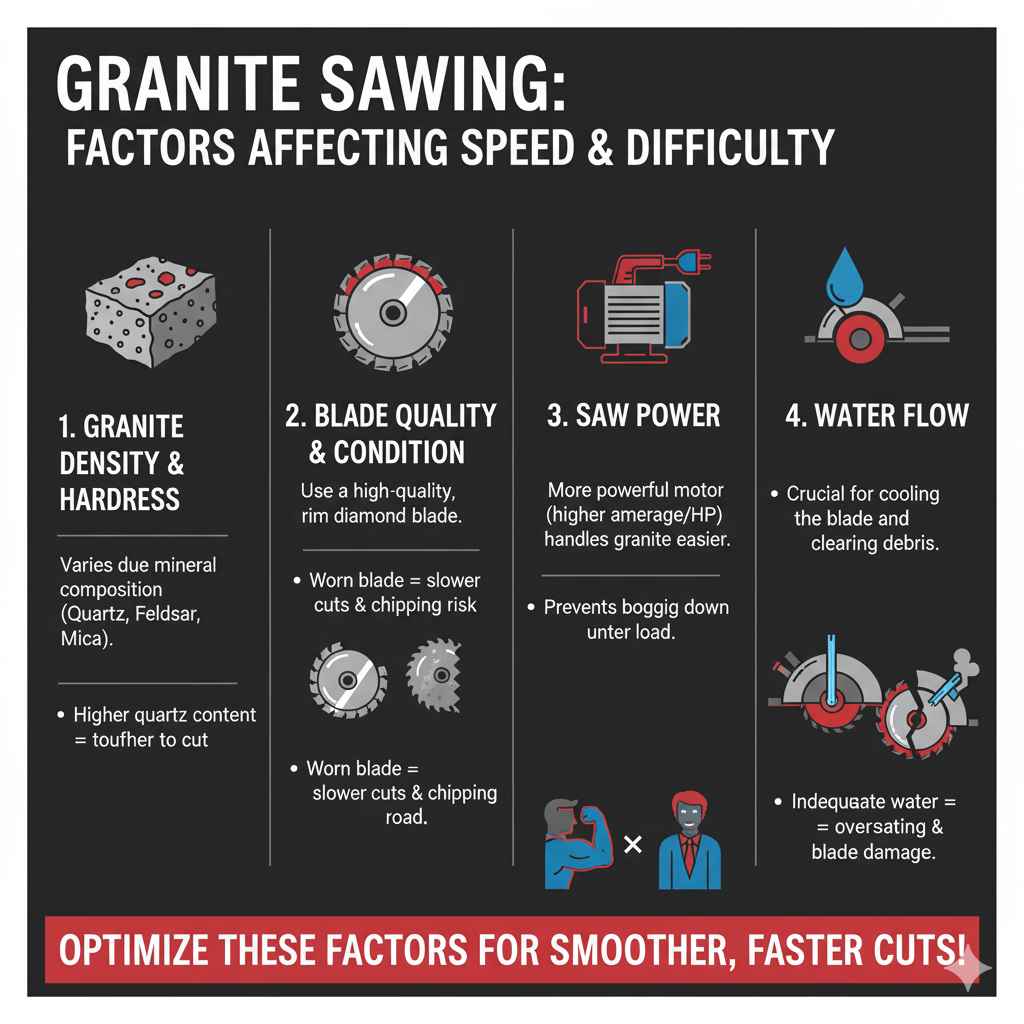
Granite Sawing: Factors Affecting Speed and Difficulty
Several factors will influence how easily and quickly you can cut granite.
Granite Density and Hardness
As mentioned, granite is comprised of different minerals. Some granites are denser and harder than others. For example, a granite rich in quartz might be tougher to cut than one with more feldspar.
Blade Quality and Condition
A worn-out or low-quality diamond blade will significantly slow down your cutting speed and increase the risk of chipping. Always use a blade in good condition.
Saw Power
A more powerful tile saw motor will handle granite more easily and maintain speed better under load compared to a less powerful model. If your saw struggles or the blade slows down considerably, you might be pushing too hard or your saw might not be suited for frequent granite cutting.
Water Flow
Inadequate water flow is a recipe for disaster. It leads to overheating, blade damage, and poor cutting performance. Keep that water flowing!
Comparison: Tile Saw vs. Specialized Stone Saws
| Feature | Standard Tile Saw (with Diamond Blade) | Specialized Stone Saw (e.g., Wet Slab Saw) |
|---|---|---|
| Cutting Capacity | Moderate; best for thinner slabs. | High; designed for thicker and denser slabs. |
| Cut Quality | Good to very good with the right blade. | Excellent; provides professional-grade precision and smooth edges. |
| Speed | Slower; may require multiple passes on thick materials. | Faster and more efficient for large or thick cuts. |
| Cost | Affordable; suitable for most DIY projects. | Expensive; typically used by professionals or fabricators. |
| Portability | Lightweight and easy to transport. | Heavy, often stationary or semi-portable. |
| Dust Control | Very good with proper water use. | Excellent with built-in water systems and higher flow rates. |
| Ideal For | Occasional cutting, small to medium home projects. | Frequent, heavy-duty use, large slabs, or stone countertops. |
While a specialized stone saw is the professional’s tool of choice, a quality tile saw paired with the correct diamond blade can be a perfectly viable option for the typical DIYer needing to make a few cuts.
Troubleshooting Common Issues
Even with the best preparation, you might encounter problems. Here are a few common ones and how to address them.
Blade Binding
Cause: Forcing the material, cutting too fast, insufficient water, or the cut closing in behind the blade.
Solution: Always feed the granite at a steady, moderate pace. Ensure ample water flow. If cutting a long piece, ensure both ends are supported so the cut doesn’t close. If binding occurs, turn off the saw immediately and wait for the blade to stop before trying to free the granite.
Excessive Chipping
Cause: Dull or incorrect blade, too much speed, poor support, or brittle granite.
Solution: Use a sharp, appropriate diamond blade. Slow down your feed rate. Ensure the granite is well-supported. Try the painter’s tape trick.
Overheating Blade/Motor
Cause: Insufficient water, blade dullness, pushing too hard, or a prolonged cut on a less powerful saw.
* Solution: Ensure maximum water flow to the blade. Slow down your cutting. Allow the saw and blade to cool periodically if making many cuts. A quality diamond blade stays cooler when cutting correctly.
Frequently Asked Questions (FAQ)
Can any tile saw cut granite, or do I need a specific type?
You can use most wet tile saws to cut granite, but the key is using a diamond blade specifically designed for hard stone or granite. The saw’s motor needs to be powerful enough to maintain speed. Look for saws with at least a 1/2 horsepower motor for best results on granite.