Are Harbor Freight Chainsaws Any Good? Proven Buy!
Yes, Harbor Freight chainsaws can be a surprisingly good buy for specific tasks and budgets, especially for homeowners, DIYers, and occasional users. They offer a budget-friendly entry into chainsaw ownership, and many models prove reliable for light to medium-duty work when used correctly and maintained properly.
As a DIYer, I know the thrill of a new project and the challenge of finding the right tools without breaking the bank. Chainsaws can seem intimidating, and their prices can be even more so! You might be looking at a weekend firewood chore, trimming some branches, or even a larger backyard project, and wondering: “Are Harbor Freight chainsaws any good?” It’s a smart question. You want a tool that gets the job done safely and reliably, but you don’t want to spend a fortune. Let’s cut through the confusion and find out if these budget-friendly saws are up to the task.
Unpacking the Harbor Freight Chainsaw Reputation
Harbor Freight Tools has built a reputation for offering tools at incredibly low prices. This often leads to questions about quality. When it comes to chainsaws, there’s a spectrum of opinions. Some folks swear by them for light duty, while others have had less than stellar experiences. The key is understanding what you’re getting and for what purpose.
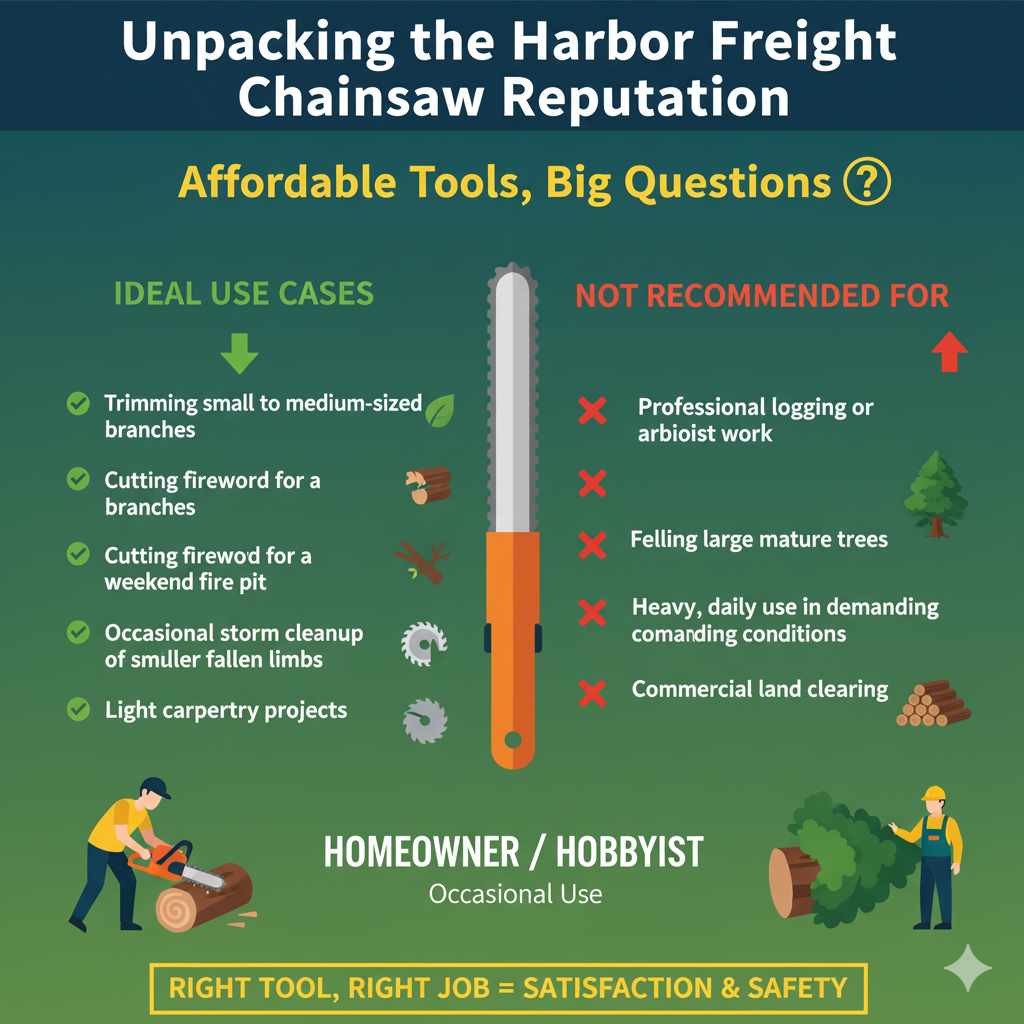
Harbor Freight chainsaws are generally designed for the homeowner or hobbyist who needs a saw for occasional use. This means tasks like:
- Trimming small to medium-sized branches
- Cutting firewood for a weekend fire pit
- Occasional storm cleanup of smaller fallen limbs
- Light carpentry projects that require occasional cuts
They are typically NOT designed for:
- Professional logging or arborist work
- Felling large, mature trees
- Heavy, daily use in demanding conditions
Choosing the right tool for the right job is crucial for satisfaction and safety. We’ll explore what makes certain Harbor Freight models shine and where you might want to consider other options.
Harbor Freight Chainsaw Lines: What to Expect
Harbor Freight offers both gas-powered and electric (corded and battery-powered) chainsaws. Each has its place:
Gas Chainsaws
These are the workhorses for many outdoor tasks. Harbor Freight offers various gas models, typically under brands like Chicago Electric or sometimes a specific store brand. They range in bar length and engine size, from smaller 10-inch saws up to 18-inch or sometimes even 20-inch models.
Pros:
- More power for tougher jobs
- Unlimited use without recharging or cord length limitations
- Generally lighter than electric options for their power output
Cons:
- Require fuel mixing (for 2-stroke engines)
- More maintenance (spark plugs, air filters, carburetor)
- Can be louder and produce exhaust fumes
- Starting can sometimes be difficult, especially when cold
Electric Chainsaws (Corded & Battery)
These are fantastic for homeowners with smaller yards or those who prioritize ease of use and low maintenance. Harbor Freight’s electric offerings are becoming increasingly popular.
Pros:
- Easy to start (push a button)
- Less maintenance (no fuel mixing, fewer moving parts)
- Quieter operation
- No exhaust fumes, making them suitable for indoor or close-to-home use
- Battery models offer good portability
Cons:
- Corded models are limited by outlet availability and cord length
- Battery models have run-time limitations and require charging time
- Generally less powerful than comparable gas models
Top Harbor Freight Chainsaw Picks (and Why They’re “Proven Buys”)
While models change, certain types of saws at Harbor Freight consistently get positive nods from users who understand their capabilities. We’ll look at what makes a saw a potential “proven buy” from their selection.
The Compact Electric Chainsaw (for light trimming)
Harbor Freight often carries small electric chainsaws, sometimes with 6-inch or 8-inch bars. These are perfect for quick tasks around the garden.
Ideal for: Pruning small branches, cutting small logs for craft projects, light cleanup.
Why it’s a good buy: Extremely affordable, very lightweight, easy to handle for beginners, minimal maintenance. They are excellent for quick fixes where a large, heavy saw would be overkill and more dangerous.
The Mid-Size Battery Chainsaw (for convenience)
As battery technology improves, Harbor Freight has introduced more capable battery-powered chainsaws. Look for models with at least a 12-inch or 14-inch bar.
Ideal for: Homeowners with multiple battery-powered yard tools, cutting firewood for occasional use, tidying up after a storm. The convenience of no cords or gas mixing is a huge plus.
Why it’s a good buy: Offers a great balance of power and portability for many homeowner tasks. Their user-friendliness makes them less intimidating for DIYers. Keep an eye on their brand promotions, as batteries and chargers are often bundled.
The Budget Gas Chainsaw (for occasional firewood)
Harbor Freight’s gas chainsaws, especially those in the 16-inch to 18-inch range, can be surprisingly capable for their price point.
Ideal for: Cutting a moderate amount of firewood, clearing larger brush, limbing downed trees. For those who need gas power but only use it a few times a year, these can be a smart investment.
Why it’s a good buy: If you’re disciplined with maintenance and don’t push it beyond its intended capacity, these saws can provide good value. Many users find they perform well for seasonal firewood needs.
Factors to Consider for a “Proven Buy”
What makes a Harbor Freight chainsaw a “proven buy” isn’t just the price tag. It’s about matching the saw to your needs and expectations. Here’s what I look for:
1. Bar Length vs. Your Needs
The bar length determines the maximum diameter of wood you can cut in a single pass:
- 6-8 inch bar: Ideal for trimming small branches and bushes.
- 10-12 inch bar: Good for medium branches and small firewood logs.
- 14-16 inch bar: Suitable for cutting most typical firewood sizes and smaller trees.
- 18-20 inch bar: For felling larger trees and processing substantial amounts of firewood. (While HF offers these, their smaller saws are often the better “proven buy” relative to their price.)
For beginners, starting with a 10-14 inch bar is often the sweet spot for manageability and versatility.
2. Power Source: Gas vs. Electric
As discussed, this is a primary decision. If you value simplicity and quiet, go electric. If you need raw power and unlimited runtime for a large acreage, gas might be your choice. Always consider the power output (cc for gas, amps/volts for electric) relative to the bar length.
3. User Reviews and Store Ratings
Don’t underestimate the power of community feedback! Before purchasing any Harbor Freight tool, I always check their website for customer reviews. Look for patterns in comments regarding performance, durability, and ease of use. Pay attention to reviews from people who appear to be using the saw for similar tasks as you intend.
4. Maintenance and Care
A “proven buy” also depends on your commitment to maintenance. Even the best saw will fail if neglected. For any chainsaw, especially one at a lower price point, regular cleaning, chain sharpening, and proper fuel/oil are paramount. Learn about chainsaw maintenance basics here: USDA Forest Service Chainsaw Safety and Maintenance.
5. Price and Warranty
Harbor Freight’s pricing is their major draw. Their tools usually fall into one of two categories: incredibly cheap or budget-friendly with a coupon. Always check for sales and use a coupon if you have one! Also, investigate their warranty policy for chainsaws. Understanding what’s covered and for how long can offer added peace of mind.
Comparing Harbor Freight Chainsaws
To help you visualize, let’s consider a hypothetical comparison. While specific models and their availability can vary, this table illustrates the general trade-offs you might see at Harbor Freight.
| Feature | Harbor Freight Compact Electric (e.g., 8″ bar) | Harbor Freight Mid-Size Battery (e.g., 14″ bar) | Harbor Freight Budget Gas (e.g., 18″ bar) |
|---|---|---|---|
| Best For | Light trimming, small branches, craft wood | Homeowner cutting, small firewood, convenience | Occasional firewood, moderate limbing |
| Power Source | Corded Electric | Battery (often 20V or 40V system) | Gasoline (2-stroke engine) |
| Ease of Use | Very High | High | Medium |
| Maintenance | Very Low | Low | Medium (requires fuel mixing, filters, spark plug) |
| Noise Level | Low | Medium | High |
| Portability | High (but tethered by cord) | High | Medium (fuel adds weight) |
| Price Point | Lowest | Low to Medium | Medium |
| Typical Crowd-Sourced Review Trend | “Great for quick, small jobs!” | “Convenient and surprisingly capable for the price.” | “Works fine for my annual firewood needs if I maintain it.” |
Safety First: Essential Chainsaw Practices
No matter the brand or price, a chainsaw is a powerful and potentially dangerous tool. Safety should always be your top priority. Harbor Freight provides safety information with their tools, but here are some fundamental rules:
- Read the Manual: Seriously, read it cover to cover before your first use.
- Wear Personal Protective Equipment (PPE): This includes a helmet with a face shield or safety glasses, hearing protection (earmuffs or plugs), heavy-duty gloves, and chainsaw-resistant chaps or pants. Steel-toed boots are also highly recommended. You can find excellent resources on safety gear from organizations like the Occupational Safety and Health Administration (OSHA) chainsaw safety standards.
- Proper Stance and Grip: Always maintain a firm grip with both hands, keep the saw close to your body, and ensure your feet are securely planted. Never operate a chainsaw with one hand.
- Be Aware of Kickback: This is a sudden, violent upward or backward motion of the chainsaw. It happens when the tip of the guide bar hits an object or when the wood closes in and pinches the saw chain in the cut. Always keep the bar tip clear and be mindful of potential pinching.
- Clear Your Work Area: Remove any debris, branches, or obstacles that could cause you to trip or interfere with your cutting.
- Never Work Alone: Always let someone know where you are and what you’re doing.
- Maintain Your Saw: A sharp chain cuts more efficiently and safely. Dull chains can lead to fatigue and increase kickback risk.
Pros and Cons of Harbor Freight Chainsaws
Let’s break down the general advantages and disadvantages you’ll encounter when considering a Harbor Freight chainsaw:
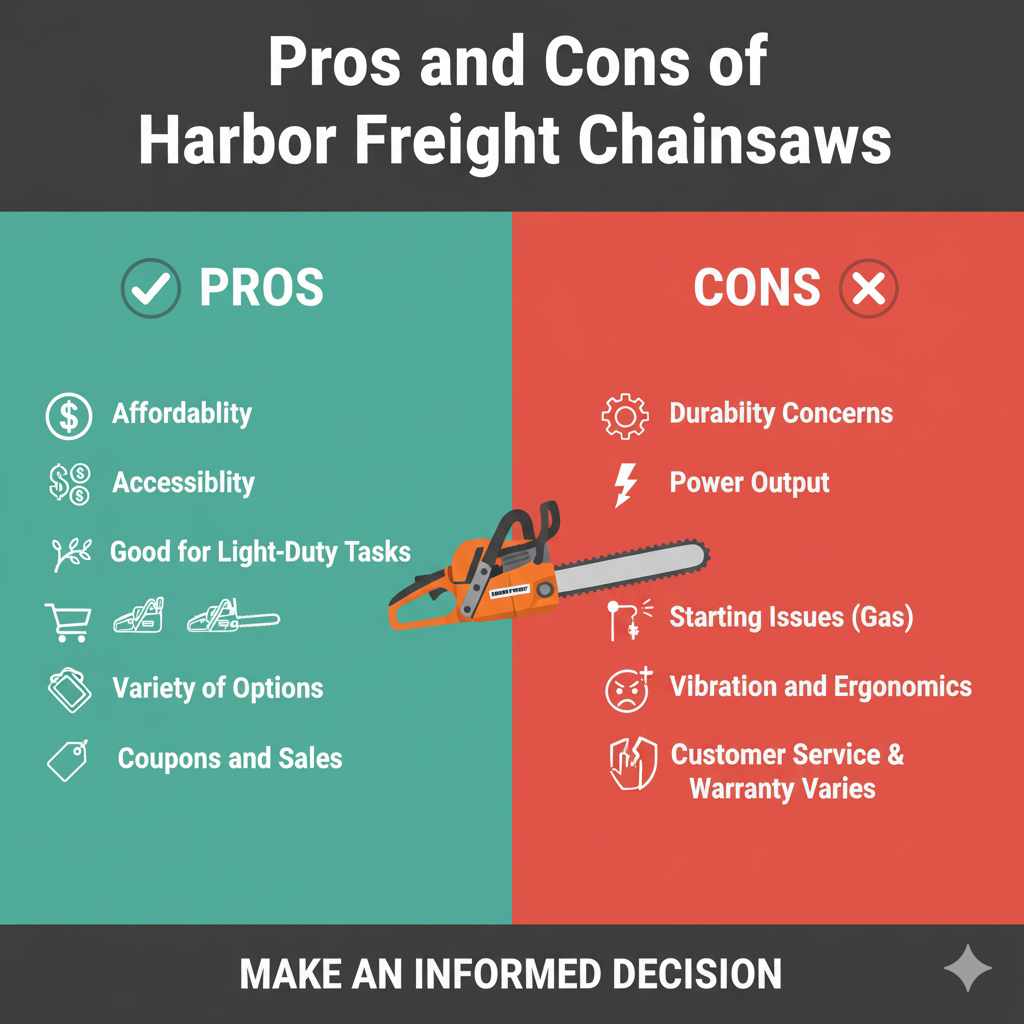
Pros:
- Affordability: This is their biggest selling point. You can often get a functional chainsaw for significantly less than comparable models from other brands.
- Accessibility: Harbor Freight stores are widespread, making it easy to purchase and return tools if needed.
- Good for Light-Duty Tasks: For homeowners who only need a saw occasionally for trimming, light firewood, or small projects, they can be perfectly adequate.
- Variety of Options: They offer gas, corded electric, and battery-powered models to suit different preferences and power needs.
- Coupons and Sales: With strategic use of coupons and looking for sales, the value proposition becomes even stronger.
Cons:
- Durability Concerns: While some models hold up well, others may not be built for heavy-duty or prolonged use. Components might wear out faster than on premium brands.
- Power Output: Generally, their saws might not offer the same raw power or cutting speed as more expensive professional-grade chainsaws, especially in the gas models.
- Starting Issues (Gas): Some users report gas models can be difficult to start, particularly in colder weather or if not properly maintained.
- Vibration and Ergonomics: For extended use, some models might be less comfortable due to higher vibration levels or less refined ergonomics.
- Customer Service & Warranty Varies: While they have a return policy, the process for warranty claims on tools can sometimes be less straightforward than with specialized tool manufacturers.
FAQ: Your Harbor Freight Chainsaw Questions Answered
Here are some common questions beginner DIYers have about Harbor Freight chainsaws:
Q1: Are Harbor Freight chainsaws good for cutting down trees?
A: For small to medium trees (a few inches in diameter), a properly maintained gas model from Harbor Freight might suffice. However, for felling larger trees, it’s generally safer and more efficient to invest in a more powerful, professional-grade chainsaw, which often comes with better safety features and reliability for such demanding tasks. Always prioritize safety and the right tool for the job.
Q2: How often should I sharpen my Harbor Freight chainsaw chain?
A: You should sharpen your chainsaw chain whenever it starts to cut slowly, produces sawdust instead of chips, or if you notice it wandering off the cut line. For occasional home use, this might be every few hours of actual cutting time. Regular maintenance is key to performance and safety. Think about the sharpness; if the saw is forcing its way through the wood, it needs sharpening.
Q3: What kind of oil should I use in my Harbor Freight gas chainsaw?
A: For the chain and bar oil, use a dedicated bar and chain lubricant designed for chainsaws. This helps to lubricate the chain and bar, reducing friction and heat. For the fuel mix (if it’s a 2-stroke engine), use a high-quality 2-stroke engine oil mixed with regular unleaded gasoline according to the ratio specified in your owner’s manual (commonly 40:1 or 50:1). Using the correct fuel mix is crucial for engine longevity.
Q4: Can I find replacement parts for Harbor Freight chainsaws?
A: Replacement parts are sometimes available directly from Harbor Freight, especially for more common wear items like chains and air filters. For specific engine components or guide bars, availability might be more limited than for major brands. Checking the Harbor Freight website or inquiring at your local store is the best way to find out. Sometimes, generic parts may fit, but always ensure compatibility.
Q5: Are there any specific Harbor Freight chainsaw models that are consistently recommended?
A: While models are constantly updated, typically, their smaller electric and battery-powered saws are well-received for light tasks, and their larger gas models tend to get favorable reviews from users who manage their expectations and perform routine maintenance. It’s best to check recent customer reviews on the Harbor Freight website for the most current model recommendations.
Q6: How do I store my Harbor Freight chainsaw when I’m not using it?
A: For long-term storage (over a month), it’s best to prepare the saw properly. For gas saws, run the engine dry of fuel or add a fuel stabilizer. Clean the saw thoroughly. For both gas and electric saws, store them in a dry, dust-free place, preferably in a case or covered to protect moving parts. Ensure the chain brake is engaged and the chain is clean and lightly oiled.