Are Gas Chainsaws Banned in California? Essential Update
No, gas chainsaws are not entirely banned in California. However, regulations are phasing out the sale of new gas-powered handheld equipment, including chainsaws, due to emissions standards. Battery-powered and electric options are becoming the norm for new purchases. This guide will clarify what’s happening and what it means for you.
Hey there, DIY friends and aspiring woodworkers! Md Meraj here. If you’re anything like me, you’ve probably heard some buzz – maybe even a little confusion – about gas chainsaws and California. It’s a topic that can make anyone scratch their head, wondering if their trusty gas-powered buddy is still welcome or if it’s off to the workshop in the sky. Don’t worry! This isn’t a complicated legal drama. It’s a practical update that affects how we choose our tools. We’ll break down exactly what’s going on with gas chainsaws in the Golden State, so you can make informed decisions for your projects. Let’s clear the air, shall we?
Understanding the California Emissions Regulations
California has always been at the forefront of environmental protection, and that includes setting strict standards for emissions from all sorts of equipment. This often means that things that produce exhaust fumes, like gas-powered engines, are scrutinized more closely. The goal is to improve air quality and reduce our collective carbon footprint. These regulations aren’t new, but they’ve been evolving, leading to the current situation with handheld equipment.
Think of it like different car emission standards over the years. For decades, California has pushed for cleaner vehicles, and now that same focus is turning towards smaller engines because, believe it or not, these small engines can contribute a significant amount to air pollution, especially in densely populated areas. The state is targeting specific types of equipment that are commonly used and can have a substantial impact on air quality.
What Exactly is Being Phased Out?
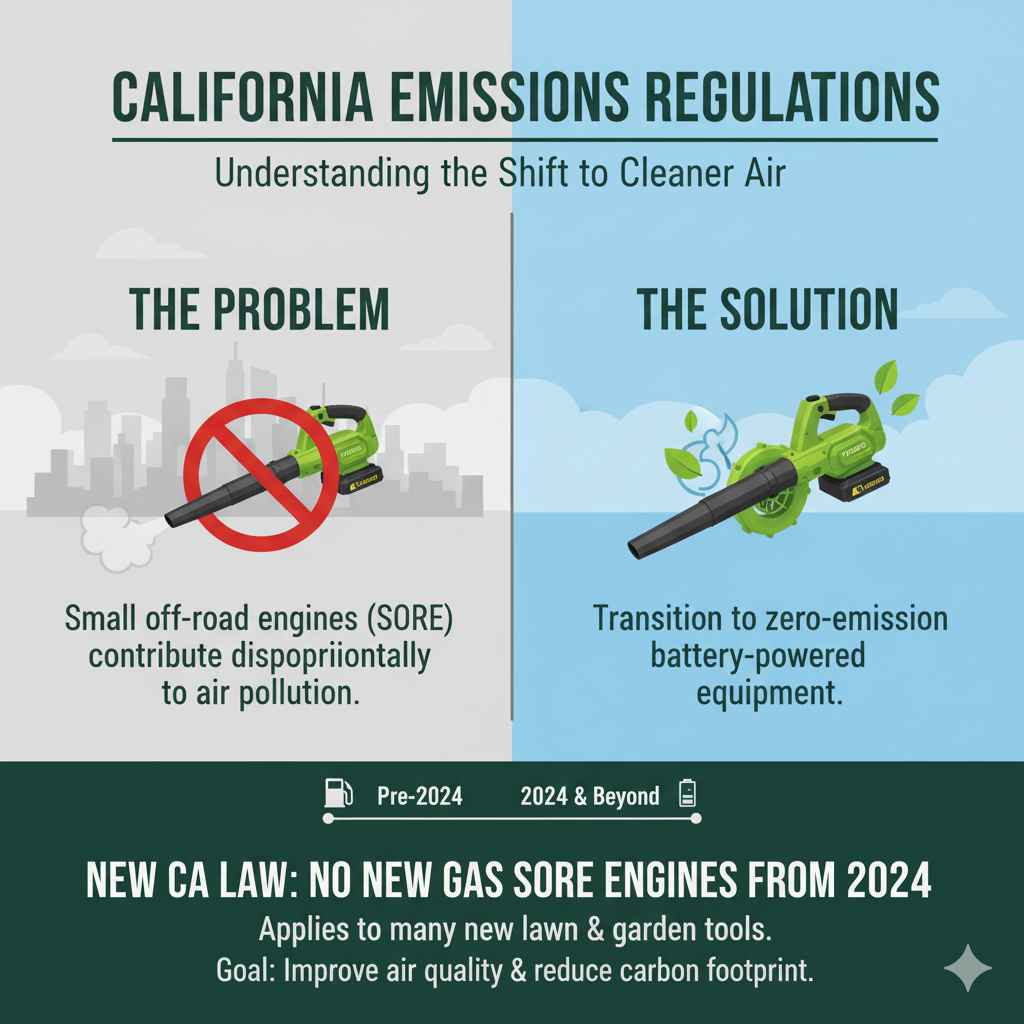
The key legislation impacting gas chainsaws is Assembly Bill 1346 (AB 1346), signed into law by Governor Gavin Newsom. This bill takes a broad approach to phasing out the sale of new “emissions-certified” handheld outdoor power equipment. While it didn’t explicitly name “chainsaws” in its initial announcement, the definition of this equipment includes engines that power many common tools found in garages and workshops.
Here’s a breakdown of what AB 1346 targets:
- Types of Equipment: It covers a wide range of handheld equipment powered by small off-road engines (SORE). This includes, but is not limited to, chainsaws, leaf blowers, string trimmers, hedge trimmers, and more.
- The Goal: The objective is to eliminate the sale of new gasoline-powered models of these specific tools.
- Timeline: The law requires the California Air Resources Board (CARB) to establish regulations to prohibit the sale of new gas-powered handheld equipment. The sales ban is set to go into effect starting January 1, 2024.
- Focus on New Sales: It’s crucial to understand that this ban primarily affects the sale of new equipment. If you already own a gas chainsaw, you are generally permitted to continue using it. And for a while, you’ll likely still be able to find used models on the market.
Why Chainsaws Specifically?
Chainsaws, especially gas-powered ones, are beloved by many for their power and convenience. They can tackle big jobs quickly. However, their engines are often less efficient and produce higher emissions compared to modern electric or battery-powered alternatives. When you factor in how many people use them for everything from firewood to clearing fallen trees, their collective environmental impact is significant. California’s approach is to encourage a transition to cleaner technologies for these commonly used, often portable, tools.
The Impact on California Residents and DIYers
So, what does this mean for you, the homeowner or DIY enthusiast working on projects in California? It’s not as scary as it might sound! The goal isn’t to ban all chainsaws, but to shift the market towards more environmentally friendly options for new purchases.
What You Can Still Do
- Use Your Existing Gas Chainsaw: If you currently own a gas chainsaw, you can continue to use it. The regulations don’t prevent you from owning or operating equipment you already have. This is a key point for many people.
- Buy Used Gas Chainsaws: While the sale of new gas chainsaws is being phased out, you can still buy and sell used ones for a period. This might be a good option for those who need a gas model for specific, intermittent tasks and prefer not to invest in a new battery or electric saw.
- Maintain and Repair: You can also still find parts and service for your existing gas-powered equipment. The focus is on preventing new polluting machines from entering the market en masse.
What’s Changing for New Purchases
The real change comes when you need to buy a new chainsaw. Starting January 1, 2024, retailers in California will no longer be able to sell new gas-powered chainsaws. This means:
- Shift to Battery and Electric: You’ll see a much wider selection of battery-powered and corded electric chainsaws available. These have made incredible advancements in power and battery life, making them a viable and often preferable alternative for many tasks.
- Consider Your Needs: This is a great opportunity to re-evaluate your chainsaw needs. For light to medium-duty tasks, a battery-powered saw might be perfect. For very demanding, prolonged use, you might need to look at higher-voltage battery systems or even commercial-grade electric tethered saws if your power source allows.
- Professional Needs: For professional loggers or arborists who require maximum power and runtime for extended periods in remote locations, the transition might involve investing in advanced battery systems or alternative power sources, depending on CARB’s evolving regulations and technological advancements.
Exploring the Alternatives: Battery and Electric Chainsaws
With the phasing out of new gas models, many are turning to battery-powered and electric chainsaws. These options have come a long way, offering impressive performance and significant benefits.
Battery-Powered Chainsaws
These are the stars of the show when it comes to emission-free cutting. They run on rechargeable lithium-ion batteries, similar to what you might find in other cordless tools.
Pros:
- Zero Emissions: No exhaust fumes, making them great for air quality and your own breathing comfort.
- Quieter Operation: Significantly quieter than gas chainsaws, which is a big plus for you and your neighbors.
- Lightweight: Generally lighter and easier to maneuver, reducing user fatigue.
- Low Maintenance: No carburetors to clean, spark plugs to replace, or fuel to mix.
- Instant Start: Just pull the trigger, and you’re ready to go.
Cons:
- Runtime Limitations: Battery life can be a concern for very long or demanding jobs. Having spare batteries is often a good idea.
- Power Output: While improving rapidly, the most powerful battery saws may still not match the sheer brute force of the biggest gas models.
- Battery Replacement Cost: Batteries can be expensive to replace when they eventually wear out.
Corded Electric Chainsaws
These saws plug directly into an electrical outlet. They offer continuous power as long as you have access to electricity and a suitable cord.
Pros:
- Consistent Power: No worries about battery life; they run as long as you need them to, provided you have power.
- Lightweight: Typically very light as they don’t house a heavy battery.
- Affordable: Often less expensive upfront than battery-powered or gas chainsaws.
- Zero Emissions: Like battery saws, they produce no direct exhaust.
Cons:
- Tethered by Cord: The cord can be a significant hazard, limiting your range and posing a trip risk. It can also get tangled or cut.
- Requires Outlet: You need to be near a power source, which isn’t always practical for outdoor jobs.
- Power Limitations for Heavy Jobs: While good for smaller tasks, they are generally not suited for heavy-duty logging or extensive tree work.
Key Considerations When Choosing a Chainsaw
When you’re in the market for a new chainsaw, whether it’s a battery, electric, or (if you can find one) a remaining new gas model during the transition, consider these factors:
- Intended Use: What kind of work will you primarily be doing?
- Light Tasks: Pruning small branches, cutting firewood for a fireplace. Battery or electric are excellent.
- Medium Tasks: Felling small to medium trees, cutting larger firewood logs. High-voltage battery saws or a higher-powered electric might work.
- Heavy-Duty/Professional: Felling large trees, clearing extensive areas. This is where gas chainsaws traditionally excelled, but now advanced professional-grade battery systems are emerging.
- Cutting Capacity (Bar Length): The length of the bar determines how thick a log or branch you can cut through in a single pass.
- Power Source Availability: Do you have easy access to power outlets for corded models? Do you have multiple batteries for cordless?
- Weight and Ergonomics: A lighter saw is less tiring to use, especially for extended periods.
- Safety Features: Always prioritize chainsaws with good safety features like chain brakes, hand guards, and anti-vibration systems.
A Look at the Regulatory Landscape: CARB’s Role
The California Air Resources Board (CARB) is the state agency responsible for monitoring and improving air quality. They are the ones developing the specific regulations for the ban on new handheld outdoor power equipment.
CARB’s website is the authoritative source for the most up-to-date information. They are working to ensure that the transition to cleaner technologies is managed effectively and that consumers have access to viable alternatives. You can find detailed information and updates on their official site, for example, regarding their mission and specific product categories they regulate.
This isn’t about restricting your ability to do work; it’s about finding better ways to do it that are healthier for everyone. CARB’s regulations are designed to drive innovation in the power tool industry, leading to better, cleaner, and often more user-friendly equipment for everyone.
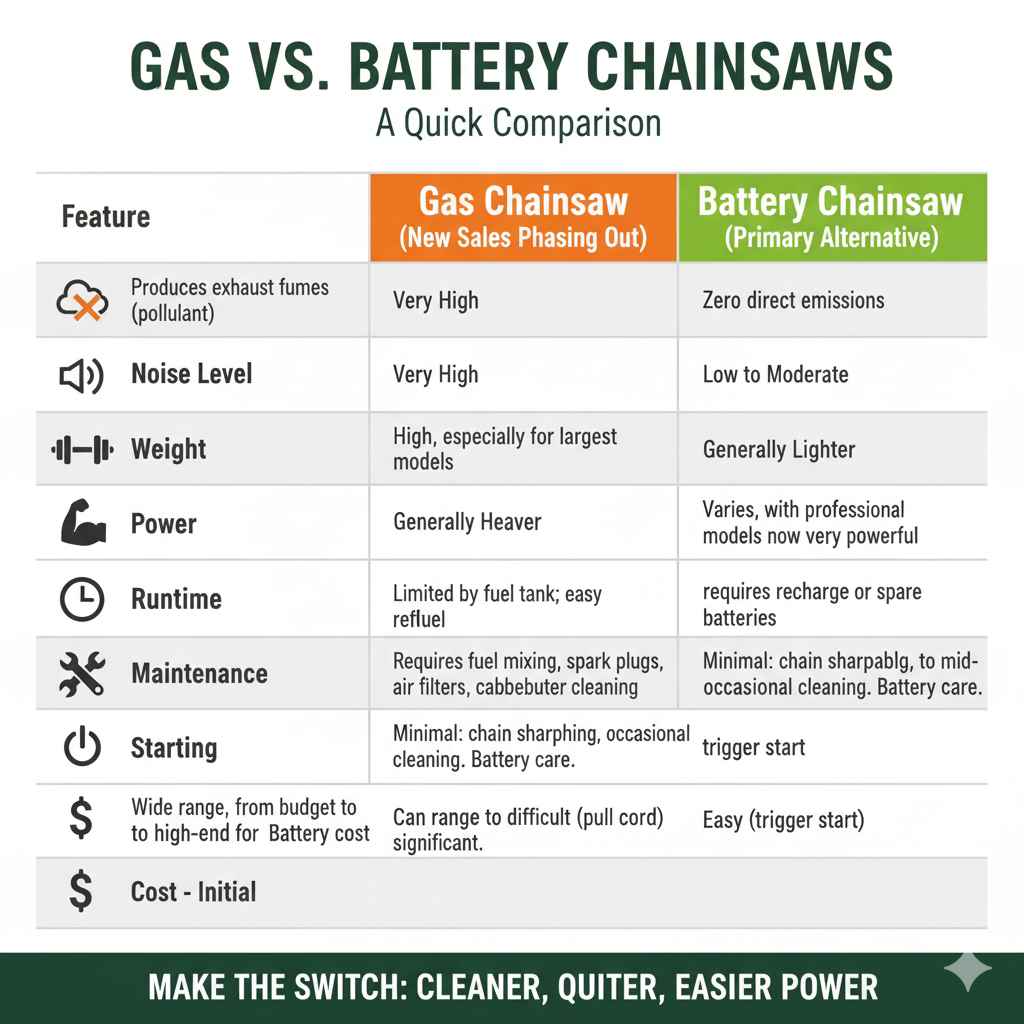
Table: Gas vs. Battery Chainsaws – A Quick Comparison
To help you visualize the differences, here’s a quick comparison:
| Feature | Gas Chainsaw (New Sales Phasing Out) | Battery Chainsaw (Primary Alternative) |
|---|---|---|
| Emissions | Produces exhaust fumes (pollutant) | Zero direct emissions |
| Noise Level | Very High | Low to Moderate |
| Weight | Generally Heavier | Generally Lighter |
| Power | High, especially for largest models | Varies, with professional models now very powerful |
| Runtime | Limited by fuel tank; easy to refuel | Limited by battery charge; requires recharge or spare batteries |
| Maintenance | Requires fuel mixing, spark plugs, air filters, carburetor cleaning | Minimal: chain sharpening, occasional cleaning. Battery care. |
| Starting | Can be difficult (pull cord) | Easy (trigger start) |
| Cost (Initial) | Wide range, from budget to high-end | Wide range, often comparable to mid-range gas for good models. Battery cost significant. |
Common Questions About California Chainsaw Regulations
It’s natural to have questions. Let’s tackle some of the most common ones:
Can I sell my used gas chainsaw in California after 2024?
Yes, generally, the regulations primarily concern the sale of new equipment. You can sell your existing, used gas chainsaw privately. However, it’s always wise to check for any specific updates or nuances in regulations regarding resale markets as they evolve.
Are electric chainsaws affected by these new regulations?
No, corded electric chainsaws are not affected by the ban on emissions-certified handheld outdoor power equipment. Since they don’t have an engine producing emissions, they are not part of the phase-out. Battery-powered chainsaws are also not directly banned; rather, they are the intended replacement for the gas models being phased out.
Will the price of battery chainsaws go up?
As demand for battery-powered equipment increases and manufacturers scale production, we might see some price shifts. However, the increased competition and technological advancements often help keep prices competitive, especially for mid-range options. The higher initial cost of some battery systems is often offset by lower running costs and reduced maintenance over time.
What about gas chainsaws used in commercial logging or specific agricultural settings?
The regulations are primarily focused on handheld outdoor power equipment sold to consumers and for general landscaping. While the specifics can be complex, professional-grade equipment used in industrial or agricultural contexts might have different timelines or exemptions based on necessity and the availability of viable alternatives. CARB provides detailed regulations for various equipment categories.
What if I live in California but bought my gas chainsaw out of state?
These regulations at the state level affect the sale of new equipment within California. If you are a California resident and purchase a new gas chainsaw from out of state and bring it into California, that new sale is also intended to be covered by the ban. However, the primary enforcement is on retailers operating within the state.
How can I be sure my current gas chainsaw is legal to use?
If you legally purchased your gas chainsaw before the January 1, 2024, sales ban took effect for new equipment, you are absolutely permitted to continue using it. The ban is about preventing new sales, not confiscating existing tools.
Conclusion: Moving Forward with Confidence
So, to circle back to our main question: Are gas chainsaws banned in California? The answer is a nuanced “gradually phasing out for new sales.” While you can’t buy new gas chainsaws in California much longer, your existing ones are safe to use, and you can still find used models for now. This shift is a natural progression towards cleaner, quieter, and often more user-friendly tools. Battery and electric chainsaws have evolved incredibly, offering powerful and efficient solutions for most of your DIY and homeowner needs.
Embracing these newer technologies doesn’t mean sacrificing performance; it means adapting to a more sustainable future. As a DIYer and woodworker, staying informed about these changes helps you make the best choices for your projects, your wallet, and our shared environment. So, don’t let the news about regulations bog you down. Instead, see it as an opportunity to explore the exciting advancements in power tool technology. Happy building, and stay safe!