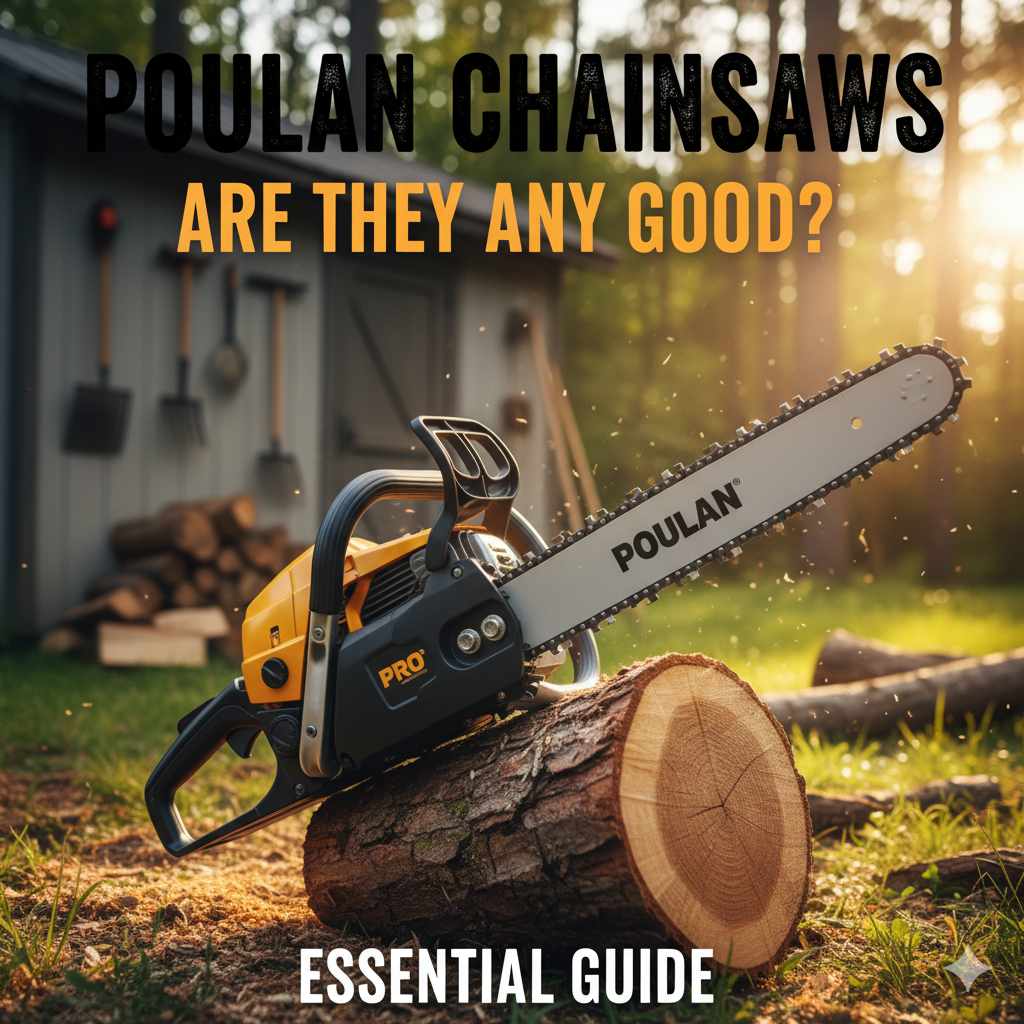
Are Poulan Chainsaws Any Good? Essential Guide
Poulan chainsaws offer a budget-friendly option for homeowners and DIYers tackling light to moderate tasks. While not professional-grade, they provide decent performance for their price, making them a good choice for occasional use, firewood cutting, and property maintenance when treated with care.
Choosing the right chainsaw can feel a bit overwhelming, especially when you’re just starting out. You want a tool that gets the job done without breaking the bank, but you also don’t want something that will quit on you halfway through a project. Brands like Poulan pop up frequently, and it’s natural to wonder, “Are Poulan chainsaws any good?” You’re not alone in asking this. Many DIY enthusiasts and homeowners seek reliable, affordable tools to maintain their properties and enjoy woodworking projects safely. This guide is here to answer your questions, demystify Poulan chainsaws, and help you decide if they’re the right fit for your needs. We’ll explore what makes them tick, their strengths and weaknesses, and how to get the most out of one.
Understanding Poulan Chainsaws: A Beginner’s Overview
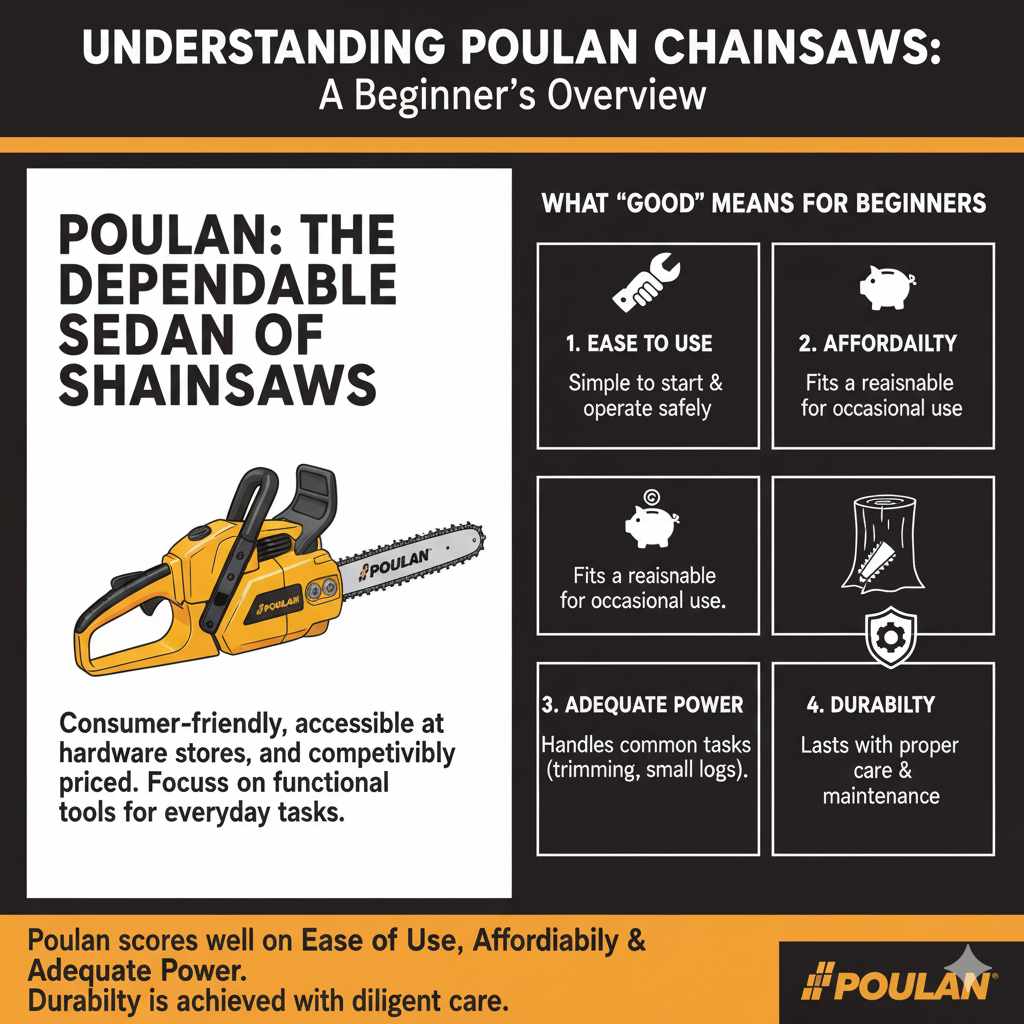
Poulan, part of the Husqvarna Group, has been around for a long time, offering a range of chainsaws designed primarily for the consumer market. This means they’re often found in big-box stores and hardware shops, making them accessible to many. Their focus is on providing functional tools at competitive prices. Think of them as the dependable sedan of chainsaws – not a luxury sports car, but it gets you where you need to go reliably for everyday tasks.
When you’re new to chainsaws, understanding what “good” means is key. For a beginner, “good” often translates to:
Ease of Use: Is it simple to start and operate safely?
Affordability: Does it fit within a reasonable budget for occasional use?
Adequate Power: Can it handle the common tasks you’ll be doing?
Durability: Will it last with proper care and maintenance?
Poulan chainsaws generally score well on the first three points and can achieve the fourth with the right approach.
What Makes a Chainsaw “Good” for Beginners?
Before we dive deep into Poulan specifically, let’s establish what makes any chainsaw a good choice for someone just learning the ropes.
Key Features for Beginners:
Lightweight Design: Heavy chainsaws are tiring and can be harder to control, increasing the risk of accidents. Lighter models are much more manageable.
Anti-Vibration System: Chainsaws vibrate a lot! A good anti-vibration system reduces fatigue and makes the saw easier to handle for longer periods.
Easy Starting Mechanism: Pulling a starter cord can be tough. Features like spring-assisted starting or primer bulbs make a big difference.
Inertia-Activated Chain Brake: This is a crucial safety feature. If the saw kicks back, the chain brake automatically engages, stopping the chain instantly to protect you.
Tool-Less Chain Tensioning: Adjusting chain tension is a regular maintenance task. Being able to do it without a special tool (like a bar wrench) is a big convenience.
Adequate Power-to-Weight Ratio: You want enough power for the job, but not so much that the saw becomes unwieldy or difficult to manage.
Are Poulan Chainsaws Any Good? A Closer Look
So, how do Poulan chainsaws stack up against these beginner-friendly criteria? Generally, they aim to hit these marks, especially in their consumer-grade models.
Poulan Chainsaw Strengths:
Poulan chainsaws are often praised for their value. You can get a functional chainsaw for a lower price point compared to many professional or even higher-end homeowner brands.
Affordability: This is perhaps their biggest selling point. Poulan offers some of the most budget-friendly new chainsaws on the market, making them accessible for homeowners who only need a saw for occasional tasks.
Ease of Availability: You can find Poulan chainsaws at many retail outlets, making them easy to purchase and find parts for.
Good for Light Tasks: For jobs like trimming small branches, cutting fallen limbs after a storm, or preparing small amounts of firewood, Poulan chainsaws are generally capable.
User-Friendly Features: Many Poulan models incorporate features designed to make them easier to start and use, such as primer bulbs and basic anti-vibration systems.
Poulan Chainsaw Weaknesses:
As with most budget-friendly tools, there are trade-offs. Poulan chainsaws are typically not built for heavy-duty, continuous use.
Durability Concerns for Heavy Use: While they can last with proper care, Poulan saws are generally made with less robust materials than professional or premium homeowner models. Frequent or demanding use can lead to quicker wear and tear.
Less Powerful Engines: Their engines are usually smaller, meaning they can bog down more easily when cutting larger or denser wood. This can be frustrating and inefficient for bigger jobs.
Basic Anti-Vibration Systems: While present, the anti-vibration systems might not be as effective as those on more expensive saws, potentially leading to more user fatigue.
Build Quality: Some users report that certain components might feel less sturdy or durable compared to higher-priced competitors.
Popular Poulan Chainsaw Models and Their Features
Poulan offers a variety of models, from small electric saws to more robust gas-powered units. For beginners, focusing on their gas-powered offerings for versatility or their electric options for simplicity is often a good starting point.
Let’s look at a couple of typical examples:
Entry-Level Gas Chainsaw (e.g., Poulan P3314)
Engine Size: Typically around 33cc.
Bar Length: Often 14 inches.
Target Use: Light yard work, pruning, small firewood cutting.
Key Features: Usually includes a primer bulb for easier starting, basic anti-vibration, and often a tool-less chain tensioner.
Pros: Very affordable, lightweight, easy to handle for smaller jobs.
Cons: Limited power for larger logs, may not be the most durable for frequent use.
Mid-Range Gas Chainsaw (e.g., Poulan Pro PP258SA)
Engine Size: May be slightly larger, around 46cc.
Bar Length: Commonly 18 inches.
Target Use: More substantial firewood cutting, felling small to medium trees, general property maintenance.
Key Features: Often includes more advanced features like better anti-vibration, sometimes a heavier-duty crankcase.
Pros: More power than entry-level models, can handle slightly larger jobs, better for extended use.
Cons: Heavier, more expensive than basic models, still not meant for professional logging.
Electric Chainsaws (Corded & Cordless)
Poulan also offers electric chainsaws. These are excellent for beginners who want the simplest operation and minimal maintenance.
Corded Electric: Extremely lightweight, quiet, and require no fuel mixing. Best for small trimming or cutting tasks near a power outlet. They are limited by the cord’s reach and power supply.
Cordless Electric (Battery-Powered): Offer freedom of movement like gas saws but are quieter, lighter, and maintenance-free (no oil mixing, spark plugs, etc.). Battery life and power can be limiting factors for extended or demanding jobs.
When choosing a Poulan, consider the following:
Your Typical Tasks: Are you just trimming hedges and small branches, or do you plan to cut down a tree or process significant amounts of firewood?
Your Budget: Poulan excels at the lower end of the price spectrum.
Your Comfort Level: Do you want the simplicity of electric, or the power and range of gas?
How to Use a Poulan Chainsaw Safely and Effectively
Regardless of the brand, safe chainsaw operation is paramount. Poulan saws, like all chainsaws, require respect and proper technique.
Essential Safety Gear (PPE):
Always wear proper Personal Protective Equipment (PPE). This is non-negotiable.
Chainsaw Chaps or Pants: Protect your legs from accidental contact with the chain. Chainsaw manufacturers often recommend specific types of protective gear. For guidance on protective clothing standards, you can refer to resources like OSHA (https://www.osha.gov/).
Safety Glasses or Goggles: Protect your eyes from flying debris.
Hearing Protection: Chainsaws are loud and can cause permanent hearing damage.
Gloves: Provide a better grip and protect your hands.
Steel-Toed Boots: Protect your feet.
Hard Hat: Especially important when felling trees or working in areas with overhead hazards.
Chainsaw Operation Basics:
1. Read the Manual: Seriously, read it! Your Poulan chainsaw comes with specific instructions for your model.
2. Pre-Operation Check:
Ensure the chain is properly tensioned (snug but able to be turned by hand, but not loose enough to jump off).
Check the chain brake (ensure it engages when pushed forward and disengages when pulled back).
Check chain oil and fuel levels. For gas models, use the correct fuel-to-oil ratio specified by Poulan.
3. Starting the Chainsaw:
Place the saw on firm, level ground.
Engage the chain brake.
For most Poulan gas saws:
Set the choke (usually fully out for cold start, halfway for warm start).
Press the primer bulb several times until fuel is visible.
Gently pull the starter cord several times until the engine sputters.
Move the choke to the halfway position (or off if it started).
Pull the starter cord firmly until the engine starts.
Once running, disengage the chain brake carefully before cutting.
4. Proper Cutting Technique:
Maintain a firm grip with both hands, thumbs wrapped around the handles.
Keep the saw close to your body for better control.
Stand with your feet firmly planted, slightly to the side of the cutting path, not directly behind the saw.
Let the saw do the work; don’t force it.
Be aware of kickback – the dangerous, upward motion of the guide bar that occurs when the chain at the tip of the guide bar contacts an object. Always maintain control and avoid cutting with the tip.
5. Shutting Down:
Engage the chain brake.
Turn off the engine.
Maintaining Your Poulan Chainsaw
Proper maintenance is critical for any power tool, especially a chainsaw, and it’s the key to making a budget-friendly saw last.
Clean After Every Use: Remove sawdust and debris from the air filter, cooling fins, and around the chain and bar.
Sharpen the Chain Regularly: A sharp chain cuts efficiently and safely. Dull chains require more force, increasing fatigue and the risk of kickback. You can learn to sharpen yourself or take it to a service center. For tips on chain maintenance, resources like Stihl’s chain sharpening guide (though for Stihl, the principles apply broadly) can be very informative.
Check Chain Tension: Adjust as needed before and during use.
Lubricate the Chain: Ensure the automatic oiler is working and the oil reservoir is filled.
Check Air Filter: Clean or replace it as needed. A clogged filter reduces power.
Inspect Spark Plug: Clean or replace it if it looks fouled.
Fuel and Oil Mixture (Gas Models): Always use fresh gasoline and the correct mixture of high-quality 2-stroke oil as recommended in your owner’s manual. Using the wrong mix can damage the engine. Refer to the EPA’s guidance on cleaner gasoline for small engines.
Poulan Chainsaws vs. Other Brands: A Quick Comparison
It’s helpful to see where Poulan fits in the broader market:
| Feature / Brand | Poulan | Poulan Pro (Higher-end Poulan) | Husqvarna (Consumer Grade) | ECHO (Consumer/Prosumer) |
|---|---|---|---|---|
| Price Range | $ (Most Affordable) | $$ (Budget-friendly, step up) | $$ – $$$ (Mid-range to Upper-mid) | $$ – $$$$ (Mid-range to Professional) |
| Build Quality | Good for price, consumer-grade plastics | Better durability than standard Poulan | Very good, robust construction | Excellent professional-grade build |
| Engine Power | Sufficient for light tasks | Good for moderate homeowner tasks | Strong, reliable power for varied jobs | Powerful, reliable, built to last |
| Durability | Moderate; good with care | Good; designed for more frequent use | Excellent; long lifespan | Exceptional; professional-grade |
| Vibration Control | Basic | Improved | Advanced | Advanced |
| Ease of Maintenance | Generally straightforward | Straightforward | Very good, good parts availability | Excellent, good parts availability |
| Best For | Occasional light tasks, budget-conscious | More frequent homeowner use, firewood | Regular homeowner use, occasional pro | Heavy homeowner use, pro use |
Key Takeaway: If your budget is tight and your needs are light, Poulan is a viable option. If you’re willing to invest a bit more for greater durability, power, and longevity, consider Poulan Pro, Husqvarna, or ECHO’s consumer-grade lines.
When to Choose a Poulan Chainsaw
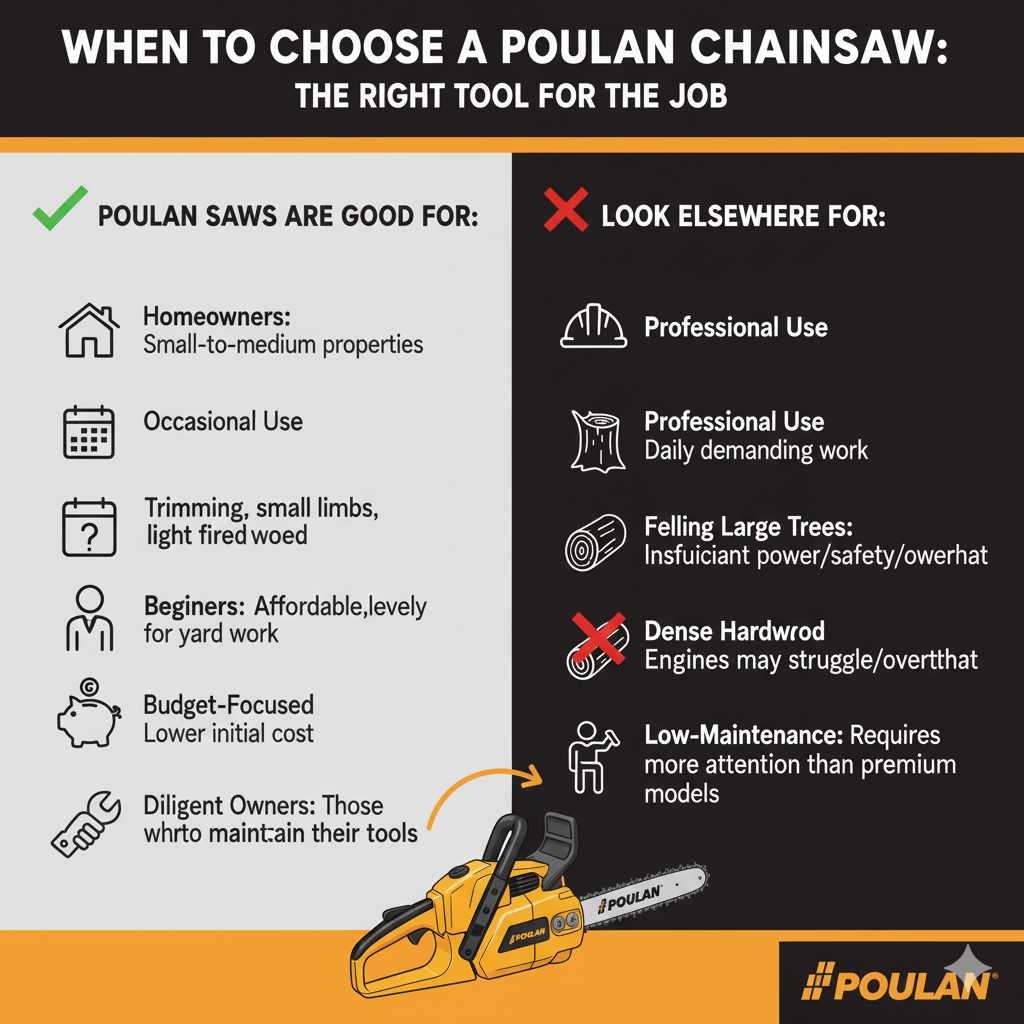
Poulan chainsaws are good for:
Homeowners with small to medium-sized properties.
Occasional use: trimming branches, clearing small fallen limbs, cutting smaller firewood logs.
Beginners who need an affordable entry-level tool for light yard work.
Those who prioritize purchase price over long-term, heavy-duty performance.
People who are diligent about maintenance.
When to Look Elsewhere:
Professional use: These saws are not designed for daily, demanding work.
Felling large trees: Insufficient power and potentially inadequate safety features for such tasks.
Cutting dense hardwood consistently: The engines may struggle and overheat.
Users who want a “set it and forget it” tool: While durable with care, they require more attention than premium models for longevity.
Frequently Asked Questions About Poulan Chainsaws
Q1: Are Poulan chainsaws reliable?
A1: For their intended use (light to moderate homeowner tasks), Poulan chainsaws can be reliable when properly maintained. They are designed for occasional use rather than heavy-duty work. Routine cleaning, sharpening, and proper fuel/oil mixtures will significantly contribute to their reliability.
Q2: How do I start a Poulan chainsaw?
A2: Most Poulan gas chainsaws have a choke, a primer bulb, and a starter cord. Ensure the chain brake is engaged, set the choke as per your manual (fully out for cold, halfway for warm), press the primer bulb until fuel appears inside it, and then pull the starter cord. You might need to adjust the choke after the engine sputters. Always refer to your specific model’s manual for exact starting procedures.
Q3: What kind of oil should I use for a Poulan chainsaw?
A3: For gas models, you’ll need a high-quality 2-stroke engine oil mixed with gasoline. Poulan typically recommends a 50:1 fuel-to-oil ratio. Always check your owner’s manual for the precise ratio and recommended oil type. For the bar and chain oil, use a dedicated bar and chain lubricant, not motor oil.
Q4: Are Poulan chainsaws durable?
A4: Poulan chainsaws offer moderate durability suitable for homeowner use. With regular maintenance, cleaning, and proper operation, they can last for several years under light to moderate workloads. They are not built with the same robust materials or engineering as professional-grade chainsaws and may not withstand heavy, continuous use as well.
Q5: Where can I buy Poulan chainsaws and parts?
A5: Poulan chainsaws are widely available at major retail stores such as Lowe’s, Home Depot, and other hardware or outdoor equipment retailers. Parts can often be found at these same locations or through online retailers specializing in power equipment parts. Your local authorized Poulan service center is also a good resource.
Q6: Are Poulan Pro chainsaws better than regular Poulan chainsaws?
A6: Yes, Poulan Pro is Poulan’s higher-tier line. Poulan Pro chainsaws generally feature more powerful engines, better build quality, more advanced anti-vibration systems, and are designed for more demanding homeowner use compared to the standard Poulan line. They offer a step up in performance and durability.
Q7: How often should I sharpen the chain on my Poulan chainsaw?
A7: The frequency of sharpening depends heavily on usage and the types of wood you’re cutting. A good rule of thumb is to sharpen the chain whenever you notice it’s taking more effort to cut, if it’s producing sawdust instead of fine chips, or if you hit dirt or rocks (which dulls the chain instantly).