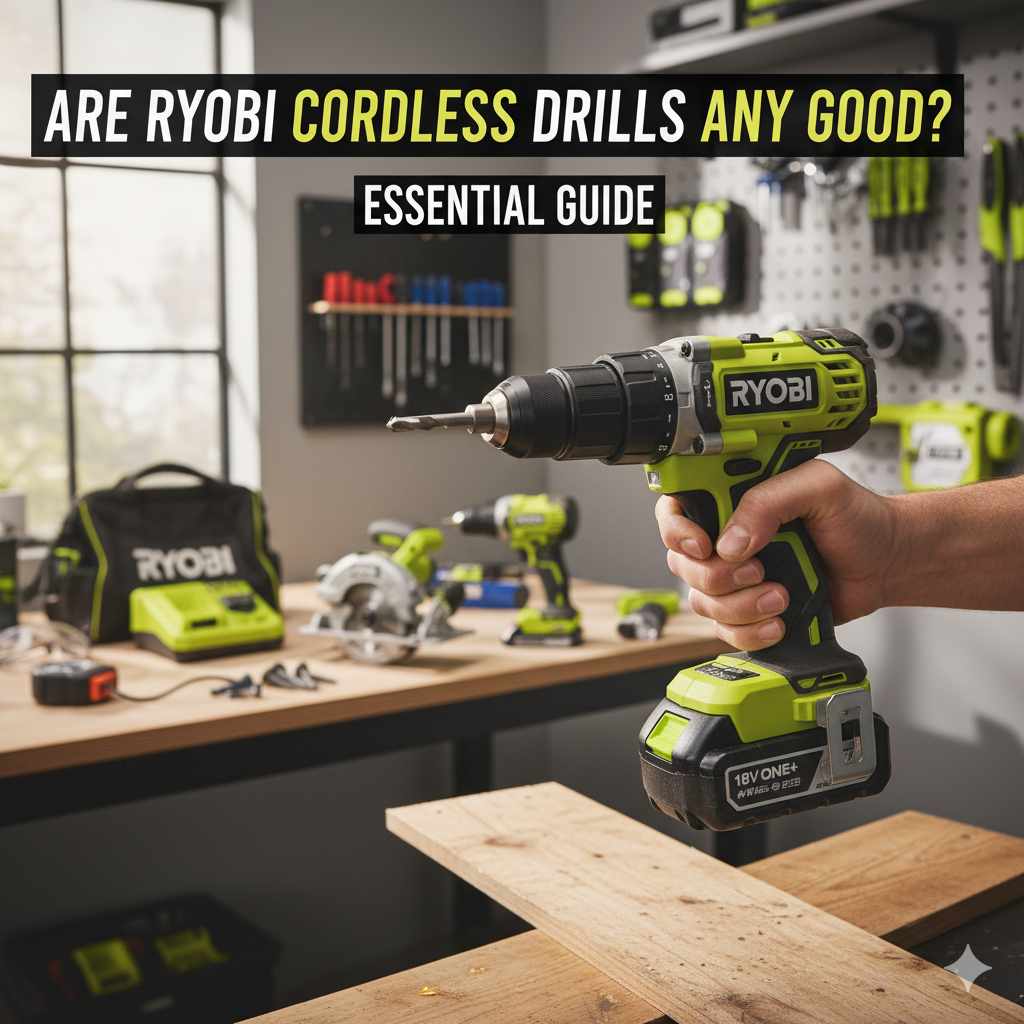
Are Ryobi Cordless Drills Any Good: Essential Guide
Ryobi cordless drills are a fantastic choice for beginners and DIY enthusiasts. They offer a great balance of power, features, and affordability, making them one of the best-value brands for home projects and light to moderate workshops. You can trust them for most common tasks without breaking the bank.
Choosing the right cordless drill can feel a bit overwhelming, especially when you’re just starting out. You want a tool that’s powerful enough for your projects but not so complicated or expensive that it scares you away from trying new things. Many folks wonder, “Are Ryobi cordless drills any good for someone like me?” The answer is a resounding yes! Ryobi has carved out a sweet spot, offering tools that are accessible, reliable, and surprisingly capable for a wide range of DIY tasks around the house and in your workshop. We’ll dive into what makes them a great option, helping you understand their features, benefits, and who they’re best suited for, so you can confidently pick the right drill for your next adventure.
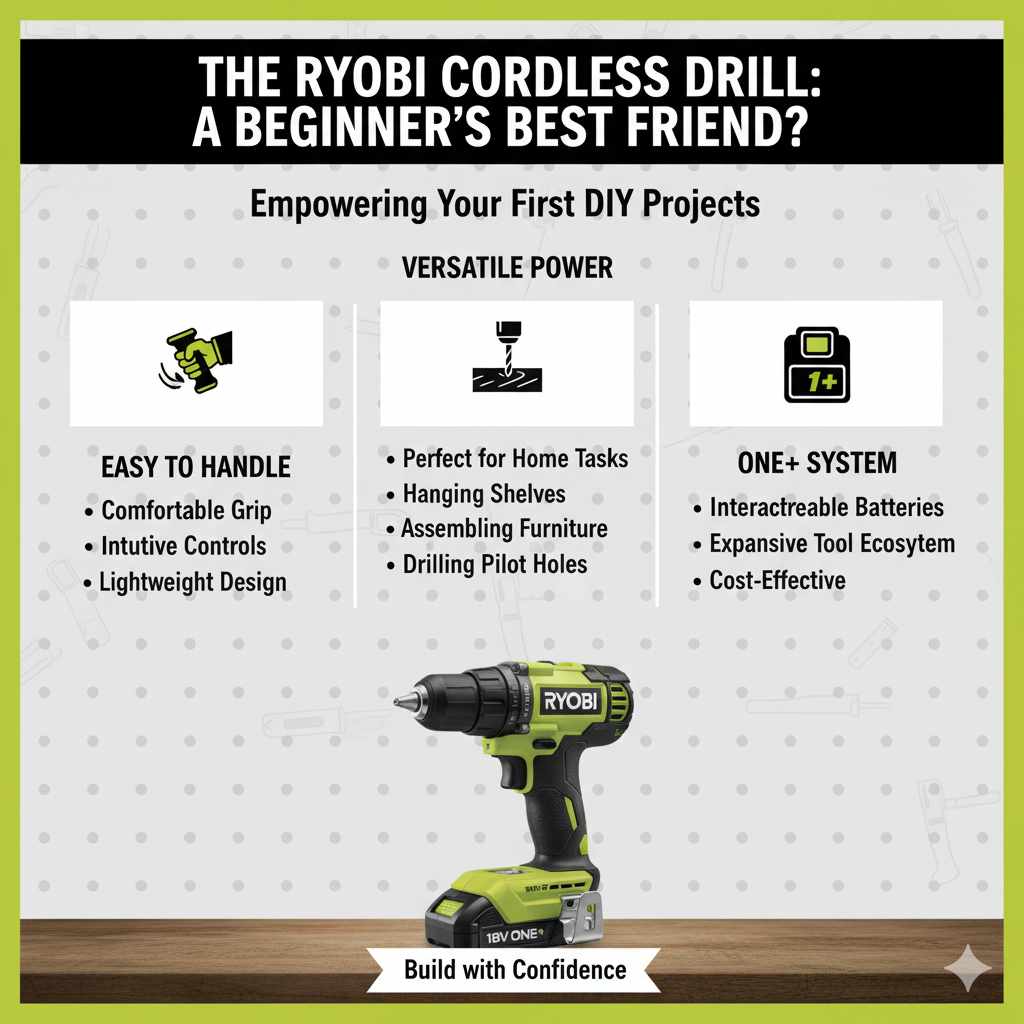
The Ryobi Cordless Drill: A Beginner’s Best Friend?
When you’re starting out in DIY or woodworking, the tool you choose can make a huge difference in whether a project feels fun and achievable or frustrating and impossible. The cordless drill is arguably the most fundamental tool in any home toolkit. It’s your go-to for tasks like hanging shelves, assembling furniture, drilling pilot holes, and even tackling small construction projects. For beginners, the key is finding a drill that’s easy to handle, intuitive to use, and reliable enough to build confidence. This is precisely where Ryobi shines.
Ryobi’s philosophy seems to be all about empowering the everyday user. They offer a vast ecosystem of tools that share batteries, which is a huge plus for budget-conscious beginners. Their cordless drills are designed with user-friendliness in mind, featuring comfortable grips, clear controls, and plenty of power for typical home tasks. You won’t find yourself wrestling with an overly complex or underpowered tool. Instead, you’ll find a dependable partner ready to help you bring your ideas to life.
What Makes Ryobi Cordless Drills Stand Out?
Several factors contribute to Ryobi’s popularity, especially among those new to the DIY scene. They’ve managed to hit a sweet spot that appeals to a broad audience. Let’s break down what makes them a strong contender:
1. Affordability and Value
This is often the biggest draw for newcomers. Compared to professional-grade brands, Ryobi drills are significantly more budget-friendly. You can get a capable drill and battery kit for a fraction of the cost. This allows beginners to invest in essential tools without a major financial commitment. The value proposition is excellent; you get a lot of functionality for your money.
2. The ONE+ Battery System
Ryobi’s ONE+ system is a game-changer. It means a single battery can power hundreds of different Ryobi tools – from drills and saws to garden tools and even lifestyle products. For a beginner building their toolkit, this is incredibly convenient and cost-effective. You can start with a drill kit and then expand your collection of tools, knowing you already have compatible batteries and chargers, significantly reducing the cost of subsequent tool purchases.
To learn more about the benefits of battery platforms, check out this guide on the tool battery platform system from Tool Crib, which explains why having a consistent battery type is so advantageous.
3. User-Friendly Design
Ryobi tools are generally designed with the average user in mind. They feature ergonomic grips for comfort during longer use, simple and clearly labeled controls, and straightforward operation. Many models include features like LED lights to illuminate your work area, making it easier to see what you’re doing, especially in dimly lit spaces.
4. Range of Models for Different Needs
Ryobi offers a variety of cordless drill models to suit different levels of DIY expertise and project demands. Whether you need a basic drill for simple tasks or a more powerful hammer drill for occasional masonry work, there’s a Ryobi option. This allows users to start with a model that fits their immediate needs and upgrade later if their projects become more demanding.
5. Wide Availability
Ryobi tools are readily available at major home improvement retailers like Home Depot, as well as online. This makes them easy to find, compare, and purchase. You can often see and feel the tools in person before buying, which is helpful for beginners making their first drill purchase.
Are Ryobi Cordless Drills Powerful Enough?
This is a common question. For most home projects, DIY tasks, and light woodworking, the answer is a definite yes. Ryobi drills offer sufficient power and torque for:
- Drilling holes in wood, plastic, and metal.
- Driving screws into various materials.
- Assembling furniture.
- Hanging pictures, shelves, and curtains.
- Light-duty repairs.
The power of a cordless drill is often measured in voltage (V). Ryobi’s most popular line uses 18V batteries, which are more than capable for the tasks mentioned above. They also offer a 40V line for more demanding applications, though the 18V ONE+ system is the go-to for most homeowners and beginners. While they might not match the raw power of high-end professional-grade tools for extremely demanding jobs (like drilling through dense concrete repeatedly or driving very large lag bolts all day), they perform admirably for the vast majority of home-based activities.
Ryobi Cordless Drill Models: A Quick Look
Ryobi has a broad lineup, making it a bit confusing at first. However, for beginners, focusing on the 18V ONE+ system is usually the best approach. Here’s a look at some common types you’ll encounter:
1. The Standard Cordless Drill/Driver
This is the workhorse. It’s designed for drilling holes and driving screws. Most Ryobi drill/drivers in the ONE+ line feature variable speed triggers, multiple clutch settings to prevent overtightening screws, and a keyless chuck for easy bit changes. They are lightweight and easy to maneuver.
2. The Cordless Hammer Drill
A hammer drill adds a percussive action to the rotational drilling. This makes it much easier to drill into harder materials like brick or concrete. If you plan on doing any light masonry such as mounting shelves on a brick wall or installing a mailbox post, a Ryobi 18V ONE+ hammer drill is a great option. It still functions as a regular drill/driver for wood and metal.
3. The Impact Driver
While not strictly a drill, an impact driver is a fantastic companion tool. It delivers rotational and percussive force in a sideways hammering motion, giving it immense torque for driving screws, especially long or large ones, with less effort. It’s not ideal for drilling holes but excels at fastening. Many beginners find a drill/driver and an impact driver kit to be a very versatile combo.
Key Features to Look For in a Ryobi Drill
When you’re ready to buy, keep an eye out for these features on Ryobi drills; they’ll make your experience much better:
- Chuck Type: Look for a keyless chuck. This means you can tighten and loosen the drill bits by hand – no special wrench needed. Most Ryobi drills have these.
- Clutch Settings: This feature allows you to control the torque (twisting force). It’s crucial for driving screws. Too high, and you might strip the screw head or drive it too deep. Too low, and the screw won’t go in fully. Many settings give you fine control.
- Variable Speed Trigger: Most drills have this. It lets you control the speed by how hard you squeeze the trigger. This is essential for starting screws or holes slowly and precisely, then ramping up speed as needed.
- LED Work Light: A built-in light that turns on when you squeeze the trigger is incredibly useful for illuminating your work area, especially in dark corners or under cabinets.
- Ergonomics and Weight: A comfortable grip and a manageable weight are important, especially if you’ll be using the drill for extended periods. Try to hold a few different models if possible.
- Battery Capacity (Ah): Batteries are rated in Amp-hours (Ah). Higher Ah means longer run time on a single charge. For occasional use, a 1.5Ah or 2.0Ah battery is often fine. For more frequent or heavier use, consider a 4.0Ah or larger.
Ryobi Cordless Drill Models & Specifications for Beginners
Here’s a comparison table highlighting a couple of popular Ryobi 18V ONE+ drill models often recommended for beginners and DIYers. Keep in mind model numbers can change, but these represent typical offerings.
| Feature | Ryobi P215 (Typical Drill/Driver Example) | Ryobi P251 (Typical Hammer Drill Example) | Ryobi P1813 (Typical Drill/Driver Kit Example) |
|---|---|---|---|
| Motor Type | Brushed | Brushed | Brushed |
| Voltage | 18V | 18V | 18V |
| Chuck Size | 1/2 inch | 1/2 inch | 1/2 inch |
| Max Torque | ~500 in-lbs | ~500 in-lbs | ~500 in-lbs |
| Speed Settings | 2-Speed (0-450/0-1,600 RPM) | 2-Speed (0-450/0-1,600 RPM) | 2-Speed (0-450/0-1,600 RPM) |
| Drilling Modes | Drill, Driver | Drill, Driver, Hammer Drill | Drill, Driver |
| Keyless Chuck | Yes | Yes | Yes |
| LED Light | Yes | Yes | Yes |
| Included Battery | Often sold as bare tool or with one 1.5Ah battery | Often sold as bare tool or with one 2.0Ah battery | Typically includes two P107 1.5Ah batteries and charger |
| Ideal For | General DIY, basic repairs, furniture assembly | General DIY, basic repairs, light masonry tasks | Beginners needing a complete starter kit |
Note: Specifications can vary by year and specific kit. Always check the product details for the most current information.
Pros and Cons of Ryobi Cordless Drills
Like any tool, Ryobi drills have their strengths and weaknesses. Understanding these can help you make an informed decision.
Pros:
- Excellent Price Point: Very affordable for most budgets.
- Vast ONE+ Battery Ecosystem: One battery works on hundreds of tools.
- User-Friendly: Easy to operate, comfortable to hold.
- Good Performance for Home Use: Powerful enough for most DIY tasks.
- Wide Availability: Easy to find and purchase.
- Variety of Models: Options for different needs (drill/driver, hammer drill).
- LED Work Light: Enhances visibility.
- Good Warranty: Typically a 3-year limited warranty on tools and batteries.
Cons:
- Not for Heavy-Duty Pro Use: May lack the power and durability for daily professional construction.
- Brushed Motors (on many models): Brushed motors are less efficient and have a shorter lifespan than brushless motors found in higher-end tools. However, Ryobi does offer some brushless options in their 18V line and for their 40V tools.
- Run Time on Smaller Batteries: Smaller Ah batteries (like 1.5Ah) may need more frequent recharging for extended projects.
- Durability for Extreme Conditions: While durable for home use, they might not hold up as well to very harsh, daily professional abuse.
When is a Ryobi Drill the Right Choice?
A Ryobi cordless drill is an excellent choice if you:
- Are a beginner DIYer or homeowner.
- Are on a budget and want good value for your money.
- Are starting to build your tool collection and want a versatile first drill.
- Plan to use your drill for common household tasks, furniture assembly, and occasional projects.
- Want to take advantage of a shared battery system to save money on future tool purchases.
- Need a tool that is easy to use and understand, without complicated settings.
For instance, if you’re assembling that flat-pack furniture you just bought or hanging a new mirror in your entryway, a Ryobi drill will handle the job with ease and make the process much quicker and smoother than a screwdriver. If you’re building a simple wooden planter box for your garden, it’s more than capable. For more advanced woodworking, check out resources like Popular Mechanics’ guide on choosing a drill to understand the specifications that matter most for different levels of use.
When Might You Consider Other Options?
While Ryobi is great for many, there are situations where you might want to explore other brands:
- Professional Tradesperson: If you use a drill daily for construction, you’ll likely need a heavy-duty, professional-grade tool from brands like DeWalt, Milwaukee, or Makita, which offer superior durability, power, and often brushless technology for extended use.
- Extremely Demanding Tasks: For continuous, heavy-duty applications like drilling large holes in thick hardwoods or frequent concrete work, a higher-end tool might be more suitable.
- Die-Hard Brand Loyalty/Platform Already Established: If you’ve already invested heavily in another brand’s battery platform (e.g., DeWalt 20V MAX batteries), it might make sense to stick within that system for easier battery and charger sharing.
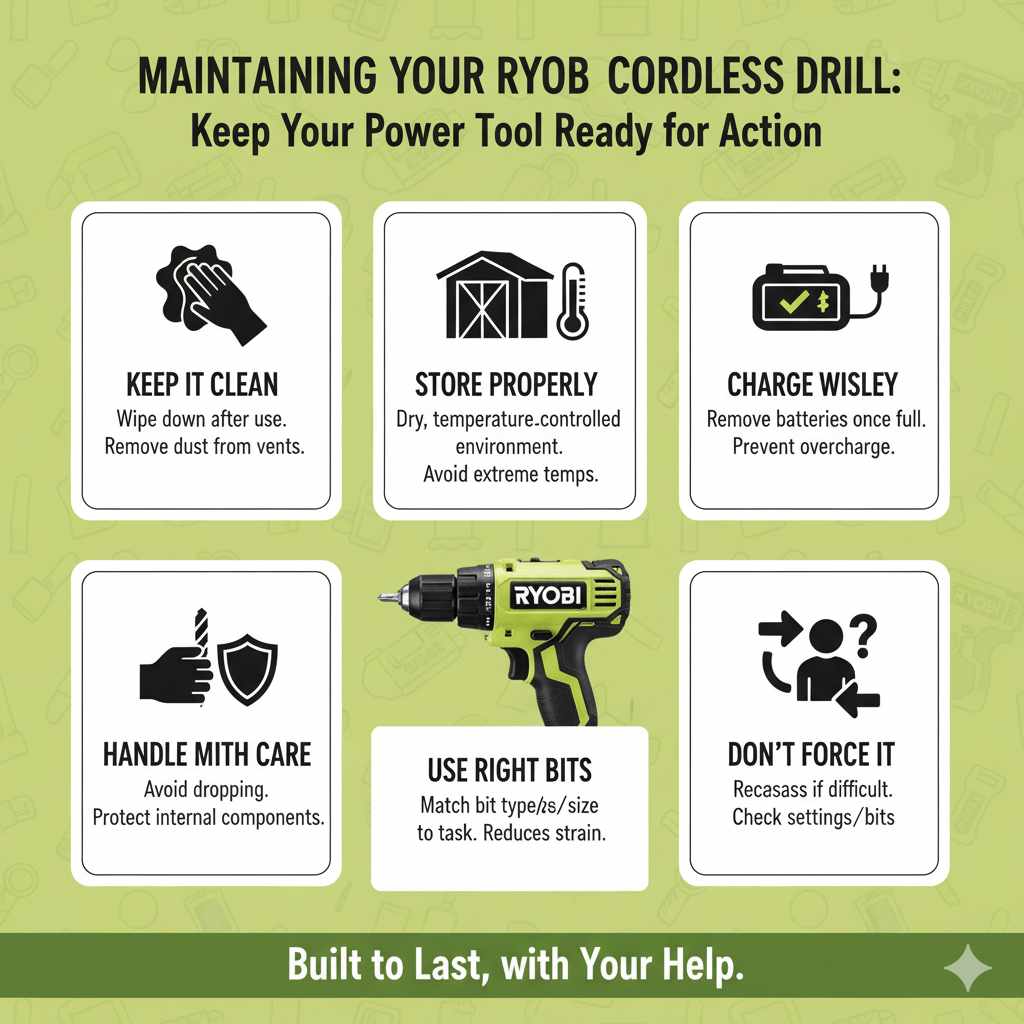
Maintaining Your Ryobi Cordless Drill
To ensure your Ryobi drill lasts and performs well, a little basic maintenance goes a long way:
- Keep it Clean: Wipe down your drill after use, especially if exposed to dust or debris. A soft brush can help remove dust from vents.
- Store Properly: Store your drill and batteries in a dry, temperature-controlled environment. Avoid extreme heat or cold.
- Charge Batteries Wisely: Don’t leave batteries on the charger indefinitely after they’re full. Most modern chargers have overcharge protection, but it’s good practice to remove them once charged.
- Handle with Care: Avoid dropping your drill. While they are built to be rugged, repeated drops can damage internal components.
- Use the Right Bits: Ensure you are using the correct type and size of drill bits or driver bits for the task. This reduces strain on the drill’s motor.
- Don’t Force It: If a screw is difficult to drive or a hole is hard to drill, you might be using the wrong setting, the wrong bit, or the drill might be struggling. Reassess the situation rather than forcing the tool.
For battery care tips, the U.S. Department of Energy offers insights into battery management and longevity, which can be applied to your power tool batteries.
Frequently Asked Questions (FAQ)
Q1: Are Ryobi drills good enough for basic home repairs?
Yes, absolutely. Ryobi drills are excellent for common home repairs like assembling furniture, hanging shelves, drilling pilot holes before screwing, and minor mounting tasks. They provide more than enough power and ease of use for these applications.
Q2: Should I buy a Ryobi drill/driver or a hammer drill?
If you only plan on drilling into wood, plastic, or metal, a standard drill/driver is sufficient. If you anticipate drilling into brick, concrete, or masonry for things like mounting fixtures or building a fence post, a hammer drill offers that extra capability while still functioning as a regular drill/driver.