Are Old Craftsman Table Saws Any Good: Essential Guide
Yes, old Craftsman table saws can be excellent for beginners and hobbyists, offering durability, affordability, and solid performance if properly maintained. Many are built with cast iron, providing stability and longevity that newer, lighter models often lack. Focus on specific vintage models known for quality construction to get the best value.
Finding the right tools for your budding woodworking passion can feel like a big puzzle. Many beginners wonder about older tools, especially when they see them at great prices. Are old Craftsman table saws any good?” is a question that pops up often. It’s a smart question to ask! These saws have a reputation for being tough, but are they right for today’s projects? We’ll dive deep into what makes vintage Craftsman table saws tick, what to look for, and why they might be the perfect starting point for your workshop adventures. Get ready to discover the hidden gems of yesteryear!
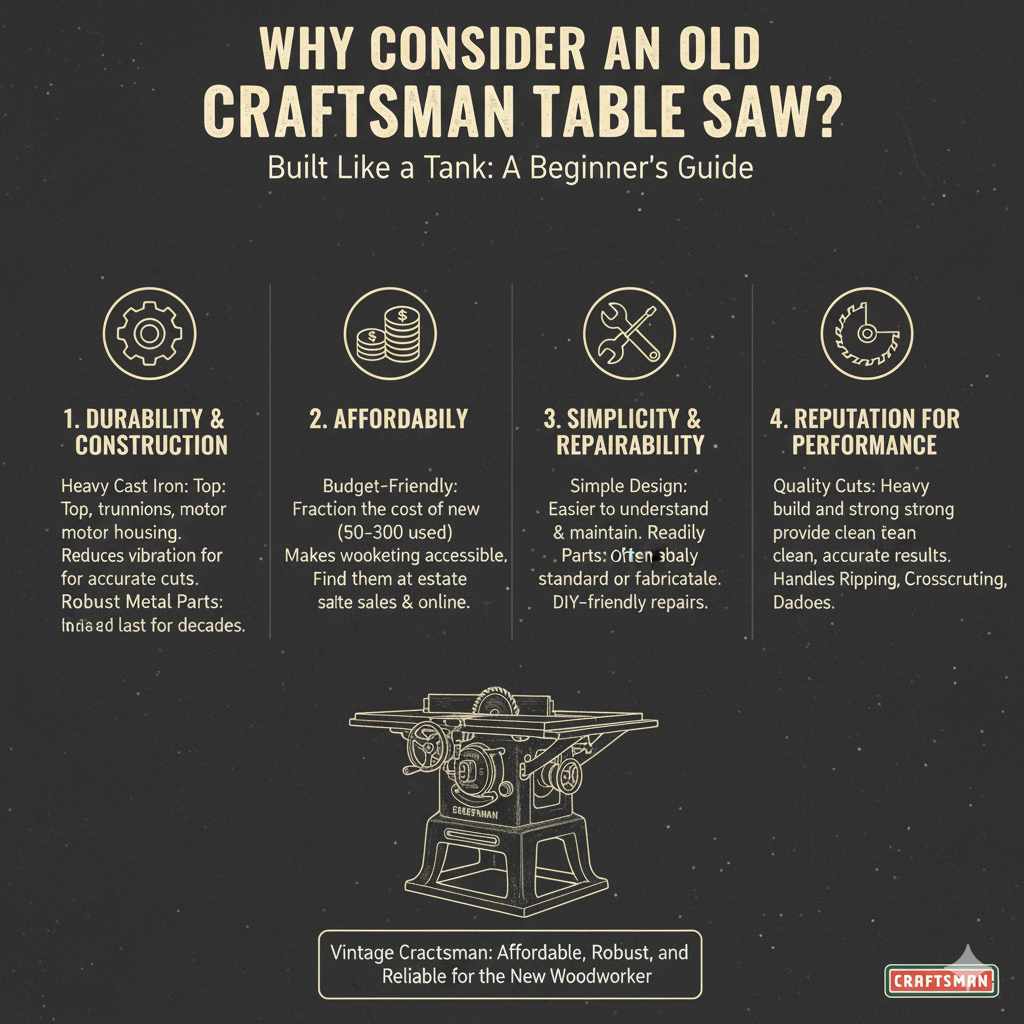
Why Consider an Old Craftsman Table Saw?
Craftsman has been a household name in tools for generations, and their older table saws are often celebrated for a few key reasons. When you’re starting out, you need tools that are reliable, safe, and won’t break the bank. Old Craftsman saws can certainly fit that bill. They represent a different era of manufacturing, one focused on robustness and longevity. Let’s explore the advantages that make these vintage machines so appealing.
Durability and Construction
Many pre-1990s Craftsman table saws were built like tanks. This means they often feature heavy cast iron construction for the tabletop, trunnions (the part that holds the blade assembly), and the motor housing. This substantial weight does wonders for reducing vibration during operation. Less vibration means more accurate cuts and a smoother overall experience. Think of it like this: a heavier object is harder to move around, and that’s a good thing when you want your saw to stay put and cut true.
These saws were designed to last, often with robust internal parts that can withstand years of use with proper care. Unlike many modern, lighter-duty saws often made with more plastic components, older Craftsman saws tend to have metal parts that are less prone to wear and tear.
Affordability
One of the biggest draws for beginners is price. New table saws, especially good quality ones, can be a significant investment. Older, used Craftsman table saws often appear on online marketplaces, at estate sales, or in flea markets for a fraction of the cost of a new saw. This makes woodworking more accessible for those on a tighter budget. You can often find a solid performer for a few hundred dollars, or sometimes even less, allowing you to save money for other essential tools or materials.
Simplicity and Repairability
Vintage machinery often has a simpler design compared to their modern counterparts laden with electronics. This simplicity can make them easier to understand, maintain, and repair. If something goes wrong, you’re more likely to find available replacement parts or be able to fix it yourself with basic mechanical knowledge. Many parts are also standard or can be fabricated. This keeps your saw running without needing specialized technicians or costly parts.
Reputation for Performance
While not every old saw is a gem, many vintage Craftsman models were designed to offer excellent cutting performance. The heavy cast iron construction, often coupled with robust motors, allowed them to handle a variety of wood thicknesses and types. For tasks like ripping lumber, crosscutting, and even some basic dado work (with the right setup), these saws can deliver clean, accurate results that rival more expensive saws.
What to Look For in a Used Craftsman Table Saw
Buying any used tool comes with its own set of considerations, and a table saw is no exception. You want to make sure you’re not bringing home more problems than solutions. Here’s a checklist to help you evaluate a potential vintage Craftsman table saw.
Key Components to Inspect:
- Tabletop Flatness: Lay a straight edge across the cast iron top. Check for significant rust pitting, warping, or unevenness. A slightly rusty surface can often be cleaned up, but a warped top is a much bigger issue for accuracy.
- Trunnions: These are the heavy metal brackets that hold the motor and blade. They should be solid, without cracks or severe damage. Check if the mechanism for raising/lowering and tilting the blade moves smoothly.
- Motor: Listen for any strange noises (grinding, excessive humming) when the motor runs. Ensure it reaches full speed. Check for signs of overheating or damaged wiring. For older saws, you might encounter either universal (brush-type) motors or induction (single-phase) motors. Induction motors are generally preferred for their durability and quieter operation.
- Fence System: The fence is the guide you push the wood against for rip cuts. Check if it slides smoothly and locks securely. Does it run parallel to the blade? A bent or sticky fence will lead to inaccurate cuts.
- Blade Guard and Safety Features: Ensure all safety guards are present and accounted for. While you can often replace them, having them intact is a good sign the previous owner cared about safety.
- Wheels and Stands: If the saw has a mobile base, test its stability and mobility.
- Overall Condition: Look for signs of neglect like excessive rust, bent parts, missing knobs, or damaged power cords.
Common Craftsman Table Saw Models Worth Considering
While there are many Craftsman models, some are more sought after than others by woodworkers. These often share common characteristics of robust construction. Here are a few series or models that often get a good reputation:
- Certain 10-inch contractor saws: Many models from the 1970s through the early 1990s, often identified by their model numbers starting with “103” (especially those manufactured by King-Seeley Thermos) or “113” (often manufactured by Emerson Electric). These are known for their cast iron construction and decent power.
- Older Shopsmiths (though not strictly a standalone table saw, they often function as such): If you find an older Shopsmith Mark V, it can be a versatile machine that includes a table saw function.
It’s always a good idea to research specific model numbers you find online. Forums and woodworking communities are excellent resources for this. A quick search for “[Model Number] reviews” can yield valuable insights from other users.
Potential Downsides and How to Address Them
No tool is perfect, and buying used means you might encounter a few issues. The good news is, for old Craftsman table saws, many of these problems are fixable with a bit of effort and know-how. Understanding these potential downsides will help you negotiate the price or plan for repairs.
Dust Collection
Older table saws were often not designed with modern dust collection standards in mind. Many open-stand designs don’t have integrated dust collection ports. This means sawdust can fly everywhere, creating a dusty workshop environment and potential health hazards.
Solution: You can often retrofit a dust collection system. Adding a shroud around the motor and blade, connecting it to a shop vacuum or a dedicated dust collector, can significantly improve dust management. For saws with closed cabinets, check for a dust port and ensure it’s not obstructed. For more on effective dust collection, the Occupational Safety and Health Administration (OSHA) emphasizes controlling dust for worker safety.
Lack of Modern Safety Features
Some older saws might lack features like advanced blade guards or riving knives. A riving knife is a crucial safety device that separates the wood kerf after the blade passes through it, significantly reducing the risk of kickback. Many also have two- or three-prong power plugs, which can be a grounding concern in some modern workshops.
Solution for Riving Knife: You can often purchase aftermarket riving knives or blade guard assemblies designed to fit certain saw models. Alternatively, you might consider a splitter, which serves a similar purpose. Always inspect and, if necessary, upgrade safety features before extensive use.
Solution for Power Plug: If the saw has a two-prong plug and you’re concerned about grounding, a qualified electrician can advise on installing a proper three-prong plug, or you can use a GFCI outlet with an appropriate adapter. However, grounding is the preferred and safest method. Consulting a professional is recommended for electrical modifications.
Motor Power and Speed
Depending on the model and its age, a Craftsman table saw might have a less powerful motor than what’s standard on new saws. Older motors can also lose some of their original power over time. This can be an issue when cutting hardwoods or thicker stock, leading to bogging down.
Solution: Ensure the motor is in good working order. If power is consistently an issue, you might consider a motor upgrade if feasible and safe for the saw’s design. Sometimes, a thorough cleaning and tune-up of the existing motor can restore lost performance. For very demanding tasks, you might need to slow down your feed rate.
Alignment and Calibration
Even with solid construction, older saws can get out of alignment over time due to years of use, transport, or just wear and tear on the components. The trunnions, the trunnion-to-blade alignment, and the fence might need adjustment.
Solution: This is where good old-fashioned maintenance comes in. Learning to align your table saw is a valuable skill. You’ll need to adjust the trunnions so the blade is perfectly perpendicular to the table and parallel to the miter slots. Fence calibration is also essential. Many online guides and YouTube videos can walk you through this process. It’s a process that requires patience but yields highly accurate results.
Essential Maintenance and Tune-Up for Vintage Saws
Bringing an old Craftsman table saw back to life often involves a thorough tune-up. This process isn’t just about fixing problems; it’s about understanding your machine and ensuring it operates safely and effectively. A well-maintained vintage saw can be a joy to use.
- Deep Cleaning: Start by cleaning every part of the saw. Remove all rust from cast iron surfaces using steel wool, mineral spirits, and then apply a protective coat of paste wax or a light oil to prevent rust. Clean out accumulated sawdust, grease, and grime from the motor, trunnions, and mechanisms.
- Lubrication: Identify all the lubrication points. This usually includes the trunnion elevation and tilt mechanisms, and sometimes the arbor bearings. Use the appropriate type of grease or oil as recommended by any available manual or by consulting online resources for that specific model.
- Blade Alignment: This is critical for accurate and safe cuts. You’ll need to align the blade parallel to the miter slots and ensure it is perfectly perpendicular to the table in both the vertical and tilted positions. Tools like a dial indicator or a combination square are helpful here.
- Fence Calibration: Ensure the fence is perfectly parallel to the blade and the miter slot. If the fence system is worn, you might need to adjust it or consider an aftermarket upgrade.
- Motor Check: Disconnect power and inspect the motor. Check the drive belt for wear, cracks, or proper tension. If it’s a universal motor, clean the commutator and check brush wear. For induction motors, ensure vents are clear.
- Blade Arbor Check: Inspect the blade arbor for any wobble or damage. Ensure the blade flanges are clean and flat.
- Power Cord and Plug: Examine the power cord for any cuts, fraying, or damage. Ensure the plug is securely attached and compatible with your workshop’s outlets. Replace if any damage is found.
Regularly lubricating and cleaning your saw will keep it running smoothly. A good habit is to give it a quick wipe-down and check the alignment after intensive use.
Safety First! Using Your Older Craftsman Table Saw
Safety is paramount when operating any power tool, and table saws require particular attention. Older saws, even with their robust build, can pose risks if not handled correctly. Always prioritize safety to protect yourself and ensure a positive woodworking experience.
- Read the Manual (if available): If you can find an original manual for your specific model, it’s an invaluable resource for operation and safety instructions. Many vintage manuals can be found online as PDFs.
- Use Push Sticks and Push Blocks: Never feed wood with your hands too close to the blade. Always use push sticks for narrow pieces and push blocks for wider boards to keep your hands clear.
- Ensure Proper Guarding: Always use the blade guard whenever possible. If your saw is missing guards, consider replacing them with aftermarket options or using a splitter and an auxiliary fence as minimum protection.
- Understand Kickback: Kickback occurs when the wood is suddenly thrown back towards the operator. It’s often caused by the blade binding in the wood, pinching, or the wood not being properly supported or guided. Never stand directly behind the blade path.
- Blade Selection: Use the correct blade for the type of wood and cut you are making. Ensure blades are sharp and properly installed. A dull blade is more likely to bind and cause kickback.
- Be Aware of Your Surroundings: Keep your workshop clean and free of obstructions. Ensure good lighting.
- Disconnect Power: Always disconnect the power to the saw before changing blades, making adjustments, or cleaning.
- GFCI Protection: If operating in a potentially damp environment or using older wiring, consider powering older tools through a Ground Fault Circuit Interrupter (GFCI) outlet for an extra layer of electrical safety. The National Fire Protection Association (NFPA) notes the importance of proper electrical grounding and protection to prevent fires.
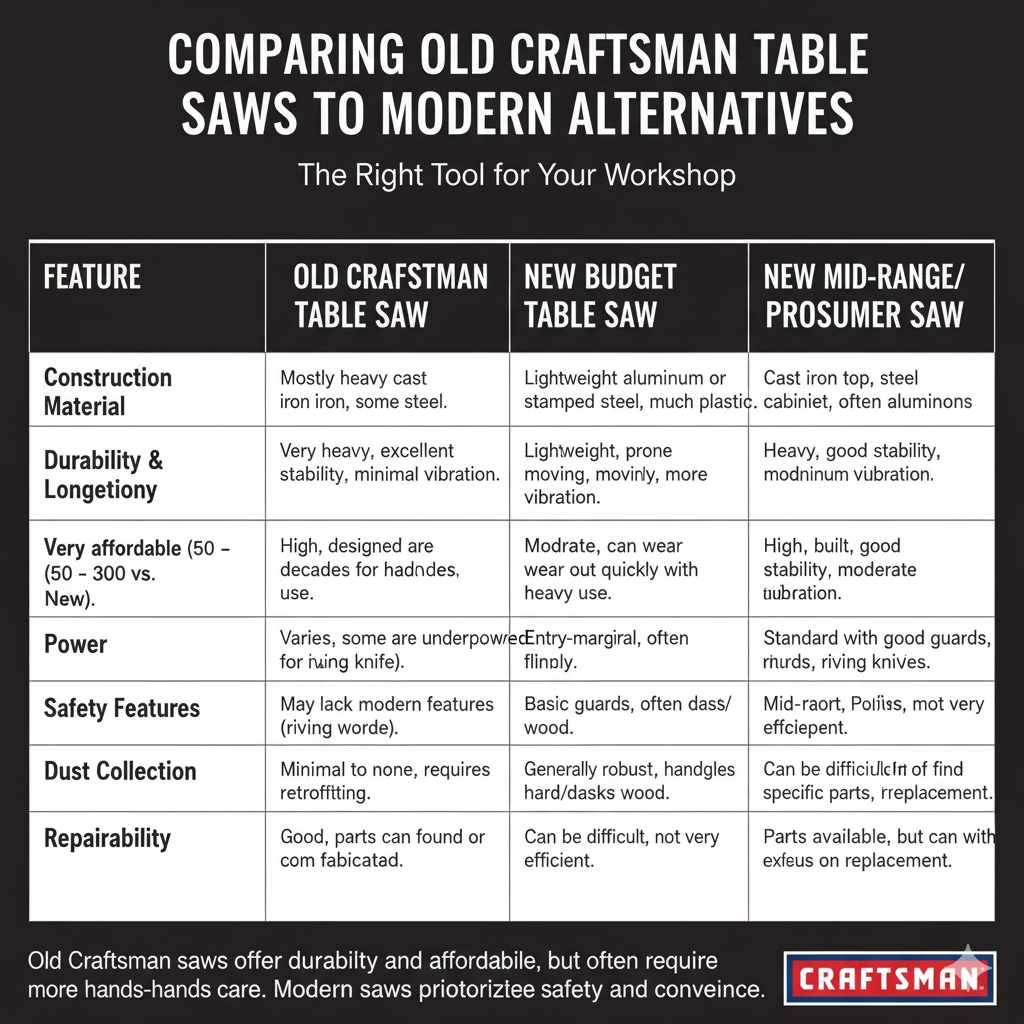
Comparing Old Craftsman Table Saws to Modern Alternatives
It’s helpful to see how a vintage Craftsman holds up against today’s options. This comparison can help solidify your decision.
| Feature | Old Craftsman Table Saw | New Budget Table Saw | New Mid-Range/Prosumer Table Saw |
|---|---|---|---|
| Construction Material | Mostly heavy cast iron, some steel. | Lightweight aluminum or stamped steel, much plastic. | Cast iron top, steel cabinet, often aluminum trunnions. |
| Weight & Stability | Very heavy, excellent stability, minimal vibration. | Lightweight, prone to moving, more vibration. | Heavy, good stability, moderate vibration. |
| Durability & Longevity | High, designed for decades of use. | Moderate, can wear out quickly with heavy use. | High, built for demanding hobbyists. |
| Price (Used vs. New) | Very affordable ($50 – $300 typically). | Entry-level $200 – $500. | Mid-range $600 – $1500+. |
| Power | Varies, some are underpowered for hardwoods. | Often marginal, struggles with hard/dense wood. | Generally robust, handles most tasks well. |
| Safety Features | May lack modern features (riving knife). | Basic guards, often flimsy. | Standard with good guards, riving knives. |
| Dust Collection | Minimal to none, requires retrofitting. | Basic port, not very efficient. | Good integration, often with efficient ports. |
| Repairability | Good, parts can be found or fabricated. | Can be difficult to find specific parts, focus on replacement. | Parts available, but can be expensive. |
As you can see, old Craftsman saws offer a compelling mix of durability and affordability that’s hard to beat at their price point. However, they often require more hands-on effort to bring them up to modern safety and performance standards compared to a new, mid-range saw.
Frequently Asked Questions (FAQ)
Are old Craftsman table saws safe to use?
Yes, old Craftsman table saws can be safe to use, provided they are in good working condition, properly maintained, and operated with essential safety precautions. Always inspect for damage, ensure all safety guards are in place, use push sticks, and be aware of kickback risks. Upgrading safety features like a riving knife is highly recommended for maximum safety.
What are the most sought-after vintage Craftsman table saw models?
Among hobbyists, 10-inch models from the 1970s to early 1990s are often favored. Look for model numbers starting with “103” or “113,” as these were frequently manufactured with robust cast iron components. Researching specific model numbers on woodworking forums can provide more insights into their desirability and performance.