Are Dewalt And Craftsman Batteries Interchangeable? Essential Guide
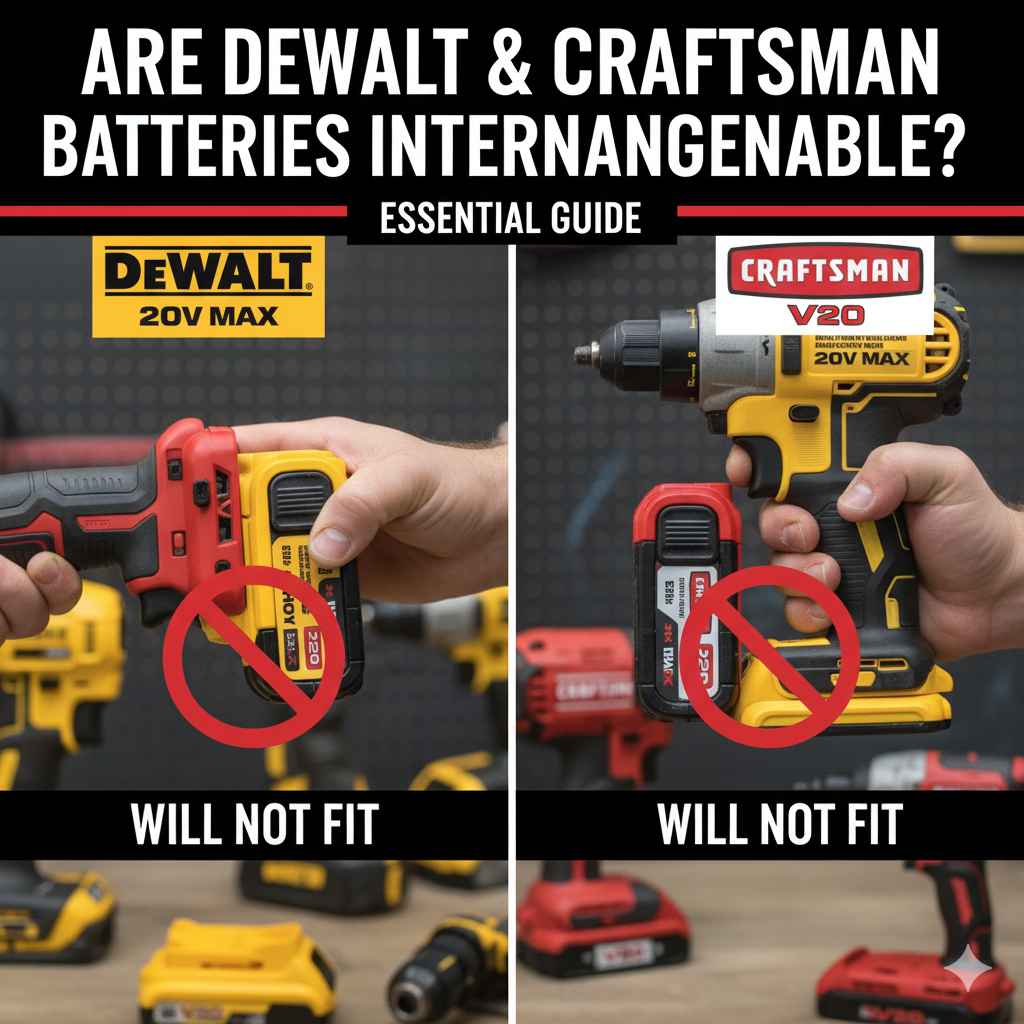
No, Dewalt and Craftsman batteries are generally not interchangeable. While both brands use lithium-ion technology and have similar looking connectors, their battery system designs, voltage outputs, and proprietary charging mechanisms are different. Attempting to force them or use adapters can damage your tools and batteries.
Hey there, fellow DIYers and aspiring woodworkers! Md Meraj here. Ever found yourself in the workshop, reaching for a battery, only to realize it’s the wrong brand? It’s a common puzzle, especially as our tool collections grow. You might have a Dewalt drill and a Craftsman saw, and wonder if those batteries can do a little cross-brand team-up. It would certainly be convenient, right? But before you try to snap that Dewalt battery onto your Craftsman tool, let’s dive into why this isn’t usually a good idea. We’ll break down the differences, what happens if you try, and what your options are. Stick around, and we’ll get this battery mystery solved!
Dewalt vs. Craftsman Batteries: The Quick Rundown
When you’re starting out in woodworking or tackling DIY projects around the house, having the right tools is key. And for cordless tools, that means having reliable batteries. Dewalt and Craftsman are two very popular tool brands, each with their own lines of cordless tools and batteries. It’s natural to ask if you can mix and match them. But here’s the straightforward answer: generally, no, Dewalt and Craftsman batteries are not interchangeable.
Think of it like trying to fit a square peg into a round hole – it just doesn’t quite work. While both brands use lithium-ion technology and might look similar at first glance, their battery packs are designed with different internal structures, voltage configurations, and communication systems. These differences are intentional, keeping their battery ecosystems separate.

Why Aren’t They Interchangeable? Understanding the Core Differences
The main reason Dewalt and Craftsman batteries can’t be swapped is by design. Manufacturers create their battery systems to work exclusively within their own brand’s tool offerings. This ensures optimal performance, safety, and longevity for both the tool and the battery.
Here’s a closer look at the key differentiating factors:
Proprietary Connectors: Each brand uses a unique design for the terminals on their batteries and the corresponding slots in their tools. These connectors, while sometimes appearing similar, have subtle variations in pin layout, spacing, and shape. This prevents incompatible batteries from being inserted.
Voltage System (V): Batteries come in various voltage ratings (e.g., 12V, 18V, 20V MAX, 40V, 60V). Even if two batteries have the same stated voltage, the internal wiring and power delivery can differ significantly. Forcing a battery with a different voltage into a tool designed for another can seriously damage the tool’s motor and electronics. Dewalt’s popular 20V MAX system, for instance, is distinct from Craftsman’s V20 or other voltage lines.
Communication Protocols: Modern power tool batteries aren’t just simple power sources. Lithium-ion batteries often have internal circuitry that communicates with the tool. This communication can involve managing power output, monitoring battery health (temperature, charge level), and ensuring safe operation. Dewalt and Craftsman use different communication protocols, meaning a tool designed for a Dewalt battery won’t understand the signals from a Craftsman battery, and vice-versa.
Physical Dimensions and Housing: While this might seem less critical, the physical size, shape, and latching mechanisms of batteries can prevent them from fitting securely into tools designed for another brand. A battery that doesn’t seat properly won’t make a good electrical connection and can even fall out during operation, posing a safety hazard.
What Happens If You Try to Force It?
It’s tempting to try and make a battery connection work if you’re in a pinch. However, attempting to force a Dewalt battery into a Craftsman tool (or the other way around) is a bad idea and can lead to several problems:
Damage to the Battery: You could bend or break the battery terminals, rendering the battery useless. The internal electronics of the battery could also be damaged.
Damage to the Tool: The most common outcome is damaging the tool’s battery receptacle or internal wiring. The wrong voltage or incompatible communication signals can overheat and fry the tool’s motor control board.
Fire Hazard: In extreme cases, forcing incompatible batteries or using incorrect voltage can cause the battery to overheat, swell, leak, or even catch fire. Lithium-ion batteries require careful management.
Voided Warranty: Using an incompatible battery will almost certainly void any warranty you have on both the tool and the battery.
Poor Performance: Even if you somehow managed a connection, the tool would likely not perform correctly. It might have reduced power, inconsistent operation, or fail to turn on at all.
Exploring Battery Systems: Dewalt vs. Craftsman
Let’s take a moment to appreciate the systems these brands offer, as understanding them helps explain why interchangeability is a non-starter.
Dewalt Battery Systems
Dewalt is renowned for its robust and extensive range of power tools, powered by several battery platforms. Their flagship system is the 20V MAX platform, which is incredibly popular among professionals and serious DIYers.
Dewalt 20V MAX: This is their primary cordless system. It represents the nominal voltage of the battery pack. When the battery is under load, the actual voltage may drop. This system features a wide array of tools, from drills and saws to outdoor power equipment. They use their distinct yellow and black battery packs.
Dewalt FLEXVOLT: This is a groundbreaking battery technology that can switch voltage. A FLEXVOLT battery can provide 60V MAX for high-demand 60V tools or automatically switch to 20V MAX for use with their 20V MAX tools. This offers incredible versatility.
Dewalt 12V MAX: A smaller, lighter system designed for compact tools and applications where weight is a primary concern.
Dewalt batteries are known for their durability, advanced battery management systems, and compatibility within their respective platforms. For more information on Dewalt’s battery technology, you can often find detailed specifications on their official website or through reputable tool review sites.
Craftsman Battery Systems
Craftsman has a long history in the tool industry and has also evolved its cordless battery technology over the years. Their current prominent cordless battery platform is the V20 system and the powerful 40V and V60 lines for outdoor equipment.
Craftsman V20: This is Craftsman’s main lineup for general-purpose cordless power tools, similar in concept to Dewalt’s 20V MAX ecosystem. The “20V MAX” designation on Craftsman batteries operates under the same principle as Dewalt’s, referring to the nominal voltage. This system offers a good range of tools for home use and DIY projects.
Craftsman 40V and V60: These higher voltage systems are typically used for more demanding applications, particularly outdoor power equipment like mowers, string trimmers, and leaf blowers. They provide more power and longer runtimes for these heavier-duty tasks.
Craftsman batteries are designed to be user-friendly and offer good value. Their focus is on providing reliable power for the everyday homeowner and DIYer. You can find detailed information about their battery specifications and tool compatibility directly on the Craftsman website.
Can You Use Adapters to Make Them Compatible?
You might see adapters online claiming to let you use one brand of battery with another. While these adapters exist, they are generally not recommended, especially for beginners.
How they work: These adapters typically sit between the battery and the tool, acting as a bridge to connect the terminals.
The Risks:
Electrical Incompatibility: The primary concern is voltage mismatch. If the adapter doesn’t perfectly match the voltage requirements of the tool or battery, you risk damaging both.
Poor Connection: Adapters can create a less secure connection than a direct fit, leading to intermittent power or failure to operate.
Loss of Safety Features: They can interfere with the battery’s built-in management system and the tool’s safety features, increasing the risk of overheating or other hazards.
Voided Warranties: Using third-party adapters will almost certainly void the warranties on your Dewalt and Craftsman tools and batteries.
Quality Varies Wildly: The quality and safety of these adapters can vary significantly. Some might be poorly made and pose real risks.
For these reasons, it’s best to avoid adapters and stick to batteries designed specifically for your tools. The peace of mind and safety are well worth the investment in the correct battery.
What Are Your Options If You Have Both Brands?
So, you’ve got the Dewalt bug and the Craftsman itch, meaning you have batteries from both brands. What’s the best way to manage this?
1. Stick to the Brand Ecosystem: This is the most straightforward and safest solution. Each battery should only be used with tools designed for that specific brand and battery system. This means Dewalt batteries for Dewalt tools, and Craftsman batteries for Craftsman tools.
2. Invest in the Right Batteries for Each Tool: While it might seem like an added expense, it’s the most reliable way to ensure your tools operate correctly and safely. When you buy a new tool, ensure you have compatible batteries and chargers.
3. Look for Battery Bundles: Often, tools are sold in kits with one or more batteries and a charger. Buying these kits can sometimes be more cost-effective than purchasing the tool and batteries separately.
4. Consider Battery Capacity (Ah): When buying batteries for a specific brand, pay attention to the Amp-hour (Ah) rating. A higher Ah rating means longer runtimes. This is a feature you can mix and match within a brand’s system – for example, a larger Ah Dewalt battery will work with any Dewalt 20V MAX tool.
5. Recharge Strategically: Keep your Dewalt chargers with your Dewalt batteries and your Craftsman chargers with your Craftsman batteries. This helps avoid confusion and ensures batteries are charged correctly.
Battery Maintenance Tips for Longevity
Regardless of brand, proper care will extend the life of your power tool batteries. Here are some essential tips:
Avoid Extreme Temperatures: Don’t leave batteries in a hot car or freezing garage. Store them in a cool, dry place. Extreme temperatures can degrade the battery’s performance and shorten its lifespan.
Don’t Store Batteries Fully Discharged: If storing a battery for an extended period, aim for a partial charge (around 40-60%). Storing them completely dead or fully charged can reduce their capacity over time.
Use the Correct Charger: Always use the charger specifically designed for your battery system (e.g., a Dewalt charger for Dewalt batteries, a Craftsman charger for Craftsman batteries). Using the wrong charger can be dangerous and damage the battery.
Clean Battery Contacts: Periodically clean the metal contacts on both the battery pack and the tool with a dry cloth or a pencil eraser. Dirt or debris can interfere with the electrical connection.
Avoid Overcharging: Modern chargers have features to prevent overcharging, but it’s still good practice to remove the battery once it’s fully charged, especially if you won’t be using it immediately.
Cycle Your Batteries: While less critical with modern lithium-ion batteries than older types, occasionally using and recharging your batteries through a full cycle can help keep them balanced and performing optimally.

Frequently Asked Questions (FAQ)
Q1: Can I use a Dewalt 20V MAX battery on a Craftsman V20 tool?
A1: No, you cannot. Despite both being rated “20V MAX,” the physical connectors, internal wiring, and communication protocols are proprietary and different. Attempting to force it could damage both the battery and the tool.
Q2: Are all Dewalt batteries interchangeable with each other?
A2: Not entirely. Dewalt batteries are generally interchangeable within their series. For example, most Dewalt 20V MAX batteries will work with most Dewalt 20V MAX tools. However, a 20V MAX battery will not work with Dewalt’s 12V MAX or FLEXVOLT tools, and vice-versa, without specific tool compatibility. FLEXVOLT batteries are designed to work across both 60V and 20V MAX platforms, which is a special case.
Q3: Are all Craftsman batteries interchangeable with each other?
A3: Similar to Dewalt, Craftsman batteries are largely interchangeable within their specific platform. For instance, Craftsman V20 batteries work with Craftsman V20 tools. However, a V20 battery will not work with their 40V or V60 outdoor power equipment batteries, as these are different voltage systems.
Q4: What is the danger of using an adapter for Dewalt and Craftsman batteries?
A4: The primary dangers include damaging the tool or battery due to voltage mismatch, creating an unreliable electrical connection, bypassing safety features increasing the risk of overheating or fire, and voiding your tool’s warranty.
Q5: My older Craftsman tool uses a NiCad battery. Can I use a new lithium-ion battery from them?
A5: It depends on the specific older Craftsman tool and whether Craftsman offers a compatible lithium-ion upgrade battery designed to fit the older tool’s housing and electrical system. Generally, NiCad and lithium-ion systems are not cross-compatible due to different voltage characteristics and charging requirements. Check the tool’s manual or Craftsman’s support for specific compatibility information.
Q6: What should I do if I accidentally bought the wrong battery?
A6: If you purchased a battery from one brand that doesn’t fit your tools from another brand, your best bet is to return it to the retailer for a refund or exchange. Keep your receipt and ensure the battery is in its original, unused condition to make the return process smooth.
Q7: Is it worth buying tools that require different battery systems?
A7: It depends on your needs. If you only need a few tools from each brand, it might be manageable. However, if you plan to build an extensive tool collection, consolidating into one or two battery platforms (like Dewalt’s 20V MAX or Craftsman’s V20 for general use) can save you money and reduce clutter in the long run by allowing you to share batteries across many tools.
The Bottom Line: Stick to What Works
As a DIYer and someone who spends a lot of time in the workshop, I know the temptation is strong to find shortcuts and make our tools work as flexibly as possible. However, when it comes to power tool batteries, especially between different brands like Dewalt and Craftsman, the risks of trying to interchange them far outweigh any potential convenience.
The technical specifications, connector designs, and safety features are all there for a reason. They ensure your tools perform at their best and keep you safe while you work. So, embrace the distinct ecosystems of Dewalt and Craftsman. Invest in the right batteries for the right tools, maintain them well, and you’ll have a reliable setup that will serve you for many projects to come. Happy building!