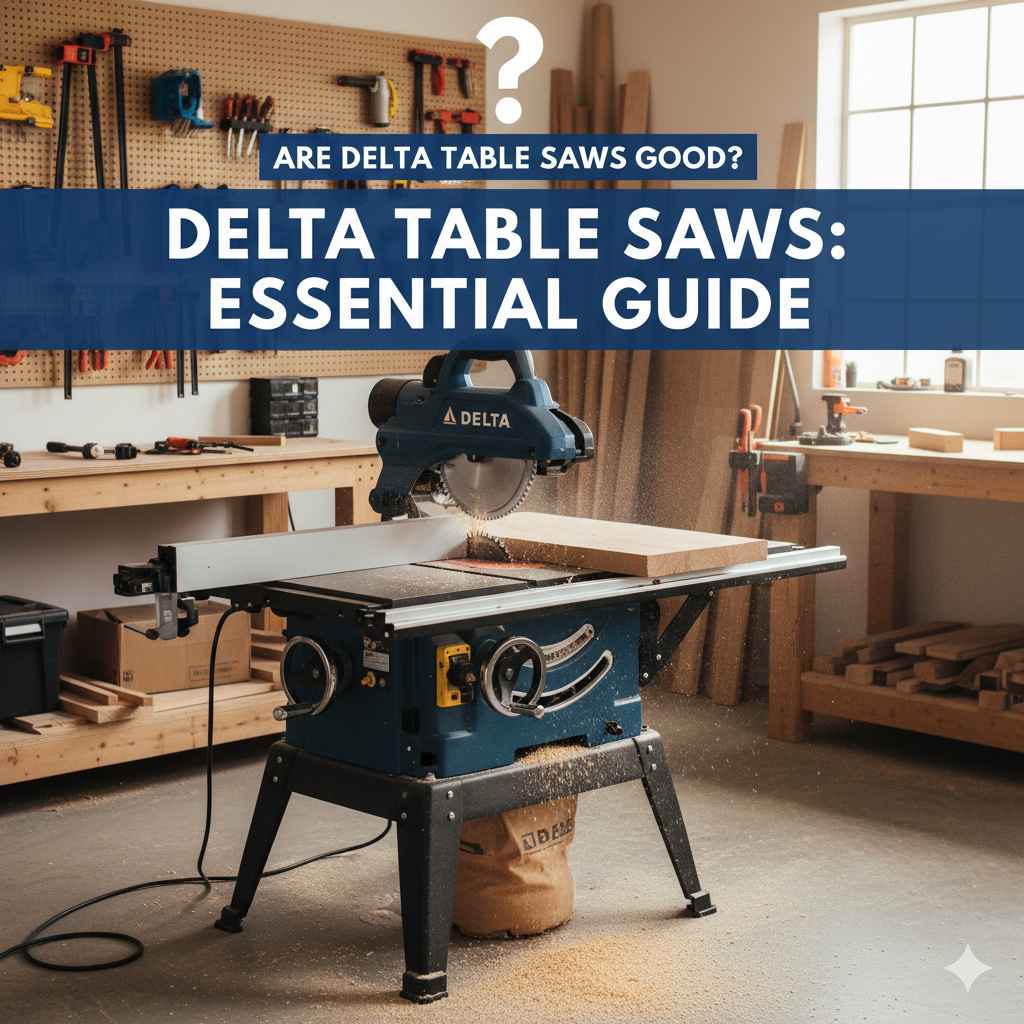
Are Delta Table Saws Good? Essential Guide
Yes, Delta table saws are generally considered a good choice for both beginners and experienced woodworkers, often praised for their balance of performance, durability, and value, especially in their mid-range and professional lines.
Hey there, woodworking enthusiasts! Md Meraj here, ready to help you navigate the exciting world of power tools. Picking the right table saw can feel like a big decision, especially when you’re just starting out. You want something reliable, safe, and that won’t break the bank, right? Delta is a name you’ll hear quite a bit, and for good reason. But are Delta table saws actually good for your workshop? Let’s break it down together, keeping things simple and clear so you can make the best choice for your projects. We’ll look at what makes them stand out and what to consider before you buy.
Delta Power Equipment has been a staple in workshops for decades, building a reputation for producing dependable tools. When it comes to table saws, they offer a range of models, from compact benchtop units perfect for small spaces to robust cabinet saws designed for heavy-duty use. Many woodworkers appreciate Delta for their focus on user-friendly features, solid construction, and a good balance between price and performance. They aim to provide tools that help you achieve precise cuts and build with confidence, which is exactly what any DIYer or seasoned pro is looking for.
Understanding Table Saw Categories: Where Does Delta Fit In?
Before diving into Delta specifically, it’s helpful to know the different types of table saws available. This will give you a clearer picture of where Delta’s offerings fit and what you can expect from each:
- Benchtop Table Saws: These are the smallest and most portable. They’re great for hobbyists with limited space or those who need to move their saw around. They’re generally less powerful and have smaller fences than larger saws.
- Jobsite Table Saws: Built for contractors, these saws are more durable and powerful than benchtop models. They often have better fences, stands, and dust collection capabilities, making them suitable for more demanding tasks.
- Contractor Table Saws: Traditionally, these were belt-driven saws designed to be relatively portable. Modern contractor saws can vary, but they usually offer more power and a larger table than jobsite saws.
- Cabinet Table Saws: These are the heavyweights of the table saw world. They are stationary, powerful, and offer the highest precision and capacity. They are usually the most expensive and require dedicated space and power.
Delta offers models across several of these categories, particularly excelling in the jobsite and contractor saw segments, while also providing some entry-level benchtop options and higher-end cabinet saws for serious woodworkers.

Delving into Delta’s Table Saw Lineup: Key Features and Benefits
Delta table saws are often recognized for a few key areas that contribute to their popularity:
Durability and Build Quality
One of the common praises for Delta tools, including their table saws, is their solid construction. Many of their models feature cast-iron components, which helps to minimize vibration during operation. This not only leads to more accurate cuts but also contributes to the longevity of the tool. A well-built table saw can last for many years, making it a worthwhile investment for your workshop.
Performance and Accuracy
Delta aims to deliver good cutting performance. Their saws often come with robust motors that can handle various wood types and thicknesses. Features like well-aligned fences, miter gauges, and smooth trunnion systems (the mechanism that holds and moves the blade) are usually designed to ensure that your cuts are precise and repeatable. For beginners, this accuracy is crucial for building projects that look good and fit together properly.
Ease of Use and Safety Features
As a woodworking mentor, safety is always my top priority. Delta generally incorporates safety features into their table saws. This can include features like blade guards, riving knives (which help prevent kickback), and easy-to-reach on/off switches. Many of their designs also focus on user-friendliness, with intuitive controls and straightforward adjustments, which is a huge plus for those new to table saws.
Dust Collection
Sawdust is an ongoing challenge in any woodworking shop. Delta table saws often include dust collection ports that can be hooked up to a shop vacuum or dust collector. Efficient dust collection not only keeps your workspace cleaner but also improves air quality. For DIYers working in garages or basements, this is a significant benefit.
Value for Money
Delta often strikes a good balance between the quality and features they offer and their price point. While they have high-end professional models, many of their popular jobsite and contractor saws are priced competitively, making them accessible for hobbyists and homeowners who want a capable tool without the premium cost of some other brands.
Popular Delta Table Saw Models and What They Offer
Delta has a broad range of table saws, but a couple of series are particularly well-known and often considered by beginners and intermediate woodworkers. Understanding these can help you pinpoint what might be right for you.
The Delta 36-725 (and similar Contractor Saws)
This model, or its close successors like the 36-725T2, is a perennial favorite in the contractor saw category. It’s often highlighted for its solid construction, powerful motor, and impressive fence system for its price. Many users praise its precision and ease of adjustment compared to cheaper alternatives. It typically features:
- A powerful induction motor, often 1.5 HP or more.
- A high-quality, reliable fence system (like a T-style fence) for accurate rip cuts.
- A large cast-iron table top for stability and a generous depth of cut.
- Good dust collection capabilities.
- A trunnion system designed for smooth blade adjustments.
This saw is often recommended for its excellent performance-to-price ratio, making it a great step up from basic benchtop models for serious hobbyists.
The Delta 36-6000 (Compact Table Saw)
For those with limited space or budget, Delta offers more compact options. The 36-6000, for instance, is a benchtop or portable saw that still packs a punch. It’s designed for maneuverability and ease of storage. Key features might include:
- A lighter-weight frame (though often still with cast-iron elements for stability).
- A more compact motor, suitable for lighter-duty tasks.
- A more basic fence system, which might require more careful alignment.
- Designed for portability, often with integrated handles or optional stands.
While less powerful and precise than their larger counterparts, these saws are fantastic for homeowners taking on small DIY projects or for those with very little workshop space.
Higher-End Options (e.g., Unisaw Models)
Delta also produces professional-grade cabinet saws, like the legendary Unisaw. While beyond the budget and needs of most beginners, these saws represent the pinnacle of Delta’s engineering. They feature heavy-duty construction, powerful 3-Phase motors (often requiring special electrical setups), advanced dust collection, and unparalleled precision. If you’re considering a Delta cabinet saw, you’re likely looking for top-tier performance and are already experienced with table saws.
Are Delta Table Saws Good? Pros & Cons for Beginners
To give you a balanced perspective, let’s look at the advantages and disadvantages of Delta table saws, specifically for someone just starting out in woodworking.
Pros:
- Reliability: Delta has a long history of making durable tools that can withstand regular use.
- Good Value: Many Delta models offer a good balance of features, performance, and price. You often get more for your money compared to some premium brands.
- User-Friendly Features: They often include intuitive controls and safety mechanisms that are helpful for beginners.
- Decent Accuracy: For their price points, many Delta saws provide good cutting accuracy, allowing for precise projects.
- Availability: Delta tools are widely available through major hardware retailers and online, making them easy to find and often supported by good warranty services.
- Good for Upgrading: A Delta contractor saw can be a significant upgrade from a basic benchtop saw, providing more power and better results without jumping to the most expensive cabinet saws.
Cons:
- Fence Alignment: While generally good, some users report that the fence on lower-end Delta models might require fine-tuning for perfect alignment out of the box. This is a common issue across many brands, though.
- Dust Collection: While present, dust collection on some entry-level models might not be as efficient as on more expensive, professional-grade saws. You may need to invest in a good shop vac.
- Motor Power on Entry Models: The smaller benchtop or jobsite models might struggle with very dense hardwoods or repetitive, heavy cuts.
- Weight: While good for stability, their cast-iron components can make some saws quite heavy, reducing portability if that’s a primary concern.
Overall, for most beginners looking for a capable and dependable table saw that won’t break the bank, Delta is a very strong contender. The key is to match the model to your specific needs and workshop space.
Essential Considerations When Buying Your First Delta Table Saw
Choosing your table saw is more than just picking a brand. Here are some key things to think about, especially with a Delta saw in mind:
Your Space and Portability Needs
Where will your table saw live? If you have a dedicated workshop, a larger contractor or cabinet saw might be ideal. If you work in a garage and need to clear space for other uses, a jobsite saw with a good stand, or even a benchtop model, might be a better fit. Delta offers options for various scenarios.
Your Project Types
What kind of projects do you plan to tackle? For basic home repairs, picture frames, or small furniture, a smaller saw might suffice. For larger furniture pieces, hardwood projects, or more intricate work, you’ll want a saw with a more powerful motor, a better fence, and a larger table surface. Think about the size and type of wood you’ll be cutting most often.
Budget
Table saws range from a few hundred dollars to several thousand. Delta offers a good spectrum. Decide what you’re comfortable spending. Remember to factor in the cost of essential accessories like a good quality riving knife, push sticks, a zero-clearance insert if needed, and a high-quality blade, as these significantly impact safety and performance. For a beginner, investing in a good blade is often more impactful than buying the most expensive saw.
Motor Power
Motor power is usually measured in horsepower (HP). For occasional use with softer woods, a 1 HP to 1.5 HP motor might be enough. For harder woods and more demanding tasks, look for 1.75 HP or higher. Contractor saws from Delta often feature powerful induction motors that provide ample power.
Fence System
The fence is critical for accurate rip cuts. Look for a fence that is sturdy, easy to adjust, and locks securely without shifting. Delta’s rack-and-pinion fences on their contractor and jobsite saws are generally well-regarded for their stability and ease of use.
Safety Features
Always prioritize safety. Ensure the saw has a blade guard, a riving knife (highly recommended over a splitter for preventing kickback), and an easily accessible power switch. Familiarize yourself with these features and always use push sticks and other safety aids. Check out resources like the OSHA standards for woodworking machinery to understand safety requirements.
Table Size and Extension Wings
A larger table surface provides more support for wider workpieces. Extension wings, often made of cast iron, can significantly increase the usable table area. Delta contractor saws typically offer a generous table size and often come with extension wings included or as an option.
Setting Up Your Delta Table Saw for Success
Once you’ve chosen your Delta table saw, proper setup is crucial for safety and performance. Even a good saw won’t perform well if it’s not set up correctly.
- Assembly: Follow the manufacturer’s instructions meticulously. Ensure all bolts are tightened and all components are securely attached.
- Leveling: Make sure the saw is perfectly level. An uneven surface can lead to inaccurate cuts and vibration. Use shims if necessary.
- Blade Alignment: This is critical. The blade should be perfectly parallel to the miter slots. Most Delta saws have adjustments for this. This ensures that your cuts are square and that the fence is reliably guiding your wood.
- Fence Calibration: Ensure your fence is parallel to the blade and locks firmly in place. A misaligned fence is a common cause of poor cuts and can even contribute to kickback.
- Riving Knife/Guard Installation: Always install and correctly align the riving knife or blade guard as per the manual. A riving knife is essential for safety.
- Dust Collection Hook-up: Connect your vacuum or dust collector to the dust port. Ensure a good seal for maximum efficiency.
Taking the time for proper setup will pay dividends in the quality of your work and your safety in the workshop. Resources like the Woodworking Network offer detailed guides on saw alignment.

Frequently Asked Questions About Delta Table Saws
Q1: Are Delta table saws good for beginners?
A: Yes, Delta offers several models, particularly their jobsite and contractor saws, that are well-suited for beginners. They strike a good balance of ease of use, reliable performance, safety features, and affordability.
Q2: What is the most popular Delta table saw model?
A: The Delta 36-725, or its updated versions like the 36-725T2, is consistently one of their most popular contractor saws. It’s often recommended for hobbyists and serious DIYers as a great value.
Q3: Are Delta table saws durable?
A: Delta has a long-standing reputation for building durable tools. Many of their table saws feature cast-iron construction, which contributes significantly to their longevity and stability.
Q4: Should I look for a delta table saw with an induction motor?
A: Yes, induction motors are generally preferred for table saws. They are quieter, more powerful, and typically have a longer lifespan than universal motors found in some smaller saws. Many Delta contractor and cabinet saws come with induction motors.
Q5: What safety features should I prioritize on a Delta table saw?
A: Always prioritize a good blade guard, a correctly aligned riving knife to prevent kickback, and an easily accessible on/off switch. Learning proper technique and using push sticks are also critical safety practices.
Q6: Where can I buy Delta table saws and get support?
A: Delta table saws are widely available from major home improvement stores like Lowe’s, Home Depot (depending on region and model), and specialized tool retailers online and in person. Delta also offers customer support and warranty services.
Conclusion: Is a Delta Table Saw the Right Choice for You?
So, are Delta table saws good? Based on their history, design philosophy, and the satisfaction of countless woodworkers, the answer is a resounding yes, especially for those looking for dependable performance without an astronomical price tag. Delta offers a compelling range of table saws that cater to different needs and skill levels, from the compact DIYer to the dedicated hobbyist.
For beginners, a Delta contractor saw like the 36-725 or a well-appointed jobsite saw often represents an excellent investment. They provide the power, precision, and features necessary to learn essential techniques and build impressive projects with confidence. Remember to consider your available space, the types of projects you envision, and your budget when making your final decision. By understanding what Delta offers and prioritizing safety and proper setup, you’ll be well on your way to making accurate, clean cuts and enjoying the rewarding process of woodworking. Happy building!