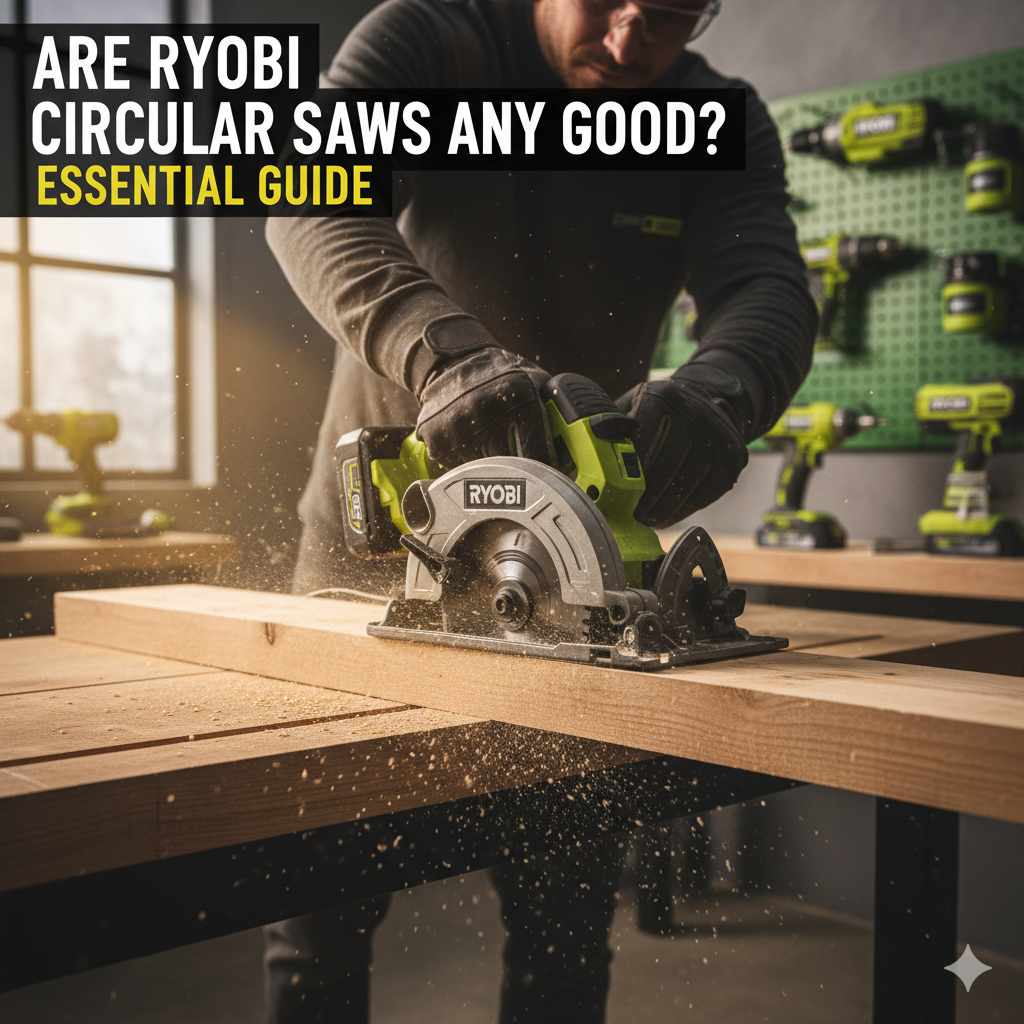
Are Ryobi Circular Saws Any Good? Essential Guide
Yes, Ryobi circular saws are generally good for DIYers and homeowners. They offer a great balance of affordability, performance, and ease of use for common household projects. While not professional-grade, they provide reliable cutting power for hobbyists and beginners.
Hey there, fellow makers and DIY enthusiasts! Md Meraj here. Picking the right circular saw for your projects can feel like navigating a maze, especially when you’re just starting out. You’ve probably seen Ryobi tools everywhere, and maybe you’re wondering, “Are Ryobi circular saws any good?” It’s a common question, and honestly, a super important one! You want a tool that helps you get the job done without causing a headache. That’s exactly why we’re diving deep into Ryobi circular saws today. We’ll break down what makes them tick, who they’re best for, and what you can expect. Get ready to learn everything you need to know to make an informed choice for your next project!
So, the big question: are Ryobi circular saws good? For the vast majority of home DIYers and hobby woodworkers, the answer is a resounding yes. Ryobi has carved out a significant niche by offering tools that are accessible, perform well for everyday tasks, and are budget-friendly. They aren’t typically found on professional job sites where heavy-duty, repeated use demands top-tier, industrial-grade tools, but for cutting lumber for shelves, building a garden planter, making simple furniture, or tackling those weekend home improvement projects, Ryobi circular saws deliver reliable results.
Think of it this way: if you’re baking cookies for your family, a home oven is fantastic. If you’re a professional baker making hundreds of cookies daily, you might need a commercial convection oven. Ryobi circular saws are like that reliable home oven – perfect for what most of us need them for. They are designed for simplicity, ease of use, and getting the job done effectively without breaking the bank.
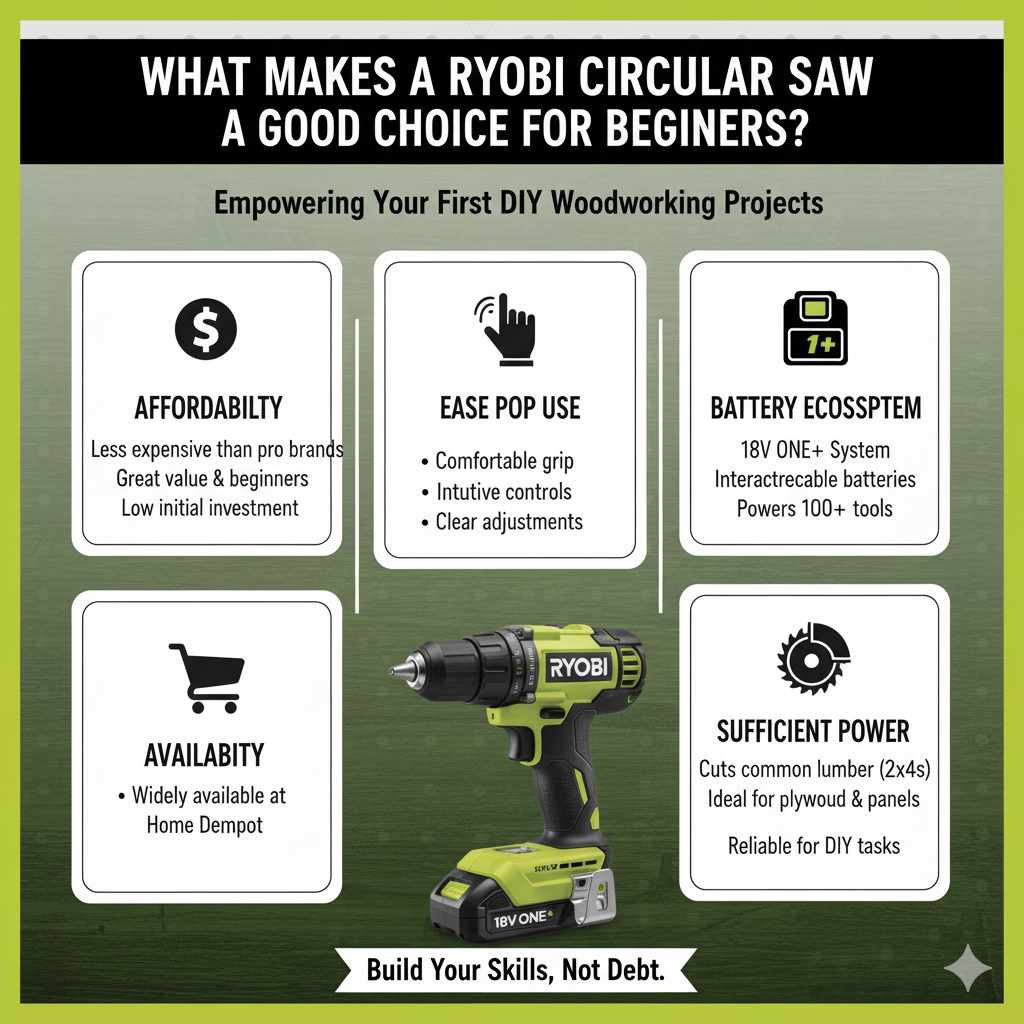
What Makes a Ryobi Circular Saw a Good Choice for Beginners?
Ryobi’s appeal to beginners and DIY enthusiasts stems from several key factors. They’ve managed to create a sweet spot between cost and capability that’s hard to beat.
- Affordability: This is often the biggest draw. Ryobi tools, including their circular saws, are significantly less expensive than premium professional brands. This makes it much easier for someone just getting into woodworking or DIY to invest in a decent tool without a massive financial commitment.
- Ease of Use: Ryobi designs its tools with the end-user in mind. Their circular saws often feature comfortable grips, intuitive controls, and clear adjustments for depth and bevel. This means less time fumbling with the tool and more time actually cutting.
- Battery Ecosystem (for Cordless Models): If you opt for a cordless Ryobi circular saw, you’re entering the Ryobi 18V ONE+ battery system. This is a huge advantage for beginners! One battery can power a vast range of Ryobi tools, from drills and sanders to leaf blowers and string trimmers. This saves money and space, as you don’t need a different charger and battery for every tool.
- Availability: Ryobi tools are widely available at major home improvement stores like Home Depot, making them easy to find, purchase, and get help with if needed.
- Sufficient Power for Common Tasks: For cutting common lumber sizes like 2x4s, plywood sheets, and dimensional lumber, Ryobi circular saws typically have enough power. They might struggle with very dense hardwoods or exceptionally thick materials over prolonged periods, but for typical DIY needs, they perform admirably.
Ryobi Circular Saw Categories: Which One is Right for You?
Ryobi offers a range of circular saws, each with slightly different features to suit various needs. Understanding these can help you pinpoint the best fit for your projects.
Corded Circular Saws
These are the traditional workhorses. They plug into an electrical outlet, meaning they offer consistent, unlimited power as long as you have an extension cord. They are generally a bit lighter and less expensive than their cordless counterparts.
- Pros:
- Unlimited power – no worrying about battery life.
- Typically lighter than cordless models.
- Often the most budget-friendly option.
- Consistent performance.
- Cons:
- Tethered by a power cord, which can be cumbersome and limit mobility.
- Requires access to an outlet or extension cord.
- Can be a tripping hazard.
Cordless Circular Saws (18V ONE+)
These are Ryobi’s most popular offerings for DIYers. Powered by their 18V ONE+ battery system, they offer freedom of movement and convenience. The runtime depends on the battery size (measured in Amp-hours or Ah), and you can swap batteries to keep working.
- Pros:
- Ultimate portability and freedom – no cord to manage.
- Great for working in areas without power access.
- Part of the extensive Ryobi 18V ONE+ system.
- Modern features and often good ergonomics.
- Cons:
- Limited by battery life; you’ll need spare batteries for extended use.
- Batteries and chargers can add to the initial cost if you don’t already own them.
- May have slightly less raw power than a comparable corded saw, though modern batteries have significantly closed this gap.
Specialty Circular Saws (e.g., Compact, Hybrid, Track Saws)
Ryobi also offers more specialized saws. Compact or “carving” saws are smaller and lighter, great for one-handed use or intricate cuts. Hybrid saws offer features of both corded and cordless, often running on AC power but with battery backup. They also have options approaching track saw capabilities for straighter, cleaner cuts, though these are typically at a higher price point within the Ryobi lineup.
Key Features to Look for in a Ryobi Circular Saw
When you’re looking at different Ryobi circular saw models, keep an eye on these features:
- Motor Power: While not always listed in horsepower for DIY saws, you can gauge power by amperage (for corded) or by how well it cuts through your expected materials.
- Blade Diameter: The most common is 7-1/4 inches, which is versatile. Smaller saws might use 5-1/2 or 6-1/2 inch blades, making them lighter but with less cutting depth.
- Bevel Capacity: Most saws can bevel up to 45 degrees, essential for mitered cuts. Check if detents (preset stops) are present at common angles like 0 and 45 degrees.
- Depth of Cut: This is the maximum thickness of material the saw can cut. A 7-1/4 inch blade typically offers a depth of cut around 2-1/4 to 2-5/8 inches, enough for most dimensional lumber.
- Weight and Ergonomics: A comfortable grip and balanced weight are crucial, especially for extended use. Try to hold the saw if possible.
- Dust Collection: Some saws have a port for connecting a vacuum to manage sawdust, which is a nice feature for cleaner work areas.
- Spindle Lock: This makes changing the blade much easier.
- LED Work Light: Some models include an LED light to illuminate the cut line, improving accuracy.
Ryobi Circular Saw Performance: What Can You Expect?
For average woodworking and DIY tasks, Ryobi circular saws perform well. They make straight cuts adequately, and with a bit of practice and the right technique, you can achieve good results.
Cutting Wood: They handle standard lumber like pine, fir, and plywood with ease. For softer woods, they’ll slice through almost effortlessly. When you move to hardwoods like oak or maple, you’ll notice a bit more resistance, especially with a duller blade or if you’re trying to push through too quickly. This is normal for most saws in this price range.
Accuracy: Achieving perfectly straight cuts often depends more on the user than the saw itself. However, good features like a clear sightline or an LED light can certainly help. For precision cuts, especially long, straight lines, consider using a guide, like a straight edge clamped to your workpiece, or investing in a circular saw guide rail if you do a lot of sheet goods. For more information on achieving straight cuts, resources from organizations like the Woodworking Network can offer valuable tips.
Durability: Ryobi offers a good balance of durability for the price. They feature plastic housings and components that, while not as robust as metal on professional saws, are perfectly adequate for home use. The most common issue with any saw is blade wear and tear. Keeping your blade sharp and appropriate for the material you’re cutting will significantly extend the life and performance of your saw.
Ryobi Circular Saw Models: A Quick Look
Ryobi offers several popular models. Here’s a generalized look at what you might find, keeping in mind that models are updated periodically:
| Model Type | Common Features | Best For |
|---|---|---|
| 18V ONE+ Cordless 6-1/2 Inch | Compact, lightweight, good for general-purpose cuts, often a starter saw. Part of the ONE+ system. | Beginners, smaller projects, one-handed use, users in the Ryobi ONE+ ecosystem. |
| 18V ONE+ Cordless 7-1/4 Inch Brushless | More power, deeper cut capacity than 6-1/2 inch, brushless motor for better efficiency and longevity. Often includes features like an electric brake for safety. | More demanding DIY tasks, cutting larger lumber, users wanting more power and runtime. |
| 13 Amp Corded 7-1/4 Inch | Consistent power, good value, reliable for stationary work or where an outlet is readily available. | Budget-conscious buyers, those who prefer corded power, users not needing maximum portability. |
Note: Specific model numbers and features change over time. Always check the latest specifications from Ryobi or your retailer.
Safety First! Using Your Ryobi Circular Saw
No matter the brand, safety is paramount when using a circular saw. These tools are powerful and can cause serious injury if not handled correctly. Here are some essential safety tips:
- Read the Manual: Always read and understand your saw’s specific owner’s manual before operating it.
- Wear Safety Gear: Always wear safety glasses or a face shield, hearing protection, and sturdy footwear. Consider work gloves for better grip, but ensure they don’t interfere with the tool.
- Inspect the Saw: Before each use, check that the blade is installed correctly, is sharp, and is the right type for the material. Ensure the blade guard operates freely.
- Secure Your Workpiece: Use clamps or a vise to hold your material firmly in place. Never try to cut freehand unless absolutely necessary, and even then, be extremely cautious. A stable workpiece prevents kickback. This is crucial for preventing accidents. OSHA (Occupational Safety and Health Administration) provides comprehensive guidelines on machine guarding and safety practices.
- Proper Stance: Stand in a balanced position, to the side of the blade’s intended path, not directly behind it. This helps you avoid injury if the saw kicks back.
- Don’t Force the Saw: Let the blade do the work. Pushing too hard can lead to the blade binding, overheating, and dangerous kickback.
- Keep Cords Tidy (Corded Saws): Ensure cords are routed away from the cutting area and don’t pose a tripping hazard.
- Electrical Safety: Check cords for damage. Use grounded outlets.
- Wait for the Blade to Stop: Never lay the saw down until the blade has completely stopped spinning.
Ryobi Circular Saws vs. Other Brands: A Beginner’s Perspective
When considering “are Ryobi circular saws any good?”, it’s helpful to place them in context with other brands accessible to DIYers:
- Ryobi vs. DeWalt/Makita/Bosch (Professional Brands): These brands typically offer higher-end materials, more powerful motors, advanced features, and greater durability designed for daily professional use. They also come with a significantly higher price tag. For a beginner who might use a saw a few times a year, the extra cost and features of professional lines are often unnecessary.
- Ryobi vs. Skil/Black+Decker/Porter-Cable: These brands often fall into a similar price and performance category as Ryobi. They all offer good value for home use. Ryobi often stands out due to the breadth of its ONE+ battery system and widespread availability. Features and build quality can vary model by model within each brand, so direct comparison of specific tools is always best.
For a beginner, the decision often comes down to budget, existing tool batteries, and specific features needed. Ryobi consistently hits a sweet spot that makes them a very popular and sensible choice.
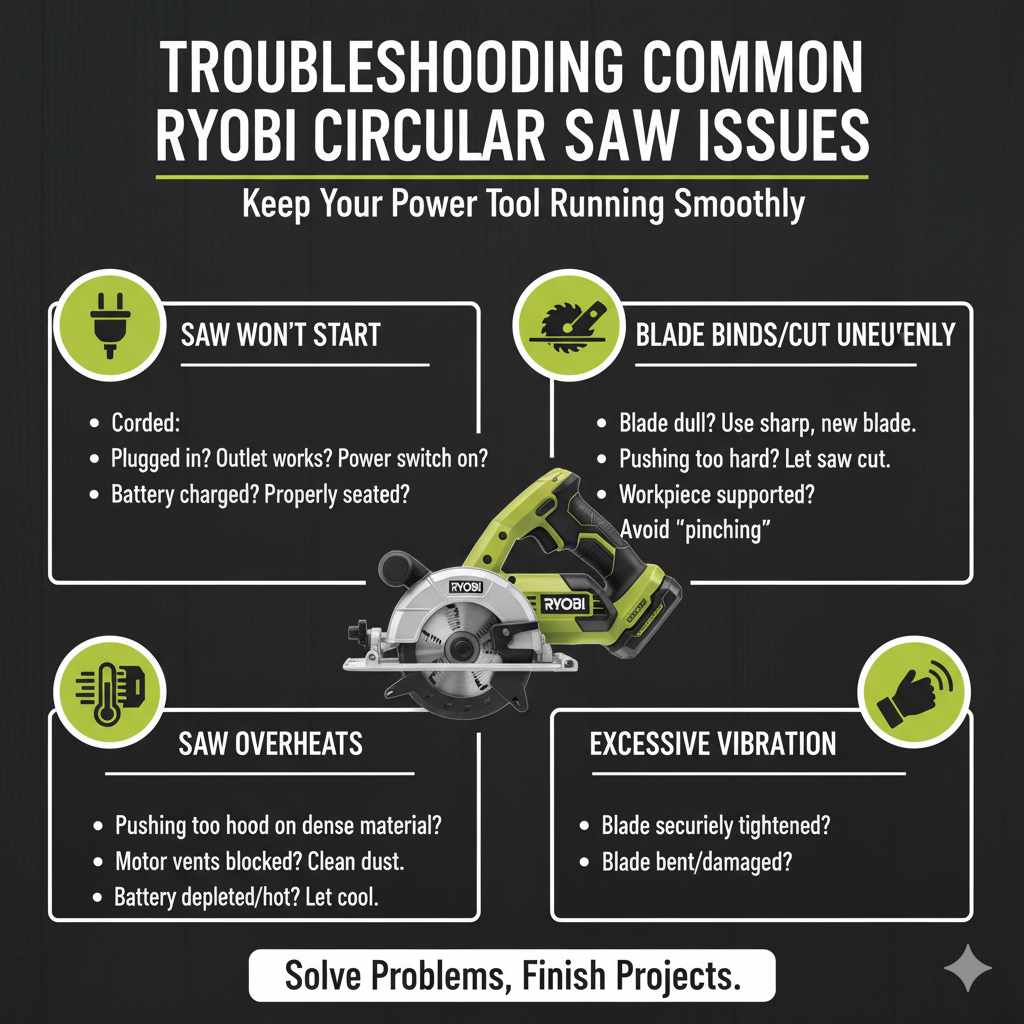
Troubleshooting Common Ryobi Circular Saw Issues
Even reliable tools can sometimes act up. Here are a few common issues and simple fixes:
- Saw Won’t Start:
- Corded: Check if it’s plugged in, the outlet is working, and the power switch is on.
- Cordless: Ensure the battery is fully charged and properly seated in the tool.
- Blade Binds or Cuts Unevenly:
- The blade might be dull. Try a new, sharp blade designed for your material.
- You might be pushing too hard or too fast. Let the saw cut at its own pace.
- Ensure your workpiece is fully supported and not “pinching” the blade.
- Saw Overheats:
- You may be pushing the saw too hard on dense material.
- The motor vents might be blocked with dust. Clean them out.
- For cordless, the battery might be depleted or overheating itself. Let it cool.
- Excessive Vibration:
- Check if the blade is securely tightened and not warped.
- Ensure the blade is not bent or damaged.
Frequently Asked Questions (FAQs) about Ryobi Circular Saws
Q1: Are Ryobi circular saws suitable for beginners?
A1: Absolutely! Ryobi circular saws are excellent for beginners. They are user-friendly, affordable, and perform well for common DIY tasks. The cordless models are especially easy to handle without the hassle of a power cord.
Q2: Can Ryobi circular saws cut through 2×4 lumber?
A2: Yes, most Ryobi 7-1/4 inch circular saws can easily cut through standard 2×4 lumber and other dimensional lumber. Smaller 6-1/2 inch models can also handle 2x4s, though they might require a second cut for thicker materials.
Q3: How long do Ryobi cordless saw batteries last?
A3: Battery life varies greatly depending on the battery’s Amp-hour (Ah) rating and the type of task. A 4.0 Ah battery, for example, can typically provide dozens of cuts in softwood on a single charge. For extended projects, having a spare battery is recommended.
Q4: Are Ryobi tools durable enough for DIY projects?
A4: For home DIY projects, Ryobi tools are generally very durable. They are built to withstand regular use for tasks around the house and in the workshop. While they may not have the ruggedness of professional-grade tools for daily, heavy-duty construction, they are more than sufficient for homeowners and hobbyists.
Q5: What’s the difference between a Ryobi brushed and brushless motor saw?
A5: Brushless motors are more efficient, offer more power, provide longer runtime per charge, and tend to last longer than traditional brushed motors. Ryobi’s brushless models typically come at a higher price point but offer better performance and longevity.