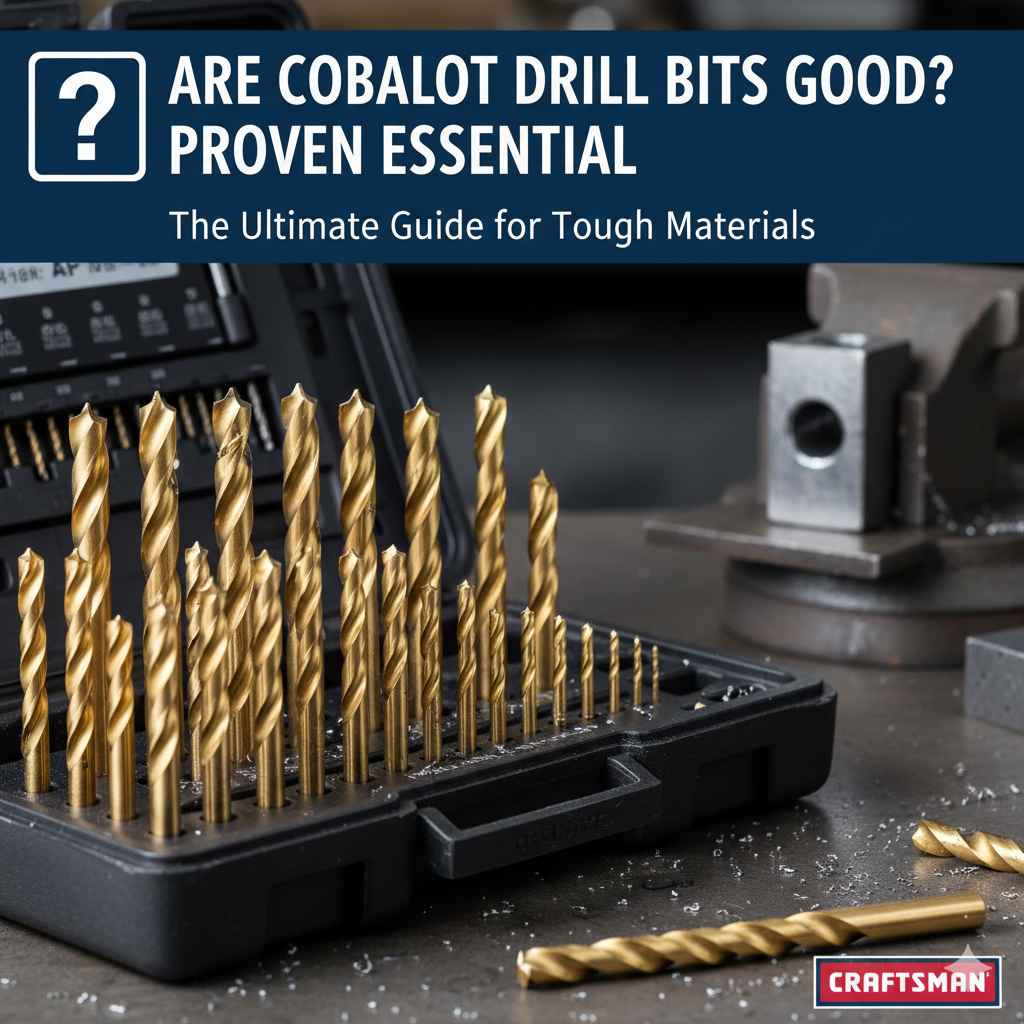
Are Cobalt Drill Bits Good? Proven Essential
Yes, cobalt drill bits are excellent choices for drilling into hard materials like hardened steel and stainless steel. Their superior hardness and heat resistance make them a proven essential for professionals and serious DIYers tackling tougher jobs where standard bits would fail.
Drilling into tough materials like metal can be a real head-scratcher for beginners. You might have a project that calls for drilling through steel, and the thought of your drill bit just spinning uselessly or, worse, snapping can be a bit daunting. It’s a common frustration, but thankfully, there are tools designed specifically for these tougher tasks. We’re going to explore a type of drill bit that’s often praised for its strength and durability: cobalt drill bits. By the end of this guide, you’ll understand why they’re so highly regarded and when they’re the perfect tool for your job. Let’s shed some light on what makes these bits so special.
What Are Cobalt Drill Bits?
Cobalt drill bits are a specific type of twist drill bit engineered for drilling into extremely hard metals. What sets them apart is their composition. They are essentially high-speed steel (HSS) bits that have been enhanced with a significant percentage of cobalt – typically between 5% and 8%. This addition of cobalt dramatically increases the bit’s hardness, its retention of temper at high temperatures, and its overall durability. To understand why this is so important, let’s look at what happens when you drill, especially into hard materials.
When a drill bit cuts into metal, friction is generated. This friction creates heat. A standard HSS bit can become soft and dull quickly when exposed to the high temperatures produced during the drilling of tough metals. Cobalt’s presence allows the drill bit to withstand these extreme temperatures without losing its hardness. This means a cobalt bit can keep cutting effectively for much longer, even under demanding conditions. Think of it like a super-powered version of a regular drill bit, built to handle the heat and the strain.

Why Are Cobalt Drill Bits Considered Good? The Science Behind Their Strength
The “goodness” of cobalt drill bits boils down to the metallurgical properties that cobalt brings to the table. It’s not just a buzzword; it’s a science that makes these bits outperform others in specific scenarios.
Enhanced Hardness and Wear Resistance
Cobalt alloys increase the overall hardness of the steel. This enhanced hardness translates directly into superior wear resistance. A harder bit can penetrate tough materials more easily and maintain its sharp cutting edge for significantly longer than standard HSS bits or even those with other coatings. This is crucial for tasks where precision and a clean cut are needed.
Superior Heat Resistance
This is arguably the most significant advantage of cobalt drill bits. Drilling generates a lot of friction, leading to high temperatures at the cutting interface. Cobalt elevates the “red hardness” of the steel, meaning the bit can retain its hardness and cutting ability even when heated to high temperatures (up to around 1100°F or 593°C). This allows for faster drilling speeds and longer bit life when working with materials that would quickly overheat and ruin a conventional bit.
Increased Durability and Reduced Breakage
While cobalt makes the bits harder, it doesn’t necessarily make them more brittle. Properly manufactured cobalt bits are designed to remain tough and resilient. This means they are less prone to snapping or breaking under the significant pressure applied when drilling into hard metal. This durability is a huge advantage, saving you time, money, and frustration.
Improved Performance on Tough Materials
The combination of hardness, heat resistance, and durability makes cobalt drill bits the go-to choice for drilling into materials that are notoriously difficult to penetrate. These include:
- Hardened steel
- Stainless steel
- Titanium
- Cast iron
- Other high-alloy steels
These materials are often used in construction, automotive repair, and manufacturing, where precision drilling is a necessity.
Cobalt Drill Bits vs. Other Drill Bits: A Comparison
To truly appreciate why cobalt drill bits are often considered essential, it helps to see how they stack up against other common types of drill bits used for metalworking.
1. High-Speed Steel (HSS) Drill Bits
These are the workhorses for general-purpose drilling. They are made from a type of steel that can withstand higher temperatures than carbon steel drills, making them suitable for drilling into a variety of softer metals and wood.
- Pros: Affordable, widely available, good for general use.
- Cons: Can overheat and become dull quickly when drilling hard metals, less durable for tough materials, can be prone to breaking.
- When to use: Soft metals (aluminum, brass), wood, plastic, and light-duty drilling.
2. Black Oxide Drill Bits
These are HSS bits that have undergone a chemical process to create a thin black oxide coating. This coating provides some corrosion resistance and reduces friction, allowing them to cut a bit more cleanly and last slightly longer than uncoated HSS bits.
- Pros: Better corrosion resistance than uncoated HSS, slightly improved performance and longevity over standard HSS.
- Cons: Still not ideal for extremely hard metals, limited heat resistance compared to cobalt.
- When to use: General-purpose drilling on wood, metal (softer steels), and plastics where a bit more durability is desired.
3. Titanium Coated Drill Bits
These are typically HSS bits coated with a thin layer of titanium nitride (TiN). The titanium coating is gold-colored and extremely hard, further increasing wear resistance and reducing friction. They can drill faster than uncoated HSS bits.
- Pros: Increased hardness and wear resistance, reduced friction for faster drilling, good corrosion resistance.
- Cons: Coating can chip or wear off over time, not as heat-resistant as cobalt, can still struggle with very hard steels.
- When to use: A good step up from black oxide for drilling into steel, aluminum, and other metals for general DIY and construction tasks.
4. Cobalt Drill Bits
As we’ve discussed, these are HSS bits alloyed with cobalt. They offer the best combination of hardness, heat resistance, and durability for drilling into the toughest materials.
Here’s a table summarizing their key differences:
| Drill Bit Type | Primary Material | Hardness | Heat Resistance | Best For | Typical Cost |
|---|---|---|---|---|---|
| High-Speed Steel (HSS) | Steel | Good | Moderate | Soft metals, wood, plastics | $ |
| Black Oxide | Steel | Good | Moderate | General purpose metal & wood | $$ |
| Titanium Coated | Steel | Very Good | Good | Steel, aluminum, tougher metals | $$$ |
| Cobalt | Steel (Hardened) | Excellent | Excellent | Hardened steel, stainless steel, titanium | $$$$ |
Cost indication: $ = Low, $$ = Moderate, $$$ = Moderately High, $$$$ = High.
As you can see, cobalt bits command a higher price, but their superior performance on the most challenging materials often makes them a worthwhile investment for specific applications.
When Are Cobalt Drill Bits Essential? Proven Use Cases
So, you might be wondering, “Are cobalt drill bits good for my project?” The answer depends entirely on the material you’re drilling into. If you’re working with soft woods or basic metals, a less expensive bit will likely serve you well. However, for certain tougher jobs, cobalt bits transition from being a good option to an absolute essential.
Drilling into Hardened Steel and Tool Steels
This is where cobalt bits truly shine. Hardened steel is unforgiving. Regular HSS bits can easily overheat, lose their temper, and become useless in seconds. Cobalt bits, with their ability to withstand high temperatures, can power through.
- Example: Replacing a broken bolt in a piece of machinery where the bolt is made of hardened steel. You’ll need to drill into the bolt to remove it, and cobalt is your best bet.
- Another Example: Working on automotive parts, especially those that have been heat-treated for strength, like suspension components or engine parts.
Drilling into Stainless Steel
Stainless steel is notoriously difficult to drill due to its strength and tendency to “work harden.” This means the material around the hole becomes even harder as you drill. Cobalt bits are excellent for maintaining a sharp edge and managing the heat generated, leading to cleaner, more efficient drilling. For more on stainless steel, the Stainless Steel Information Center provides a wealth of knowledge on working with this material.
- Example: When installing metal railings or creating custom stainless steel fixtures at home.
- Another Example: Machining or fabricating stainless steel components for industrial or artistic purposes.
Drilling into Titanium and Other High-Alloy Steels
Titanium is significantly stronger and harder than steel, and it also has a low thermal conductivity, meaning heat generated during drilling tends to stay concentrated at the cutting edge. Very few drill bits can handle this, but cobalt bits are among the best options.
- Example: Aerospace applications, specialized sporting goods, or medical implants often involve titanium.
General High-Volume or Repetitive Drilling
Even if you’re not drilling through the absolute hardest metals, if you have a high volume of holes to drill in moderately hard materials, cobalt bits can save you time and money in the long run. By lasting longer and maintaining sharpness, they reduce the need for frequent bit changes and prevent the frustration of dull bits.
How to Use Cobalt Drill Bits Effectively for Best Results
Using cobalt drill bits isn’t just about buying them; it’s also about using them correctly to maximize their benefits and ensure safety. Here are some tips to help you get the best performance:
1. Use Sufficient Lubrication and Cooling
This is crucial when drilling hard metals. Heat is the enemy of any drill bit, even cobalt.
- Use a cutting fluid or oil: Always use a dedicated cutting fluid. Apply it generously to the drill bit and the workpiece before and during drilling. This helps to cool the bit, lubricate the cutting edge, and clear away metal chips.
- Drill in short bursts: Periodically withdraw the bit from the hole to allow the cutting fluid to penetrate and cool the area. This also helps to clear chips and prevent them from binding.
You can find more detailed information on metal drilling techniques from resources like The Manufacturing Extension Partnership (MEP) National Network, which offers valuable insights into machining practices.
2. Employ the Correct Speed and Pressure
Drilling hard metals with cobalt bits requires a different approach than drilling wood.
- Slower Speeds: You generally need to drill at slower speeds than you would for softer materials. High speeds generate excessive heat, even with cobalt bits. A good rule of thumb is to check the manufacturer’s recommendations for RPM based on the bit diameter and material.
- Steady, firm pressure: Apply consistent, firm pressure. Don’t force the bit, but don’t let it spin freely either. Let the sharp cutting edge do the work. Too little pressure can cause the bit to skate or chatter, while too much can cause it to overheat or break.
3. Start with a Pilot Hole
For larger diameters or particularly tough materials, drilling a small pilot hole first can make a big difference.
- Easier Entry: A pilot hole guides the larger bit, preventing it from wandering and making the initial penetration much easier and safer.
- Reduced Stress: It reduces the stress on both the drill bit and your drill motor.
4. Keep the Drill Running (Mostly)
When drilling into metal, it’s important to keep the drill spinning to help clear chips.
- Continuous Rotation: Avoid stopping the drill while the bit is engaged in the material. This can cause chips to jam and potentially break the bit.
- Withdraw to Clear: As mentioned, periodically withdraw the bit while it’s still spinning to clear chips and allow for cooling.
5. Use a Drill Press When Possible
For critical jobs or when drilling precisely straight holes, a drill press offers much better control, stability, and consistency than a hand drill. This is especially helpful when working with hard materials.
Choosing the Right Cobalt Drill Bit: What to Look For
Not all cobalt drill bits are created equal. When you’re looking to buy, consider these factors:
1. Cobalt Content
As mentioned, cobalt bits typically contain 5% or 8% cobalt.
- 5% Cobalt (M35 Steel): This is a very common and effective alloy for most demanding applications. It offers a great balance of hardness, wear resistance, and cost.
- 8% Cobalt (M42 Steel): This alloy provides even greater hardness and heat resistance. It’s ideal for drilling through the absolute hardest materials and offers longer life in very demanding situations. However, it can be more brittle than M35 and is usually more expensive.
For most DIYers and even many professionals, a 5% cobalt bit will serve exceptionally well.
2. Bit Coating
While cobalt itself provides great properties, some cobalt bits come with additional coatings:
- Uncoated Cobalt: These are excellent and rely purely on the alloy’s properties.
- Titanium Nitride (TiN) Coated Cobalt: The gold coating adds an extra layer of hardness and reduces friction, potentially leading to faster drilling and longer life.
- Other Coatings: You might see black oxide or other specialized coatings, which can offer additional benefits like corrosion resistance.
For drilling very hard metals, an uncoated or TiN-coated cobalt bit is generally a superb choice.
3. Flute Design and Point Angle
The design of the flutes (the spiral grooves) and the tip angle can affect performance.
- Standard 118° Point Angle: Good for general-purpose drilling in softer metals and plastics.
- 135° Split Point Angle: Excellent for harder metals, including stainless steel and alloys. The split point prevents “walking” (skating across the surface) when starting a hole and allows for easier penetration.
For working with tougher materials, a 135° split point cobalt bit is often recommended.
4. Brand Reputation and Quality
When it comes to cutting tools like drill bits, quality matters. Reputable brands invest in better manufacturing processes, material sourcing, and quality control. Cheaper, no-name bits might claim to be cobalt but may not have the correct alloy composition or may be manufactured poorly, leading to premature failure. Investing in a known, trusted brand like DeWalt, Milwaukee, Makita, Bosch, or specialty bit manufacturers like Norseman or drillhog will generally yield better results.

Safety First! Always Prioritize Safety
Working with power tools and hard materials can be hazardous. Before you even pick up your drill, make sure you’re prepared to stay safe.
- Eye Protection: Always wear safety glasses or goggles. Metal shavings can fly off at high speeds and cause serious eye injury.
- Hand Protection: Wear sturdy work gloves. They protect your hands from sharp metal edges and can provide a better grip on the workpiece.
- Secure Your Workpiece: Use clamps (like C-clamps or bar clamps) to firmly secure the material you are drilling. This prevents it from spinning or moving unexpectedly, which could lead to injury or damage.
- Proper Tool Handling: Ensure your drill is in good working order and that you have a firm grip on it. Be aware of the drill’s torque and how it might twist your wrist if the bit binds.
- Coolant Management: Be cautious of hot metal and cutting fluids. Allow materials to cool before handling.
For more comprehensive safety guidelines, the Occupational Safety and Health Administration (OSHA) provides standards for hand and power tool safety that are applicable even for DIYers.
Frequently Asked Questions About Cobalt Drill Bits
Q: Can I use cobalt drill bits for wood?
A: Yes, you can use cobalt drill bits for wood, but it’s generally overkill and not cost-effective. Standard HSS or even wood-specific bits are better suited and less expensive for woodworking projects.
Q: How long do cobalt drill bits last?
A: The lifespan of a cobalt drill bit varies greatly depending on the material being drilled, the drilling technique, speed, lubrication, and the quality of the bit itself. Under ideal conditions, they can last significantly longer than standard bits, potentially drilling thousands of holes in moderate materials or hundreds in very hard ones.