Can You Put Acrylic Paint On Skin: Essential Guide
Yes, you can put acrylic paint on your skin, but it’s not ideal and requires careful handling. While temporary, it can cause irritation or allergic reactions. Always use non-toxic, washable acrylics specifically labeled as body paint or face paint. This guide will show you how to do it safely and what to avoid.
Ever wondered if that vibrant acrylic paint you use for crafting can be a fun addition to a costume or a playful art project on your skin? Many DIY enthusiasts and parents reach for craft acrylics when they think about temporary body art. It’s a common question, and the answer isn’t a simple “yes” or “no.” While it might seem like a harmless way to add some color, putting regular acrylic paint directly on your skin can lead to unwelcome surprises. We’re here to guide you through the essentials, making sure you understand the differences between craft acrylics and safe body paints, and how to enjoy creative expression without causing irritation. Let’s dive into what you need to know!
Understanding Acrylic Paint and Skin Safety
Acrylic paints, the kind you typically find in craft stores for painting on canvas, wood, or paper, are made with pigments suspended in an acrylic polymer emulsion. While they dry to a durable, water-resistant finish, they aren’t formulated for direct contact with skin. This is a crucial distinction for anyone planning to use them for body art, face painting, or costume makeup.
When we talk about regular craft acrylics, they contain chemicals and binders that can be harsh and drying to the skin. These ingredients are perfectly fine for inanimate objects, but our skin is a living organ that can react negatively to them. This is why you might experience redness, itching, rashes, or even allergic reactions if you use them directly on your skin. It’s always best to err on the side of caution and use products designed for human application.
Why Regular Craft Acrylics Aren’t Ideal for Skin
There are several reasons why your go-to craft acrylics might not be the best choice for your skin:
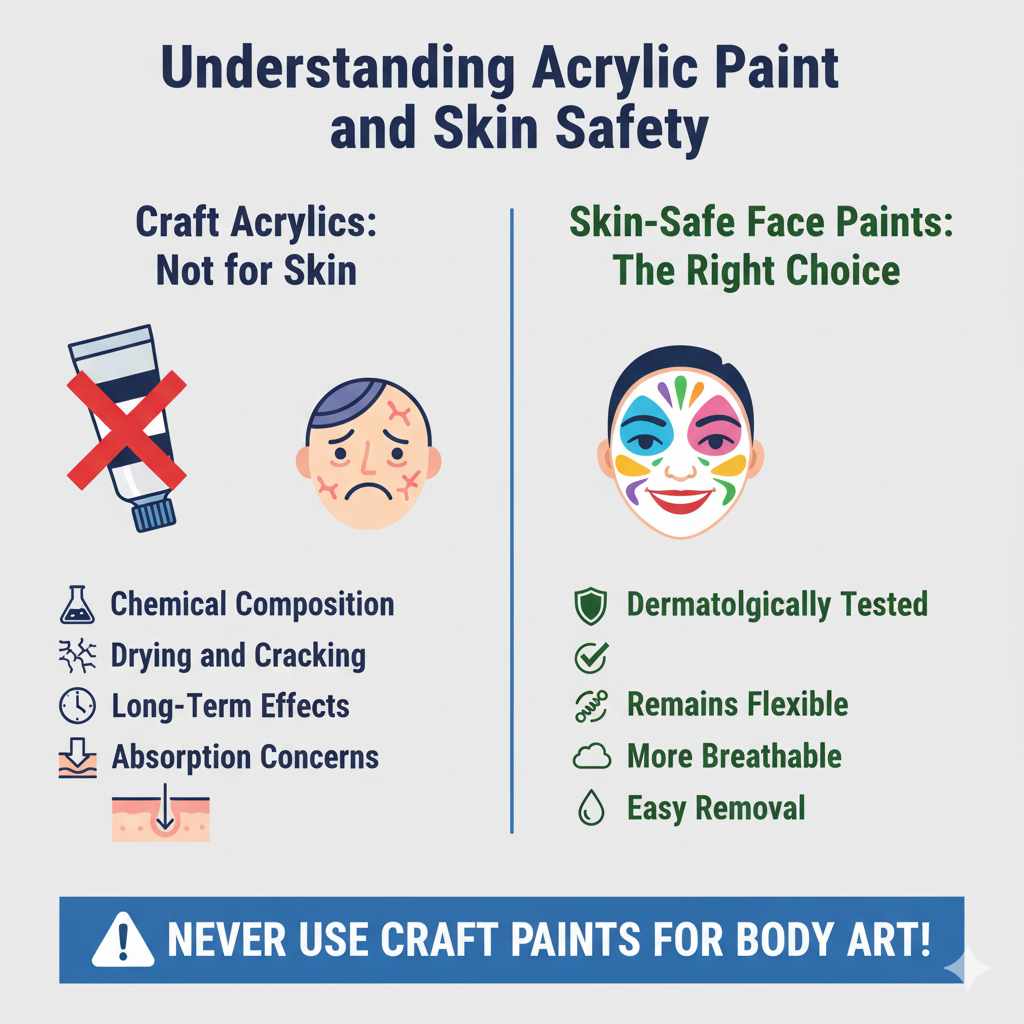
Chemical Composition: Craft paints often include binders, solvents, and pigments that are safe for surfaces but can be irritating or allergenic to skin. They are not tested for dermatological safety.
Drying and Cracking: Acrylics dry quickly and can create a stiff film on the skin. This film can feel tight, crack uncomfortably, and potentially pull at your skin, leading to irritation or even small abrasions when you move.
Long-Term Effects: Repeated or prolonged use of non-skin-safe acrylics can potentially lead to contact dermatitis or other skin sensitivities over time.
Absorption Concerns: While most craft acrylics are considered non-toxic for intended use, there’s always a slight concern about absorption into the skin, especially with certain pigments or if the skin barrier is compromised.
For these reasons, if you’re looking for vibrant colors on your skin, especially on your face, using products specifically designed for this purpose is paramount.
What Kind of Acrylic Paint Can You Put on Skin?
This is where the distinction becomes very important. While craft acrylics are generally not recommended, there are types of “acrylic-like” paints that are formulated specifically for skin. These are often referred to as:
Face Paints: These are designed for use on the face and body. They are usually water-based, non-toxic, and formulated to be safe for sensitive skin. Many are also hypoallergenic.
Body Paints: Similar to face paints, these are intended for larger areas of the body. They often come in various formulations, including water-activated, cream-based, and even spray-on options, all tested for skin safety.
Costume Makeup: This category often includes paints and other makeup products designed to create specific character looks for Halloween, theatre, or cosplay. They are formulated for temporary skin application.
These specialized products use cosmetic-grade pigments and gentler binders. They are designed to be flexible, breathable, and easily removable. Always look for labels that clearly state “non-toxic,” “hypoallergenic,” and “safe for skin” or “for cosmetic use.”
Key Features of Safe Skin Paints
When you’re choosing a paint for your skin, keep an eye out for these characteristics:
Water-Based: Most safe skin paints are water-based, making them easy to apply with brushes or sponges and simple to wash off with soap and water.
Non-Toxic & FDA Approved Ingredients: Look for seals or statements confirming the product is non-toxic and uses ingredients approved by regulatory bodies like the FDA for cosmetic use.
Hypoallergenic: While not a guarantee, hypoallergenic formulas are created to minimize the risk of allergic reactions.
Flexibility: These paints remain flexible on the skin, so they don’t crack or feel uncomfortable when you move.
Easy Removal: They should wash off cleanly without leaving stains or residue.
Remember, even with products labeled “safe for skin,” it’s always a good idea to perform a patch test if you have particularly sensitive skin or a history of allergies.
How to Safely Apply Paint to Your Skin
If you’ve chosen a product specifically designed for skin application, here’s a step-by-step guide to help you achieve great results safely. This process is similar whether you’re using a water-activated face paint, a cream-based body paint, or a specialized acrylic-like body paint.
Step-by-Step Guide to Applying Skin Paint
Applying paint to your skin is just like painting on any other surface, but with extra care for your body’s well-being.
1. Preparation is Key
Before you even open the paint, make sure your skin is clean and properly prepped. This will help the paint adhere better and last longer.
Cleanse Your Skin: Wash the area where you plan to paint with mild soap and water. Ensure there’s no dirt, oil, or lotion present.
Dry Thoroughly: Pat the skin completely dry with a clean towel.
Consider a Barrier/Primer (Optional): For longer wear or if you have dry skin, you can apply a thin layer of a cosmetic-grade primer or a gentle, fragrance-free moisturizer. Let it absorb fully before painting. Some professional face painters use specialized barrier sprays.
Protect Your Clothing: Wear old clothes or an apron that you don’t mind getting paint on.
2. Gather Your Tools
Having the right tools ready will make the application process smoother and more enjoyable.
Skin-Safe Paints: Your chosen face paint, body paint, or cosmetic-grade acrylic.
Brushes: Use clean, soft synthetic brushes. For face painting, a variety of brush sizes (small detail brushes, medium flat brushes) is helpful. Ensure they are specifically designated for cosmetic use or are thoroughly cleaned craft brushes you only use for skin.
Sponges: Clean cosmetic sponges or makeup sponges can be great for applying base colors or creating textures.
Water (for water-activated paints): A small cup of clean water is essential for diluting and activating water-based paints.
Palette: A clean palette, plate, or even the lid of your paint set to mix colors.
Mirror: A mirror is crucial, especially if you’re painting on your own face or body.
Paper Towels/Wipes: For cleaning brushes and wiping away mistakes.
3. Apply Your Base Coats
This is where you lay down the foundation of your design.
For Water-Activated Paints: Dip your brush or sponge into water, then swirl it into the paint to activate and load it. Apply to the skin in thin, even layers. Avoid over-saturating, which can lead to cracking or a sticky feel.
For Cream-Based or Other Formulations: Apply directly with a brush or sponge. Use a dabbing or swirling motion for smooth coverage. You may need to build up layers for opaque color.
Build-Up Layers Slowly: It’s better to apply multiple thin coats than one thick one. This helps prevent cracking and ensures a smoother finish.
4. Create Your Design
Once your base is dry, it’s time to add details.
Use Detail Brushes: Switch to smaller brushes for finer lines, dots, outlines, and intricate patterns.
Experiment with Techniques: Try stippling with a sponge for texture, or using the tip of a brush for sharp lines.
Allow Layers to Dry: If you’re layering colors, let the underlying paint dry completely to prevent colors from smudging. Most water-based paints dry very quickly.
5. Setting Your Paint (Optional but Recommended)
To help your design last longer and prevent smudging, especially with water-activated paints, you can set it.
Translucent Setting Powder: Use a clean, fluffy brush to gently dust a thin layer of translucent cosmetic setting powder over the dry paint. This mattifies the finish and helps it adhere better.
Setting Spray: For a more durable finish that can resist light moisture, you can use a cosmetic setting spray designed for face paint or theatrical makeup.
6. Removal
The best part about using skin-safe paints is that they come off easily!
Soap and Water: For most water-based paints, a gentle cleanser and warm water should do the trick. Lather up and rinse thoroughly.
Makeup Remover: For more stubborn paints or cream-based formulas, a gentle oil-based makeup remover or micellar water can be very effective.
Be Gentle: Avoid scrubbing harshly, as this can irritate your skin. Repeat the cleansing process if necessary.
Moisturize: After cleansing, apply a gentle moisturizer to rehydrate your skin.
Can You Put Acrylic Paint on Your Face Skin Specifically?
Painting on your face requires even more caution because facial skin can be more sensitive and is highly visible. No! You should NOT put regular craft acrylic paint directly on your face skin. The same reasons for avoiding it on other skin areas apply, but are amplified for the face. The face has thinner skin, is more prone to reactions, and any irritation or allergic response is more noticeable.
If you’re looking to paint your face for a costume, event, or artistic expression, you must use products designated as face paint or cosmetic-grade makeup. These are formulated to be safe for the delicate skin on your face, are non-toxic, and are designed to be easily and safely removed.
What to AVOID When Painting on Skin
Just as important as knowing what to use is knowing what not to use. Avoiding certain products and practices will save you from discomfort and potential skin issues.
Regular Craft Acrylics: As we’ve stressed, this is the biggest no-no. They are not designed for skin and can cause irritation, dryness, or allergic reactions.
Permanent Markers: These contain harsh solvents and dyes that can cause chemical burns, irritation, and staining.
Nail Polish: Nail polish contains strong chemicals like formaldehyde and toluene, which are definitely not meant for skin application and can cause severe irritation.
Watercolors (Standard Artist Grade): While water-based, artist-grade watercolors are not formulated for skin and could contain pigments or binders that cause reactions.
Anything Not Labeled “Non-Toxic” or “Skin-Safe”: If a product doesn’t explicitly state it’s safe for skin use, don’t risk it.
Painting Over Broken or Irritated Skin: Never apply any kind of paint to sunburned, cut, broken, or already irritated skin. This can worsen the condition and lead to infection.
Scrubbing Off Harshly: Avoid aggressive scrubbing during removal, as this can damage your skin’s natural barrier.
Using Dirty Brushes or Sponges: Contaminated tools can introduce bacteria to your skin, leading to breakouts or infections. Always ensure your application tools are clean.
Patch Testing: Your Safest First Step
Before committing to an elaborate design on a large area of your skin, performing a patch test is a wise precaution. This is especially true if you have sensitive skin, allergies, or are using a new product for the first time.
How to Perform a Patch Test:
1. Choose an Inconspicuous Area: Select a small spot on your inner forearm or behind your ear.
2. Apply a Small Amount: Apply a tiny bit of the paint you plan to use to this area.
3. Wait 24-48 Hours: Leave the paint on for the duration you intend to wear it during your project, or at least for a few hours, then remove it. Keep the area clean and dry.
4. Monitor for Reactions: Check the skin for any signs of redness, itching, swelling, blistering, or discomfort.
If you experience any adverse reaction, do not use the product on a larger area of your skin. Many cosmetic and safe body paints are hypoallergenic, but individual reactions can still occur.
Where to Find Safe Skin-Safe Paints
You can find specialized skin-safe paints at various retailers, ensuring you get products designed for your use:
Specialty Costume Shops: These stores often carry a wide array of professional face and body paints.
Online Retailers: Websites like Amazon, professional theatrical makeup suppliers, and dedicated face painting supply stores offer extensive selections.
Major Craft and Hobby Stores: Some larger craft chains are beginning to stock cosmetic-grade face paints and body art supplies.
Makeup and Beauty Supply Stores: Professional makeup artists’ suppliers are excellent sources for high-quality, skin-safe products.
When shopping, look for brands known for their quality and safety standards. Reputable brands often undergo rigorous testing to ensure their products meet cosmetic safety regulations. For example, the U.S. Food and Drug Administration (FDA) has regulations for cosmetic ingredients and their safe use. While the FDA doesn’t approve individual cosmetic products, they do regulate labeling and ensure ingredients are safe for their intended cosmetic use.
Comparing Skin-Safe Paints vs. Craft Acrylics
To further clarify the essential differences, let’s look at a comparison.
| Feature | Regular Craft Acrylic Paint | Skin-Safe Face/Body Paint |
|---|---|---|
| Intended Use | Arts and crafts (canvas, wood, paper, fabric) | Cosmetic, theatrical, face painting, body art |
| Ingredients | Acrylic polymer emulsion, pigments, binders, preservatives | Cosmetic-grade pigments, gentler binders, humectants |
| Skin Safety | Not tested for skin; potential irritant or allergen | Tested for skin safety; non-toxic, often hypoallergenic |
| Flexibility | Dries hard, can crack on skin | Remains flexible on skin, moves with facial expressions |
| Breathability | Can be occlusive, not breathable | Formulated to be more breathable |
| Removal | Can be difficult to remove, may require solvents | Washes off easily with soap and water or gentle makeup remover |
| Cost | Generally less expensive for larger quantities | More expensive per ounce due to specialized formulation |
| Durability | Water-resistant when dry, but not ideal for skin | Can be smudge-proofed; designed for temporary wear |
| Availability | Widely available in craft stores | Found in specialty makeup stores, online, and costume shops |
As you can see, the formulations are quite different, prioritizing skin health and function for those designed for body art.

Frequently Asked Questions
Q1: So, can I really not use any acrylic paint on my skin at all?
You should avoid using regular craft acrylic paints directly on your skin. They are not formulated for this purpose and can cause irritation or allergic reactions. However, you can* use paints specifically labeled as “face paint,” “body paint,” or “cosmetic-grade makeup.” These often use acrylic bases but have different, skin-safe ingredients.
Q2: How do I know if a paint is safe for my skin?
Look for clear labeling that states “non-toxic,” “safe for skin,” “cosmetic-grade,” “hypoallergenic,” or “FDA-approved ingredients.” If it’s intended for arts and crafts on surfaces, it’s generally not safe for direct skin application without these assurances.
Q3: What if I have sensitive skin?
If you have sensitive skin or a history of allergies, always perform a patch test on a small, inconspicuous area of skin (like the inner forearm) 24-48 hours before applying the paint more widely. Even “skin-safe” products can cause reactions in some individuals.
Q4: Can I mix craft acrylics with lotion to make them safe for skin?
This is a common DIY tip, but it’s generally not recommended. While thinning the paint with lotion might make it feel softer, it doesn’t change the underlying chemical composition of the craft acrylics. The pigments and binders can still cause irritation, and the lotion itself may not be compatible with the paint, leading to streaking or a poor finish. It’s best to stick with products specifically designed for skin use.